Northern Lights: the original outdoor workhorse, profiled
Genetic background, terpene structure, yield benchmarks, and why this strain is still the default beginner outdoor pick in 2026.
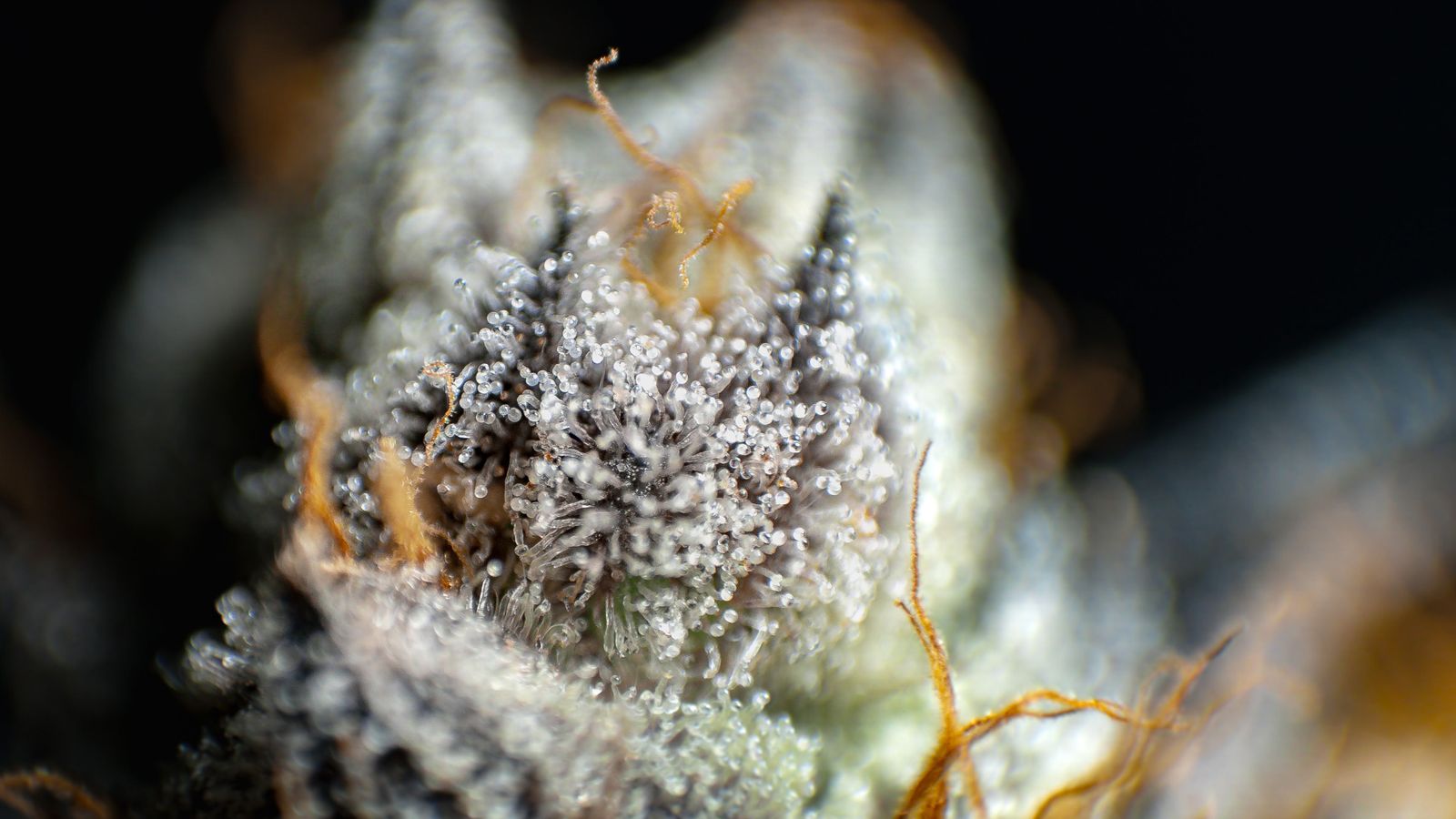
Frosty cannabis flower bud, macro photograph
Of every strain on the U.S. market in 2026, Northern Lights is probably the one most over-represented in beginner outdoor grows — and that's because the math still works. Short flowering window, manageable size, real mold resistance, and a finishing profile that fits the calendar in places where October is wet and cold.
Genetic background
Northern Lights traces to a set of Afghani indica lines bred and stabilized through the late 1970s and 1980s. The cuts circulating today are several generations downstream of the seedstock that won the early Cannabis Cups, but the core morphology has held: short internodal spacing, broad indica leaf structure, and dense flower architecture.
Chemistry
Modern panels on quality Northern Lights phenos return 17 to 20 percent THC, with myrcene as the dominant terpene and meaningful pinene and caryophyllene contributions. CBD is trivial. The aroma profile is piney, earthy, slightly sweet — closer to a forest floor than to the gas or dessert profiles that dominate the contemporary market.
Grow benchmarks
- Flowering window: 49–56 days indoor; outdoor finish in late September to early October across most U.S. zones.
- Height: 90–120 cm under standard 18/6 veg.
- Indoor yield: 500–600 g/m² under capable lighting.
- Outdoor yield: 350–500 g per plant in good conditions.
- Difficulty: beginner-friendly. Forgives nutrient miscalculations better than most modern hybrids.
Why it still wins as a beginner outdoor pick
The structural answer is the calendar. North of latitude 40, photoperiod plants need to finish before persistent cold rain and humidity push botrytis pressure through the canopy. A 49–56 day flowering window finishes in time. A 70-day modern hybrid often does not. The mold resistance is a separate, real advantage — Northern Lights phenotypes consistently come through wet finishes with lower botrytis incidence than the gassy modern crosses we test alongside them.
Harper covers new breeder releases, cup winners, and the genetics moving the legacy market. Her strain reviews involve verified terpene panels and side-by-side grow logs.
The cannabis newsletter you forward to your team.
Federal policy, market data, grower alerts, and the one story that matters today. Sent every weekday at 7am. Free.
No spam. Unsubscribe with one click. 21+ only.
Related from Strains

More from the newsroom

Where DEA cannabis rescheduling actually stands in 2026
The administrative law judge process, the public comment record, and the political calendar between now and a final rule.
Hop latent viroid is now the costliest pathogen in commercial cannabis
How to detect it, why bleach is not enough, and the tissue-culture clean stock pipeline reshaping the industry.

The Q1 2026 MSO earnings: who's surviving compression, who isn't
Wholesale prices keep grinding lower. We read every earnings call so you don't have to.