Trial Reports THC-CBD-Terpene Blend Cut Morphine Use Nearly 50%
A clinical trial of a THC, CBD and terpene formulation reported a near-50% drop in morphine use among acute nerve pain patients.
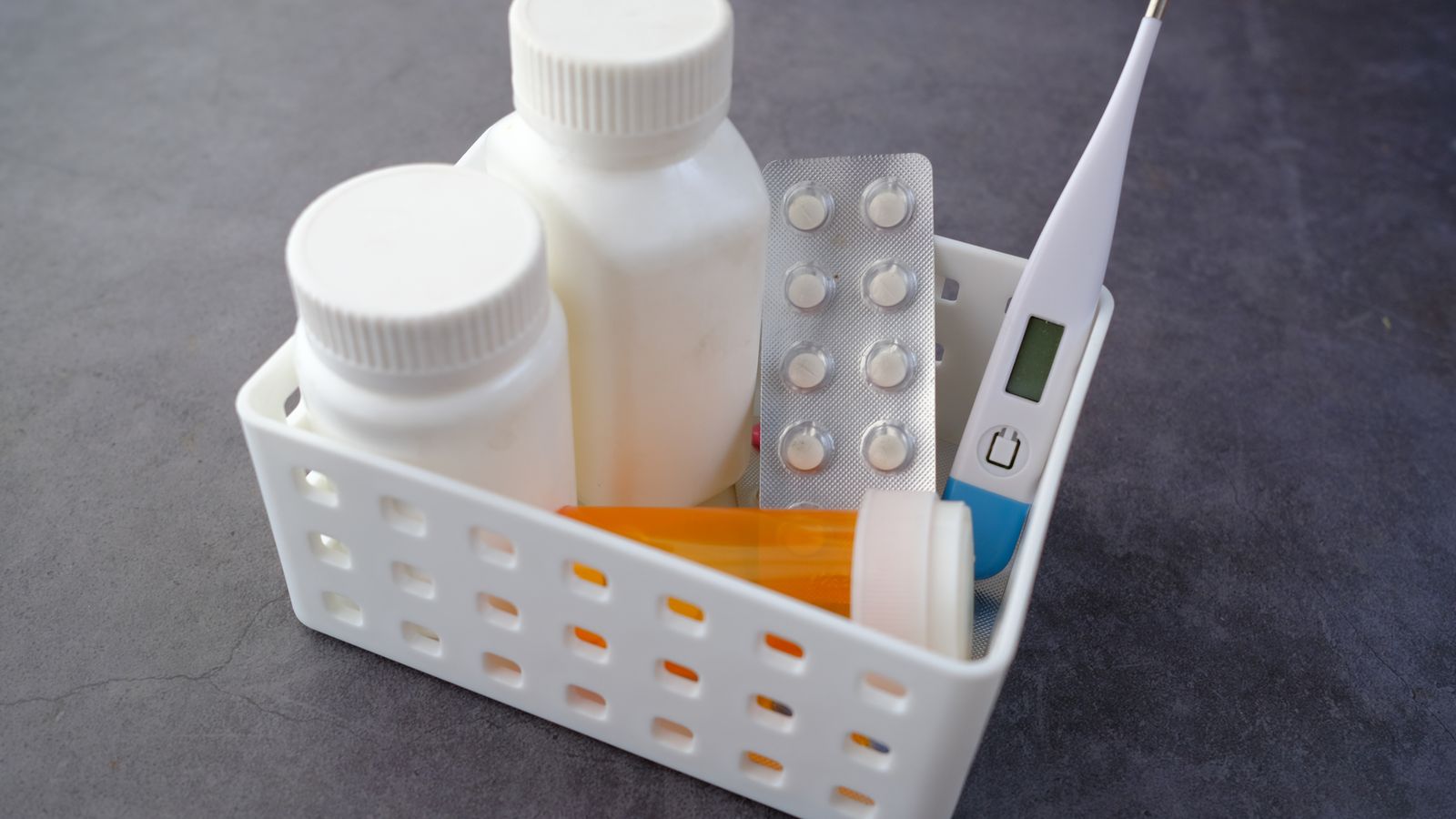
Healthcare basket with medication bottles, pills, and thermometer on a dark surface.
What the trial reported
A THC, CBD and terpene formulation was linked to a drop in morphine use of nearly 50% in patients with acute nerve pain.
The Marijuana Herald published the report on Oct. 10, 2026. Its headline gives the outcome: morphine consumption fell by nearly 50% in the treated patients.
That's the verified picture so far. Big number, thin detail.
What the report doesn't say
The source material doesn't name the sponsor, sample size, comparator arm or journal.
Without those, a reader can't tell whether the study was randomized, placebo-controlled or open-label. Nor can they tell whether "nearly 50%" is a mean, a median or a responder threshold, and that distinction separates a practice-informing result from a hypothesis-generating one.
Why the terpene line item matters
Naming terpenes alongside THC and CBD makes the formulation's exact profile the variable to scrutinize.
A wine reviewer doesn't stop at "red." You want varietal, vintage, vessel. Terpenes such as myrcene, beta-caryophyllene and limonene are frequently cited in analgesia discussions, but the report as we have it doesn't say which were used or at what percentages.
Details matter.
Acute pain is a narrow test bed
Acute nerve pain is a shorter-horizon setting than the chronic neuropathy most cannabinoid pain research targets.
A short window makes morphine consumption easy to count, which is a strength for an opioid-sparing endpoint. It also limits how far anyone can stretch the result toward long-term use. That's our read, not the trial team's.
Five details that decide whether it holds up
Five disclosures will determine whether the result is credible.
- Randomization and blinding method
- THC:CBD ratio and milligrams per dose
- A full terpene panel, with percent by weight
- How morphine use was measured, and what pain scores moved
- A peer-reviewed publication or trial registry entry
The patient and operator lens
Opioid-sparing is a different claim from opioid replacement, and product developers should respect the gap.
Cutting morphine use by nearly half still leaves patients on morphine. For formulators, a defined, batch-consistent blend sidesteps the phenotype variance that makes terpene profiles drift from flower lot to flower lot. That's the commercial story if the data survive scrutiny. For background, see the CannIntel topic hub on cannabinoids and opioid-sparing research.
What to watch next
The next milestone is full publication or a registry listing that exposes the protocol.
Until then, treat the number as provisional. A near-50% reduction would be notable in any opioid-sparing study, and the FDA would expect to see the underlying data before it carried regulatory weight.
Watch for a journal citation or a registry ID. Either would let reviewers check the terpene panel and the morphine endpoint.
For complete background, history, and our ongoing coverage of this story:
Open the CannIntel topic hub →Frequently asked questions
What did the clinical trial find?
According to The Marijuana Herald, a formulation of THC, CBD and terpenes reduced morphine use by nearly 50% in patients with acute nerve pain. The report's headline is the only outcome detail available in the source material CannIntel reviewed.
Is the result peer-reviewed?
That isn't confirmed. The source material doesn't identify a journal, sponsor or trial registry entry. Until the full data are published, the finding should be treated as preliminary.
Does opioid-sparing mean patients stopped taking morphine?
No. Opioid-sparing means patients needed less of the opioid. A reduction of nearly 50% implies patients still used morphine, just in lower amounts.
Why do terpenes matter in a cannabinoid pain trial?
Terpenes are aromatic compounds that vary by cultivar and formulation. If a trial credits a THC, CBD and terpene blend, the specific terpenes and their concentrations are needed to reproduce or evaluate the result.
Sources
The cannabis newsletter you forward to your team.
Federal policy, market data, grower alerts, and the one story that matters today. Sent every weekday at 7am. Free.
No spam. Unsubscribe with one click. 21+ only.
Related from Medical
Report Says CBD Study Cut Alzheimer's Damage; Details Unverified
The Marijuana Herald reported a study linking CBD to better memory and less Alzheimer's-related brain damage, but the underlying research hasn't been identified.
New Study Links Cannabis to Sudden Panic, StudyFinds Reports
StudyFinds reported Oct. 11 that new research shows cannabis can trigger sudden panic in a calm brain. The underlying paper is not yet verified.

Study: CBG Cut Blood Pressure 18% in Rats, Slowed Human Blood Clotting
A preclinical study reported by The Marijuana Herald links the minor cannabinoid to cardiovascular effects, but the data comes from rats and lab blood samples, not patients.
More from the newsroom
Robbinsville Council Hears Four Dispensary Applicants' Pitches
Four dispensary applicants pitched Robbinsville's council, TAPinto reported, shifting a New Jersey retail contest from state paperwork to a local beauty pageant.

Goldberg Loses Bid to Oust Cannabis Appointee, Now Defends Office
Massachusetts Treasurer Deb Goldberg lost a yearslong effort to remove her Cannabis Control Commission appointee, and the fallout now shadows her own campaign.
Illinois Report Shows Cannabis Volume Up, Revenue and Taxes Down
A new state report shows Illinois customers bought more cannabis at lower prices, a mix that cut sales revenue and tax collections.