Virginia Sets January 2027 Launch for Recreational Marijuana Sales
State regulators finalize timeline for adult-use market opening after years of legislative delays.
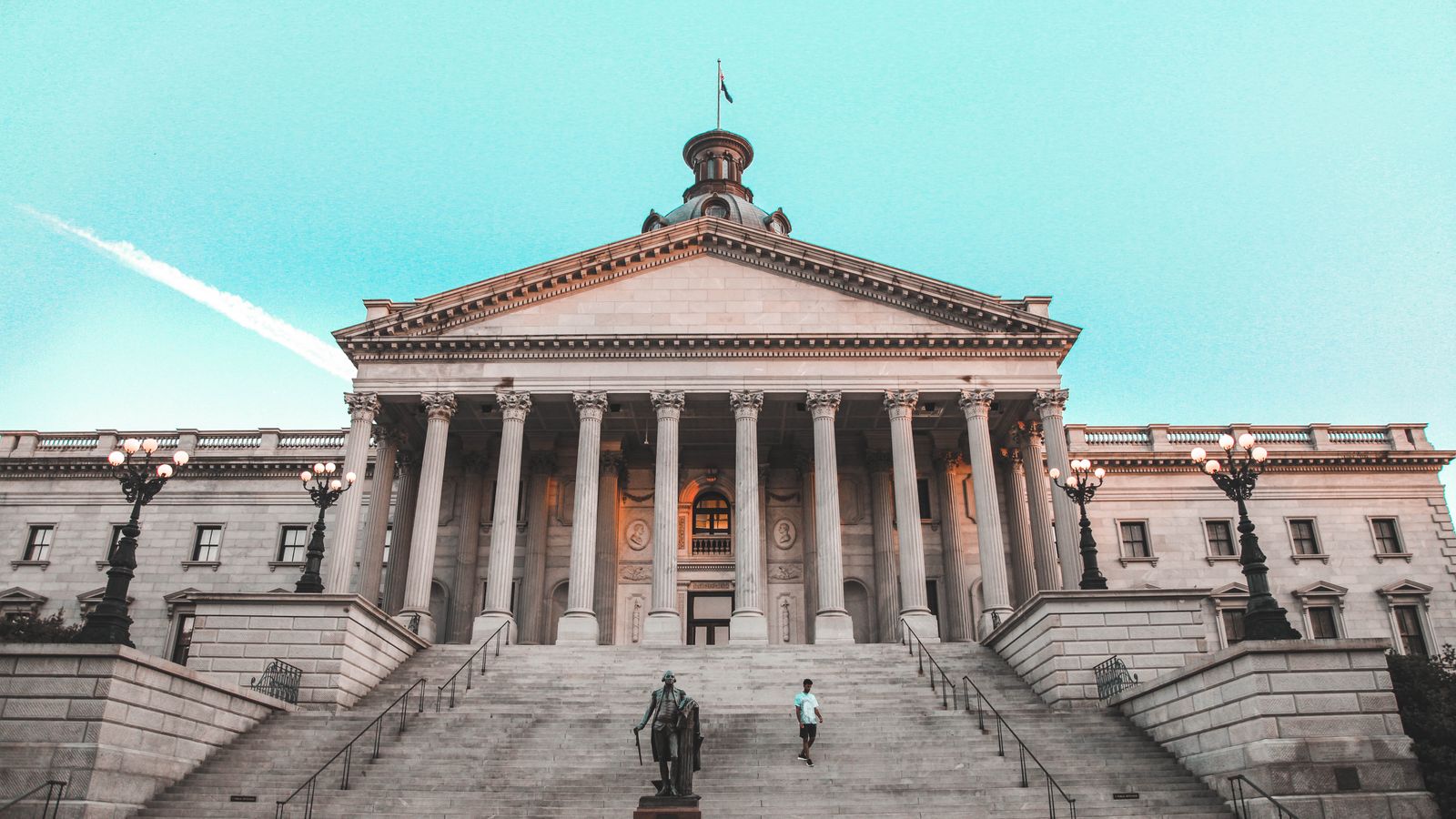
Striking view of the South Carolina State House with its grand steps and clear blue sky backdrop.
Market Launch Timeline Confirmed
Virginia's adult-use cannabis market will open January 2027, more than five years after the General Assembly legalized possession in 2021. The Virginia Cannabis Control Authority (CCA) confirmed the date in a regulatory notice published July 9, 2026. Applications for adult-use retail licenses open in October 2026. Approvals should come by December.
Existing medical dispensaries operated by the state's five vertically integrated pharmaceutical processors will convert first. How many adult-use licenses will the CCA issue in the initial phase? The authority hasn't released that number yet.
Legislative Path and Delays
The General Assembly passed HB 2312 in March 2021, legalizing possession of up to one ounce for adults 21 and older effective July 1, 2021. But the bill left retail sales unaddressed, creating a legal-possession-without-legal-purchase gap that persisted for nearly six years. Republican Governor Glenn Youngkin, who took office in January 2022, opposed retail sales and vetoed multiple market-implementation bills in 2022 and 2023.
In February 2024, the legislature overrode Youngkin's veto of SB 448, establishing the regulatory framework for adult-use sales. The CCA then spent 18 months drafting rules, conducting public comment periods, and securing federal compliance guidance before finalizing the January 2027 timeline.
License Structure and Social Equity
Virginia's program reserves 30 percent of retail licenses for social-equity applicants, defined as individuals with prior cannabis convictions or residents of historically over-policed census tracts. Applicants get scored on a 100-point rubric: 40 points for equity criteria, 30 for business plan, 30 for capitalization and site control.
Application fees are tiered. Equity applicants pay $10,000; standard retail licenses cost $50,000. The authority estimates it'll approve 150-200 retail licenses statewide by mid-2027, and vertical integration is prohibited—retailers can't hold cultivation or processing licenses under the same ownership structure.
Tax Structure and Revenue Projections
Adult-use sales will carry a 21 percent excise tax: 12 percent state excise plus Virginia's standard 5.3 percent sales tax, with localities authorized to levy an additional 3 percent. First-year tax revenue should hit $150-200 million, the CCA projects. Forty percent goes to public education, 30 percent to substance-abuse treatment, and 30 percent to law-enforcement training.
Medical cannabis sales, which began in 2020 under the pharmaceutical processor model, generated $48 million in 2025. Adult-use sales will likely eclipse medical revenue within 18 months of launch.
Operator and Market Impact
The five incumbent pharmaceutical processors—Dharma Pharmaceuticals, gLeaf Medical, Columbia Care, Green Leaf Medical, and Dalitso—will dominate early supply. Each operates one dispensary per health service area under the medical program. Will these operators receive automatic adult-use licenses, or must they compete in the application process? The CCA hasn't said.
Industry analysts estimate Virginia's adult-use market could reach $500-700 million in annual sales by 2029, based on population-adjusted comparisons to Maryland and New Jersey. With 8.7 million residents, Virginia represents the largest East Coast market without operational adult-use sales.
Regulatory Framework and Federal Considerations
The CCA's final rules, published in the Virginia Register on June 15, 2026, impose strict seed-to-sale tracking via the Metrc platform and prohibit THC concentrations above 30 percent in flower and 60 percent in concentrates. Edibles are capped at 10 milligrams THC per serving and 100 milligrams per package. Testing protocols follow Colorado's model, requiring batch testing for potency, pesticides, heavy metals, and microbials.
Virginia hasn't sought federal guidance under the Cole Memorandum framework, which was rescinded in 2018. The CCA's general counsel cited the Rohrabacher-Farr amendment, which prohibits federal interference in state medical programs, as partial legal cover. The authority will monitor DEA enforcement posture as the market scales.
For full background on Virginia's regulatory timeline and licensing structure, see the CannIntel topic hub on Virginia's adult-use program.
Next milestone: October 2026, when the CCA opens the application portal. Operators seeking equity-applicant status must submit documentation by September 15.
For complete background, history, and our ongoing coverage of this story:
Open the CannIntel topic hub →Frequently asked questions
When will recreational marijuana sales begin in Virginia?
January 2027. The Virginia Cannabis Control Authority confirmed the timeline July 9, 2026, and will begin accepting retail license applications in October 2026.
How many recreational cannabis licenses will Virginia issue?
The CCA estimates 150-200 retail licenses statewide by mid-2027. Thirty percent are reserved for social-equity applicants. Application fees are $10,000 for equity applicants and $50,000 for standard licenses.
What is the tax rate on adult-use cannabis in Virginia?
Twenty-one percent combined: 12 percent state excise tax plus 5.3 percent sales tax, with localities authorized to add 3 percent. First-year revenue is projected at $150-200 million.
Can existing medical dispensaries sell recreational cannabis?
Yes. The five pharmaceutical processors operating medical dispensaries will convert first. The CCA has not disclosed whether they receive automatic licenses or must apply through the standard process.
What are Virginia's THC limits for cannabis products?
Flower is capped at 30 percent THC, concentrates at 60 percent. Edibles are limited to 10 milligrams per serving and 100 milligrams per package. All products require batch testing via Metrc tracking.
Sources
The cannabis newsletter you forward to your team.
Federal policy, market data, grower alerts, and the one story that matters today. Sent every weekday at 7am. Free.
No spam. Unsubscribe with one click. 21+ only.
Related from Laws
Ghana Government Weighs Approval of Industrial Hemp Production
Regulatory framework under review as West African nation considers entry into global hemp market.
Rhode Island blocks local opt-outs for marijuana retail in 2027
State law will prohibit municipalities from banning licensed cannabis shops starting January 1, 2027.

Thailand's Anutin Faces Criticism Over Cannabis Policy Failures
Deputy PM under fire as recreational use remains unregulated two years after decriminalization
More from the newsroom

California Seizes $104 Million in Illegal Cannabis in Multi-County Bust
Coordinated enforcement across multiple California counties nets over $104 million in illicit product in one of the state's largest-ever cannabis seizures.

Eight Companies Apply for Industrial Cannabis Licenses in Ghana
Ghana's Narcotics Control Commission reviews cultivation applications as West African nation advances regulated hemp program.
Osseo Residents Oppose Property Tax Funding for Proposed Dispensary
Local taxpayers push back on city plan to use public funds for cannabis retail infrastructure in suburban Minneapolis.