Drone Data Reveals Hemp Water Stress Patterns Growers Miss
Multispectral imaging shows 40% of South African hemp fields irrigate too late, after stress onset.

A green tractor is actively harvesting a lush hemp field under a cloudy sky, showcasing agricultural machinery.
Study Maps Stress Before Human Eyes Can See It
Multispectral sensors detected water stress in hemp canopies 5-7 days before visual wilting appeared, according to data collected across 18 commercial hemp farms in South Africa's Eastern Cape during the 2025-2026 growing season. The study, conducted by researchers at Stellenbosch University in partnership with the South African Hemp Growers Association, used normalized difference vegetation index (NDVI) and normalized difference water index (NDWI) measurements to track plant hydration status at 10-centimeter resolution.
Hemp's rapid vegetative growth phase—typically 30-45 days from transplant to flowering initiation—leaves little margin for recovery from stress events. A single week of suboptimal water availability during peak canopy expansion can reduce final flower weight by 12-18%, according to yield models published in the study. Growers relying on visual inspection or fixed irrigation schedules missed the narrow window when intervention would've prevented yield loss.
Researchers flew DJI Matrice 300 RTK drones equipped with MicaSense RedEdge-MX Dual cameras over fields every 72 hours during vegetative and early flowering stages. The cameras capture five discrete spectral bands. Near-infrared wavelengths reveal chlorophyll concentration and leaf water content invisible to the naked eye.
The 40% Who Irrigate Too Late
Of the 18 farms monitored, seven irrigated only after NDWI values had already dropped below the 0.3 threshold indicating moderate water stress. Those farms recorded an average 14% reduction in final dry flower yield compared to farms that triggered irrigation when NDWI first dipped to 0.35, the study's recommended intervention point.
The lag wasn't ignorance. It was infrastructure. Five of the seven late-irrigating farms relied on diesel pumps and manual valve control, requiring 12-24 hours to mobilize equipment and reach distant field blocks. Two farms shared a single pivot system across multiple crops, creating scheduling conflicts that delayed hemp watering by 3-5 days even after stress was noticed.
Fastest-responding farms used automated drip systems with soil-moisture sensors and remote valve control, allowing same-day response to stress signals. But even those systems triggered on soil moisture alone, not canopy health. Drone data showed soil sensors sometimes lagged plant stress by 48 hours in sandy loam soils with low water-holding capacity, a common soil type in the Eastern Cape.
NDVI vs NDWI: Which Index Matters More
The study found NDWI outperformed NDVI as an early-warning metric, detecting stress an average of 2.3 days earlier. NDVI measures chlorophyll content and overall canopy density, useful for tracking growth rate and nitrogen status. NDWI measures the ratio of near-infrared to shortwave-infrared reflectance, a direct proxy for leaf water content.
In hemp, water stress precedes chlorophyll degradation. Leaves lose turgor and close stomata to conserve moisture before chlorophyll breaks down, so NDWI drops first. By the time NDVI shows a statistically significant decline, the plant's already been stressed for 48-72 hours. That delay matters in a 90-110 day crop where every growth day counts.
Researchers recommend a two-index approach: NDWI for irrigation timing, NDVI for nutrient and pest monitoring. Running both indices on the same flight data adds no cost, since the MicaSense sensor captures all necessary bands in a single pass. Processing time increases by roughly 15 minutes per flight using standard photogrammetry software like Pix4D or Agisoft Metashape.
Cost Per Hectare: The Adoption Barrier
Drone service providers in South Africa charge R 800-1,200 per hectare per flight for multispectral imaging, with weekly flights during vegetative growth running R 6,400-9,600 per hectare over an eight-week monitoring window. For a 50-hectare hemp farm, that's R 320,000-480,000 in imaging costs alone, before factoring in the agronomist time needed to interpret data and adjust irrigation schedules.
The math works for large operators growing high-value cannabinoid hemp, where a 14% yield increase on a crop worth R 80,000-120,000 per hectare in flower easily justifies the monitoring cost. It doesn't work for fiber or grain hemp, where gross revenue per hectare runs R 15,000-25,000 and margins are already tight. That economic split explains why adoption's been concentrated among CBD and CBG growers, not the fiber producers the South African government has prioritized in its industrial hemp development strategy.
Some growers are testing lower-cost alternatives: fixed-wing drones that cover more area per flight, reducing per-hectare costs to R 400-600, and handheld NDVI sensors that sample representative plots rather than mapping entire fields. Neither approach offers the spatial resolution of full-field multispectral mapping. Both capture enough data to improve irrigation timing over visual inspection alone.
What the Data Can't Fix
Perfect information doesn't solve bad infrastructure. Three of the seven late-irrigating farms had real-time access to drone data through a pilot program but still couldn't respond fast enough due to equipment limitations. One farm's diesel pump failed mid-season, forcing a switch to a smaller backup unit that could only irrigate 8 hectares per day. By the time the entire 40-hectare field received water, the first blocks irrigated were already stressed again.
Precision agriculture tools are only as good as the mechanical systems they control, the study's lead researcher noted. Multispectral imaging can tell you exactly when to irrigate, but it can't add pumping capacity or install drip lines. For smallholder hemp growers, the capital cost of upgrading irrigation infrastructure often exceeds the cost of the monitoring technology by an order of magnitude.
Next phase of the research will test lower-cost satellite-based multispectral data from Sentinel-2 and Planet Labs, which offer 10-meter and 3-meter resolution imagery respectively at no cost or subscription rates under R 10,000 per year. Spatial resolution is coarser than drone data, but temporal resolution is higher—Sentinel-2 revisits every five days, Planet daily. For large fields with uniform soil types, satellite data may provide enough early warning to justify the trade-off. For full background on precision agriculture tools in cannabis and hemp production, see the CannIntel topic hub on Hemp Cultivation Technology.
Sources
The cannabis newsletter you forward to your team.
Federal policy, market data, grower alerts, and the one story that matters today. Sent every weekday at 7am. Free.
No spam. Unsubscribe with one click. 21+ only.
Related from Grow
TSRgrow Expands GROWHub Software With Metrc Integration, Analytics
Cultivation-tech vendor adds state-tracking API, predictive yield models, and audit-trail features to its intelligent-grow platform.
Cannabis Growers Lock Harvest Labor Months Early as Worker Shortage Deepens
Cultivators are signing seasonal trim crews in June and July—four months ahead of October harvest—as competition for experienced hands intensifies across major markets.
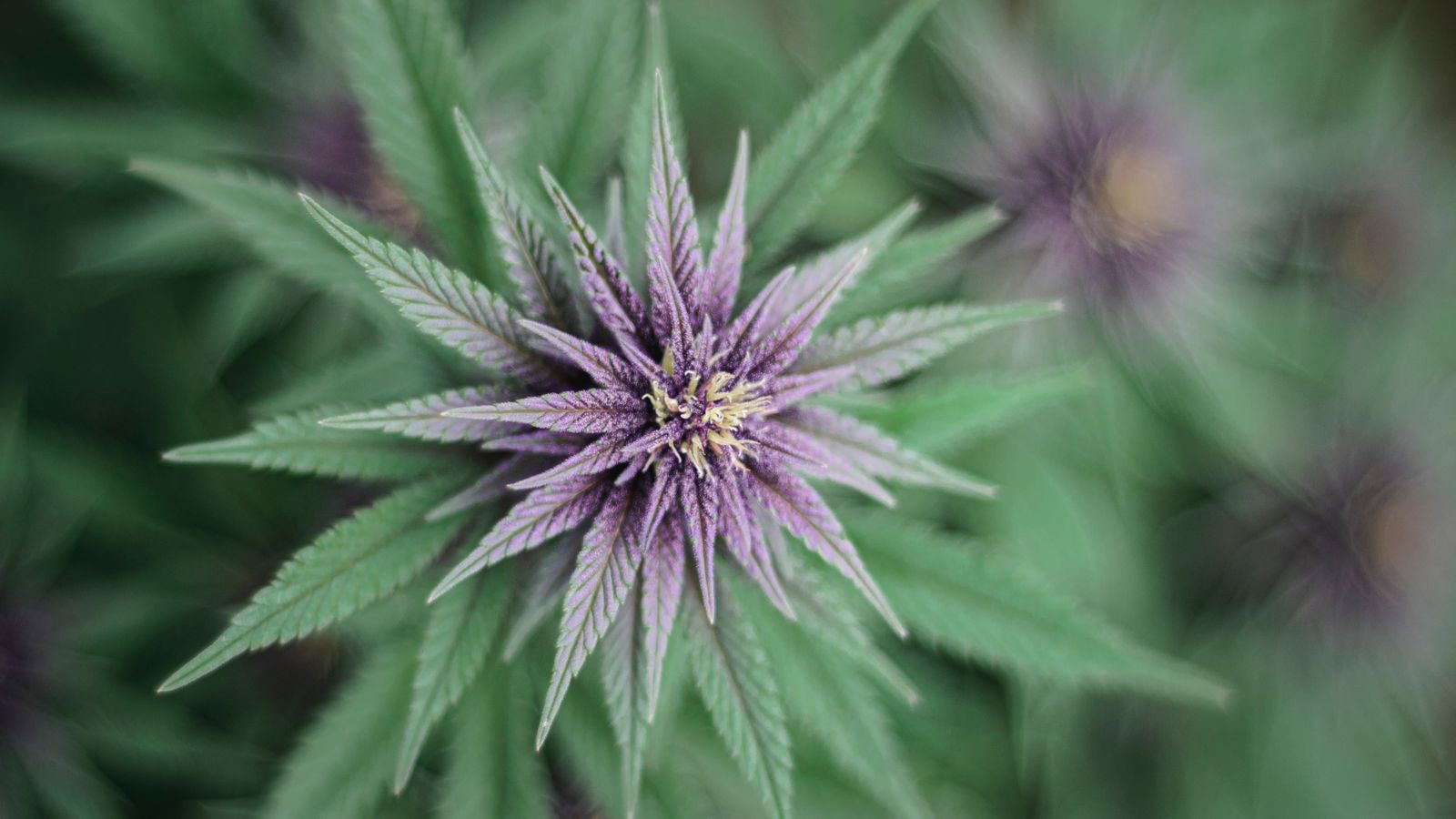
Purple Cannabis Cultivars Signal Flavonoid-Rich Chemotypes Growers Overlook
Anthocyanin pigments in purple flower correlate with measurable shifts in patient-reported effects, yet most cultivators still breed for THC alone.
More from the newsroom
Portugal Marks 25 Years of Drug Decriminalization, Public Health Model
Quarter-century milestone highlights sustained investment in treatment over incarceration for drug possession offenses.

Australia Parliament Passes Medicinal Cannabis Driving Laws
New legislation replaces zero-tolerance THC threshold with impairment-based standard for prescribed medical users.
21 Million Cannabis Arrests Over Three Decades Documented in New Analysis
Enforcement data spanning 1990-2020 reveals the cumulative scale of prohibition's human cost before state-level reforms.