Report links heavy cannabis use to worse cognition in young adults
Bioengineer.org reports a study tying heavy use to cognitive deficits in young adults while suggesting mild use may help people with HIV; the underlying paper isn't yet verified.
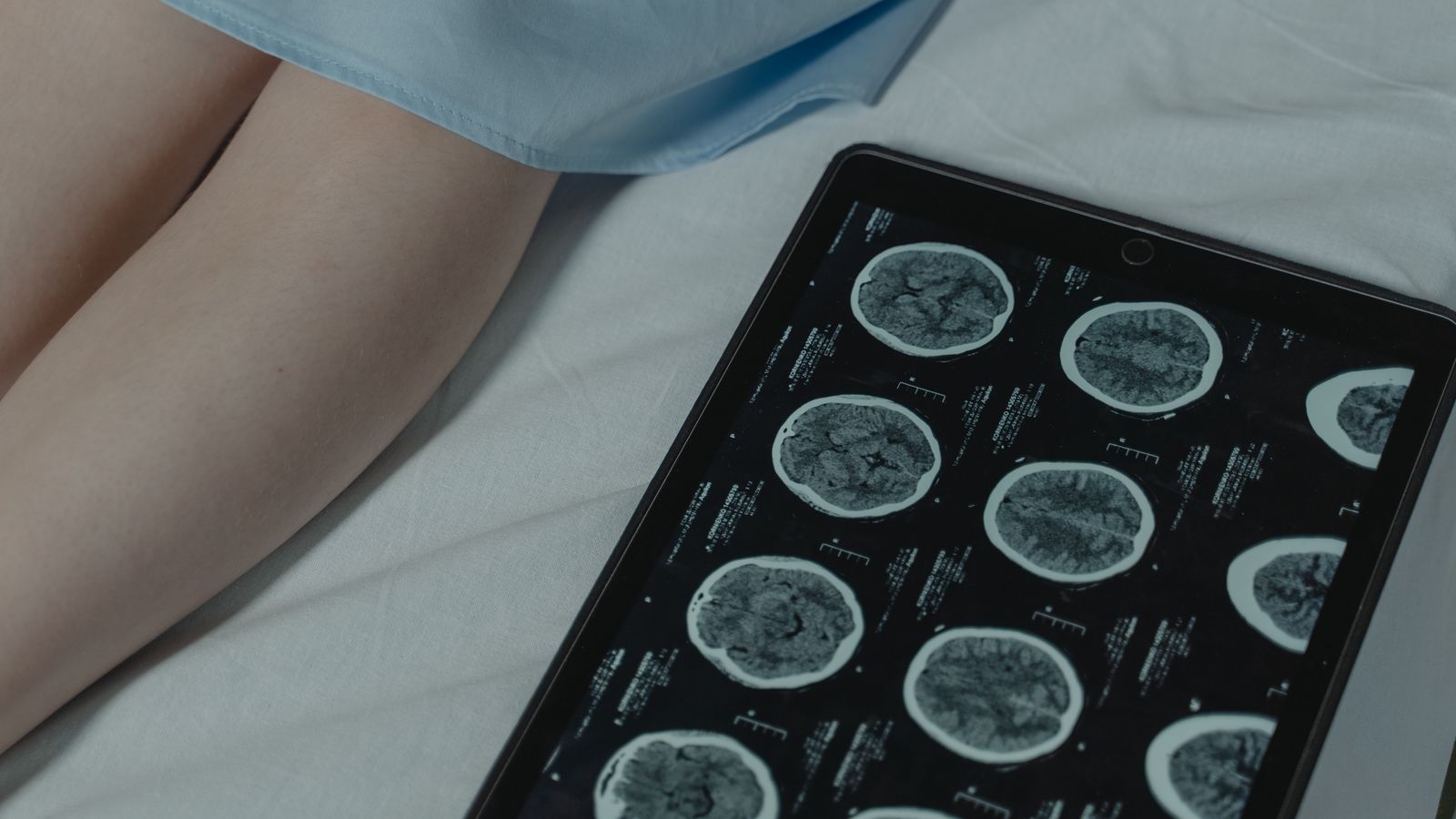
Close-up of brain CT scan display on tablet beside patient's legs in a hospital room.
What the report says, and what we could confirm
Bioengineer.org published an Oct. 17 headline pairing a cognitive-harm finding in young adults with a possible benefit for people living with HIV. That's the full extent of what our signal supplied.
We didn't receive the study's title, authors, journal, funder or sample. Without those, we can't say how many people were tested, how "heavy" and "mild" were defined, or what the comparison group looked like.
So this is a methodology-first read. We'll say what we know, flag what we don't, and give you a way to grade the paper when it surfaces.
Our review method: n of one headline, no controls
CannIntel's test rig here was a single secondary headline, which isn't enough to rate a clinical finding. There's no dataset, no effect size and no confidence interval in hand.
Here's what the signal gave us, and what it didn't:
- Provided: a publication date (Oct. 17, 2026), a publisher (Bioengineer.org) and a two-part directional claim.
- Missing: study design, sample size, age range, cannabis exposure measures, cognitive tests used, and any statistical adjustment.
- Missing: whether the HIV finding came from the same cohort or a separate analysis.
Not yet. That's the honest status of any verdict.
Why a split result deserves extra scrutiny
A finding that cuts in opposite directions for two populations usually signals a dose, timing or confounding story, not a simple good-or-bad verdict. The headline's own wording is hedged: mild use "may" help.
Heavy use tied to weaker cognition in young adults fits a long-running research thread about THC exposure during brain development. Observational work in this area struggles to separate cause from correlation, since people with existing cognitive or mood problems may use more cannabis to begin with.
The HIV claim is trickier. People living with HIV often face chronic inflammation and cognitive complications, and some may use cannabis to manage symptoms like poor sleep or appetite loss. Whether a mild-use benefit reflects the plant's effect on the endocannabinoid system, healthier users self-selecting into light use, or something else entirely can't be told from a headline. THC and CBD also behave differently, so a study that lumps products together tells you less than one that separates them.
The checklist: how to grade the paper when it lands
Five design questions will determine whether this study is a signal or a footnote. Use them on any cannabis-cognition paper.
- Design. Is it longitudinal, with baseline cognition measured before heavy use began, or a cross-sectional snapshot?
- Exposure definition. Were "heavy" and "mild" set by days per month, grams, or self-report, and was any of it verified by toxicology?
- Controls. Did the authors adjust for alcohol, tobacco, other drugs, education and baseline mental health?
- HIV subgroup size. Small subgroups produce flashy results that often don't replicate.
- Product detail. Was THC potency or CBD content recorded, or just "cannabis"?
If the answer to the first and fourth questions is "cross-sectional" and "small," treat the HIV benefit as a hypothesis. A cognitive-harm finding from a well-controlled longitudinal design would carry real weight. A snapshot would not.
What operators, clinicians and patients should do now
Nobody should change product claims, dosing guidance or treatment plans on the strength of a headline. That goes double for anything touching HIV care.
For retailers and brands, the safe posture is simple: don't cite this study in marketing, and don't make cognitive-benefit claims for any product. A medical-use framing for people with HIV is a clinical question, and it belongs with a prescriber. Patients with HIV who already use cannabis should raise it at their next appointment, particularly if they take antiretrovirals.
Young adults get the cautious reading that most research already supports: heavier, earlier and more frequent use is where the concern concentrates. That's not new, and this report doesn't settle it.
Background on how this evidence base has developed is collected in the CannIntel topic hub on cannabis and cognition research.
Verdict: a provocative headline, an unrated study; we'll score it once we've read the methods section.
Sources
The cannabis newsletter you forward to your team.
Federal policy, market data, grower alerts, and the one story that matters today. Sent every weekday at 7am. Free.
No spam. Unsubscribe with one click. 21+ only.
Related from Medical
Newsweed Report: German Medical THC Prices Vary 12-Fold
A Newsweed report published Oct. 17 puts a 12x spread on THC pricing in Germany's medical market, raising margin and pricing-power questions for operators.
Maine OCP Warns Medical Patients of Mold, Bacteria in Product
Maine's Office of Cannabis Policy issued a patient warning over unsafe microbial levels in one company's product, The Maine Wire reported.

Sunnyside opens Prestonsburg dispensary, extending Kentucky medical access
WOWK 13 News reported the opening of a Sunnyside medical cannabis store in Floyd County, a test of whether branded operators can work in rural Eastern Kentucky.
More from the newsroom

California Man Punished in Remote Cannabis Farm Imprisonment Case
The New York Post reported a California man was punished for imprisoning migrants on a remote weed farm, but sentence and charge details remain unconfirmed.

State-Licensed Marijuana Operators Face Long DEA Registration Waits
A Rutland Herald report says state-licensed marijuana operators should expect long waits for DEA registrations, putting a procedural bottleneck at the center of the rescheduling debate.

Hall of Flowers Sets New York Return at Pier 36, Oct. 21-22
The California-born trade show brings its format to Pier 36 for two days, with access for New Yorkers who aren't on the guest list.