Wisconsin Governor Nominees Crowley, Tiffany Back Legalization in Debate
Democrat David Crowley and Republican Tom Tiffany both endorsed some form of marijuana legalization on the debate stage, but split on how far and how fast Wisconsin should go.
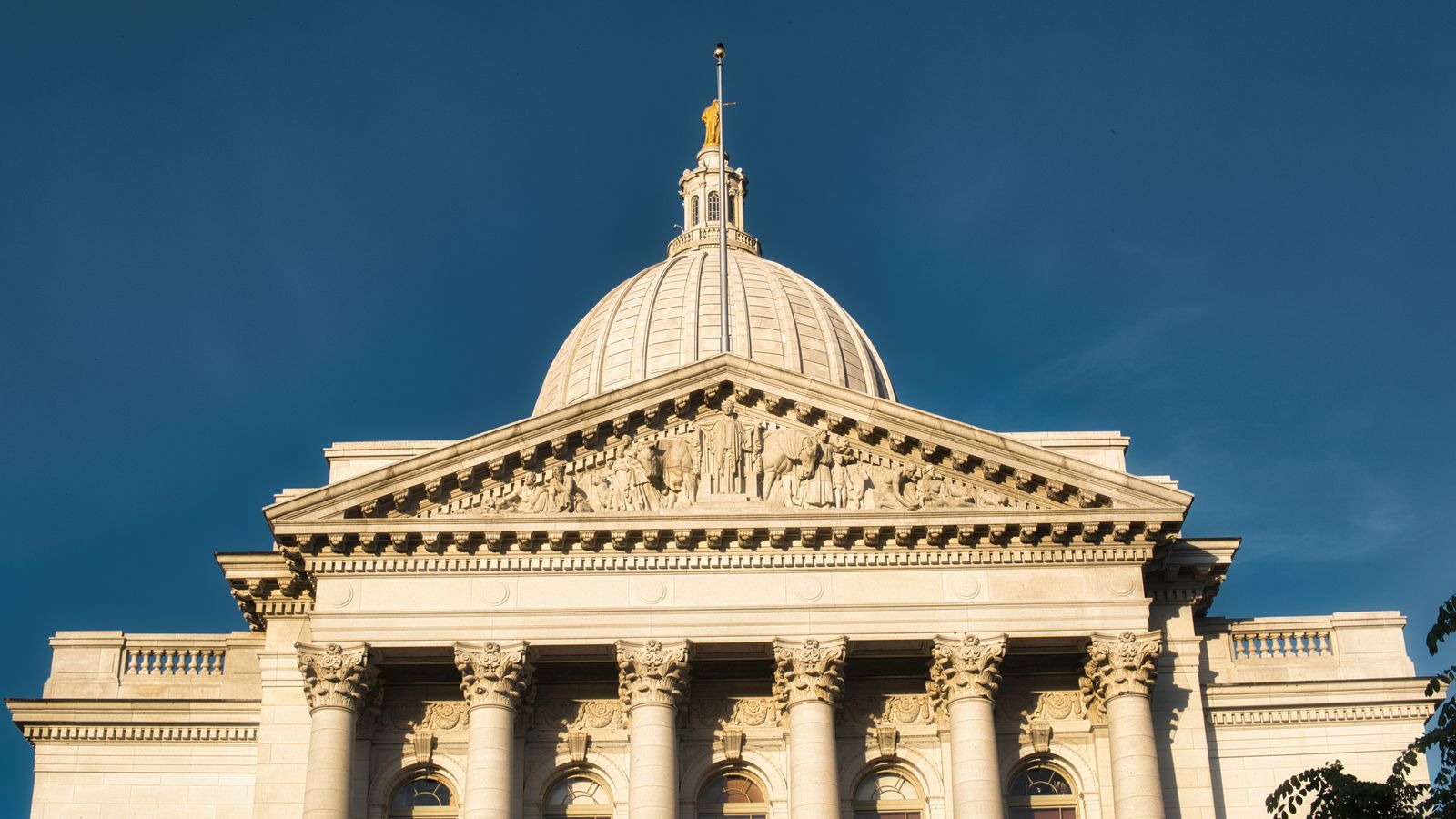
Stunning view of Wisconsin State Capitol building against a clear blue sky in Madison.
Both Nominees Back Legalization, With Limits
Democrat David Crowley and Republican Tom Tiffany both said marijuana should be legalized for some uses, according to Marijuana Moment's report on the gubernatorial debate.
The candidates were asked directly whether they support legalizing recreational marijuana. Their answers showed agreement on the principle and disagreement on scope and timing, according to the report.
Crowley is the Milwaukee County Executive. Tiffany represents Wisconsin's 7th Congressional District in the U.S. House. They face each other in the general election on Nov. 3, 2026, roughly 12 days after the report published.
The initial report doesn't lay out every detail of each nominee's position, and this story doesn't characterize them beyond what was reported. The distinction that matters is between full adult-use legalization and a narrower framework, such as medical access. That's where the campaigns diverge.
Why the Gap Between "Some Form" and Recreational Matters
Agreement that legalization should happen in some form sets a low bar, and the policy fight in Wisconsin will turn on the details.
"Legalization" can mean a medical-only program with a short list of qualifying conditions. It can also mean a full adult-use market with licensed retailers, a tax structure and expungement provisions. Different laws, different political costs.
For operators, the difference is enormous. A medical program might license a handful of vertically integrated businesses, while an adult-use market could open hundreds of licenses and pull in investment from multi-state operators (MSOs) already running in neighboring states.
Nothing has moved yet. Neither nominee has a bill on a desk, and a governor can't legalize alone.
The Legislature Has Been the Wall
Wisconsin's Republican-controlled Legislature has blocked cannabis reform for years, even as Democratic Gov. Tony Evers pushed for it.
Evers has repeatedly included legalization proposals in his budget requests. Republican lawmakers have removed those provisions each time. Evers said in July 2025 that he wouldn't seek a third term, which leaves the governor's office open this November.
Medical cannabis has had Republican sponsorship at the Capitol. Sen. Mary Felzkowski, a Republican, has led medical marijuana legislation in past sessions. Those bills haven't become law.
That history is why a Republican nominee endorsing legalization in some form is notable. A governor from either party who wants a bill signed still needs the Assembly and Senate to pass one. The sequence is plain: a governor sets priorities and writes a budget, then negotiates with legislative leaders who control the calendar.
The stakes beyond the governor's race are the legislative maps and majorities. Even with a willing governor, a bill needs committee hearings and floor votes that leadership has declined to schedule. Both nominees' comments suggest the posture of at least the top of the Republican ticket has changed, though the debate summary offers no evidence that legislative leaders have followed.
Regional Pressure and What Comes Next
Wisconsin is increasingly surrounded by legal markets, which gives either nominee an economic argument for acting.
Illinois, Michigan and Minnesota all allow adult-use sales. Wisconsin residents near those borders can already buy legally, and the tax revenue from those purchases goes to other states. That math is hard to argue with, and it's the argument reform backers will press on whichever nominee wins.
Wisconsin has no statewide medical program, and local approaches to possession penalties vary by municipality, including in Milwaukee and Madison. A new governor would inherit that patchwork, along with a decision about whether to pursue a medical-first bill, a full adult-use bill, or a phased approach.
For full background on this story, see the CannIntel topic hub on Wisconsin cannabis legalization.
The next signals: each campaign's written cannabis platform before Nov. 3, and which party controls the Wisconsin Legislature when the 2027 budget process begins.
Frequently asked questions
Who are the Wisconsin governor candidates discussing marijuana legalization?
Democrat David Crowley, the Milwaukee County Executive, and Republican Tom Tiffany, a U.S. House member from Wisconsin's 7th District. Both are their parties' nominees for governor, and both said at a debate they support legalizing marijuana for some uses, according to Marijuana Moment.
Do both candidates support recreational marijuana in Wisconsin?
Both support legalization in some form, according to Marijuana Moment's report. They disagree on how far the state should move and how fast. The initial report doesn't detail every position, so the scope of each nominee's support for adult-use sales is not fully established.
Is marijuana legal in Wisconsin right now?
No. Wisconsin has no legal adult-use market and no statewide medical cannabis program. Neighboring Illinois, Michigan and Minnesota allow adult-use sales. Past legalization proposals from Gov. Tony Evers were removed from budgets by the Republican-controlled Legislature.
When is the Wisconsin governor's election?
The general election is Nov. 3, 2026. Gov. Tony Evers said in July 2025 he wouldn't seek a third term, so the governor's office will be filled by either Crowley or Tiffany.
Sources
The cannabis newsletter you forward to your team.
Federal policy, market data, grower alerts, and the one story that matters today. Sent every weekday at 7am. Free.
No spam. Unsubscribe with one click. 21+ only.
Related from Laws

DEA Urges Judge to Wrap Up Marijuana Rescheduling Process
The DEA asked the judge overseeing marijuana rescheduling to finish the process and avoid side fights, Cannabis Business Times reported, as the Schedule III proposal nears its third year.

DEA Asks Judge to Reject Motion to Reopen Rescheduling Hearing
The agency wants the presiding judge to deny a bid for new testimony and discovery, a request that could add months to the Schedule III timeline.

Utica Firefighters Sue Over Medical Cannabis Suspensions in New York
Two Utica firefighters suspended after urine tests found cannabis metabolites are suing, putting New York's patient protections against public-safety drug testing.
More from the newsroom

Survey of 7,913 German Patients Finds Pharmacy Cannabis Preferred
A survey of 7,913 German medicinal cannabis patients, nearly 90% with experience of both channels, points to the illegal market as a major source of stress.
Virginia Sen. L. Louise Lucas indicted in marijuana business case
The Washington Post reported the indictment of Virginia's Senate president pro tempore, a figure in state cannabis debates. The charging details were not in the initial report.

Vireo Growth acquires Palatka cannabis facility for $21M
The multistate operator paid $21 million for a Palatka site, a hard-asset bet on Florida's medical market while Canada and Germany show the cost of overbuilding.