House Bill Directs HHS to Track Cannabis Testing in Hospital ERs
Legislation mandates federal study of marijuana, fentanyl, and other drug screening prevalence in emergency departments nationwide.
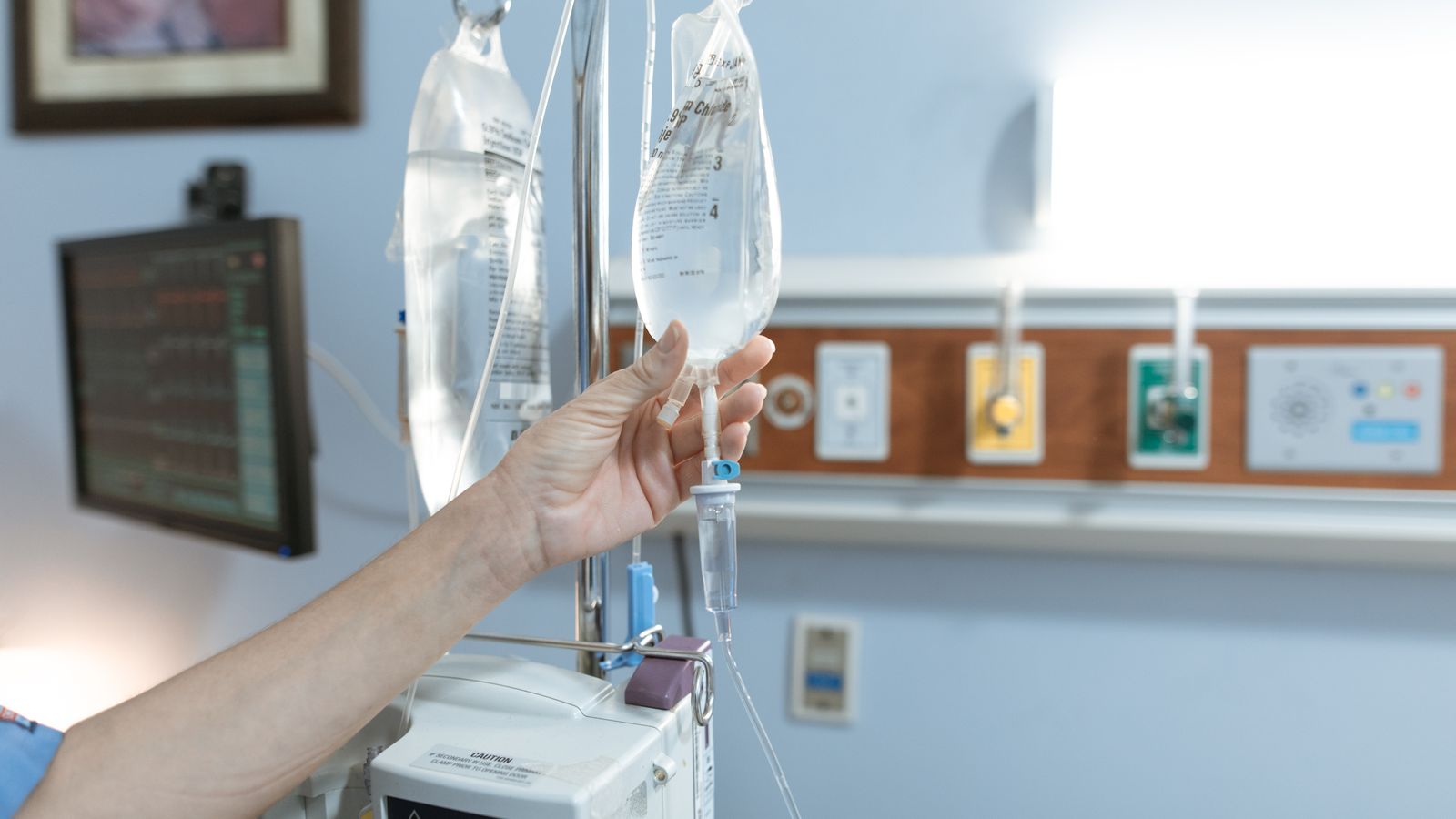
Close-up image of an IV drip and hand in a hospital room, illustrating medical care.
Bill Advances With Unanimous Committee Support
The legislation passed the House Energy and Commerce Committee 46-0, signaling broad bipartisan backing for federal tracking of emergency-department drug testing practices. The full House floor vote is scheduled for this week, though the exact date hasn't been finalized. If enacted, the bill would mandate HHS to collect and analyze data on drug-screening protocols used in hospital ERs across the country.
The measure doesn't impose new testing requirements on hospitals. It directs federal health officials to document existing practices — which vary widely by institution, state, and patient presentation.
Scope of the Mandated Study
HHS would be required to track testing prevalence for marijuana, fentanyl, and other controlled substances in emergency settings. The legislation doesn't specify whether the study would distinguish between delta-9 THC, total THC, or THCA — a gap that could complicate data interpretation given the rise of hemp-derived intoxicating cannabinoids.
Key data points the study would likely capture include:
- Frequency of toxicology screens ordered by emergency physicians
- Which substances are included in standard panels versus expanded testing
- Regional and demographic variations in testing practices
- Correlation between positive tests and patient outcomes or discharge diagnoses
HHS won't be asked to recommend policy changes. Just document current practice.
Why Emergency-Department Testing Matters
Emergency departments are a critical data source for substance-use trends, but testing protocols are inconsistent and often driven by insurance reimbursement rather than clinical necessity. Some hospitals screen every trauma patient. Others test only when intoxication is suspected or when a patient consents. The lack of standardized reporting makes it difficult to assess the public-health impact of cannabis use, particularly as legalization expands.
For cannabis specifically, a positive test in an ER setting doesn't establish impairment or causation. THC metabolites can remain detectable in urine for weeks after use, long after psychoactive effects have worn off. This creates ambiguity in cases where cannabis is cited in medical records but may not have contributed to the emergency presentation.
The legislation doesn't address how HHS should handle this interpretive challenge in its data collection.
Implications for Cannabis Policy and Research
The study could provide ammunition for both legalization advocates and opponents, depending on how the data is framed. Advocates may point to low rates of cannabis-only emergency visits as evidence of relative safety. Opponents may highlight any uptick in THC-positive cases as evidence of public-health risk, even if causation is unclear.
The bill arrives as federal agencies face mounting pressure to generate evidence on cannabis harms and benefits. DEA's pending rescheduling decision, HHS's ongoing review of cannabis's medical utility, and state-level debates over potency caps and hemp intoxicants all hinge on the quality of available data. Emergency-department testing records are one of the few real-time windows into population-level exposure.
For context on federal cannabis data-collection efforts, see the CannIntel topic hub on Federal Cannabis Drug Testing Policy.
Timeline and Next Steps
The House vote is expected this week, with passage likely given the 46-0 committee margin. If the bill clears the House, it would move to the Senate, where its prospects are less certain. The Senate hasn't yet said whether it'll take up the measure or attach it to a broader health-policy package.
If enacted, HHS would likely have 12 to 24 months to complete the study, based on typical timelines for similar reporting mandates. The agency would need to coordinate with the Centers for Disease Control and Prevention, the Substance Abuse and Mental Health Services Administration, and potentially the Drug Enforcement Administration to access hospital data and toxicology records.
Enforcement and Compliance Questions
The bill doesn't specify penalties for hospitals that decline to participate or fail to report data, leaving compliance largely voluntary. Federal health surveys often rely on self-reported data from a sample of institutions rather than mandatory universal reporting. If HHS follows that model, the study may capture trends but miss outliers or underreport testing in states with restrictive drug policies.
Another unresolved question: whether the study will distinguish between screening ordered for clinical reasons versus testing mandated by law enforcement or child-welfare agencies. In some jurisdictions, hospitals are required to report positive drug tests to state authorities, which can affect patient willingness to consent to testing. That dynamic could skew the data if not accounted for.
Enforcement will vary. This is a data-collection mandate, not a clinical-practice standard. Hospitals will likely interpret participation requirements differently depending on their existing relationships with federal health agencies.
We'll be watching the House floor vote this week and tracking whether Senate leadership signals interest in taking up the measure before the end of the session.
Sources
The cannabis newsletter you forward to your team.
Federal policy, market data, grower alerts, and the one story that matters today. Sent every weekday at 7am. Free.
No spam. Unsubscribe with one click. 21+ only.
Related from Laws

New York vows hemp THC beverage crackdown amid illegal retail surge
State officials acknowledge widespread unlicensed sales despite prohibition outside licensed cannabis channels.

Vermont Lt. Gov. Rodgers Settles Cannabis Grow Violation With Reduced Fine
John Rodgers will pay a lower penalty after state regulators found violations at his cultivation business.

Antigua & Barbuda's Cannabis Framework Marks Eight-Year Evolution
The Caribbean nation's regulatory structure has progressed from decriminalization in 2018 to a licensing regime targeting economic diversification.
More from the newsroom
First Medical Cannabis Dispensary Opens in North Alabama
Operators launch the region's inaugural medical cannabis retail location as Alabama's program expands northward.

Ohio identifies Vapen cartridge in health complaints, store closure
Vext names product after state investigation triggers dispensary shutdown and patient reports.

Teen Cannabis Surveys Miss Rising Use Disorder, Kaiser Study Finds
Self-reported adolescent consumption data diverge from clinical diagnoses, masking treatment gaps in legalized states.