Hawaii Police Department Recognizes Medical Marijuana Patients' Gun Rights
A Hawaii police department has reversed its longstanding policy barring medical cannabis patients from firearm permits, marking a rare local enforcement shift amid federal ambiguity.
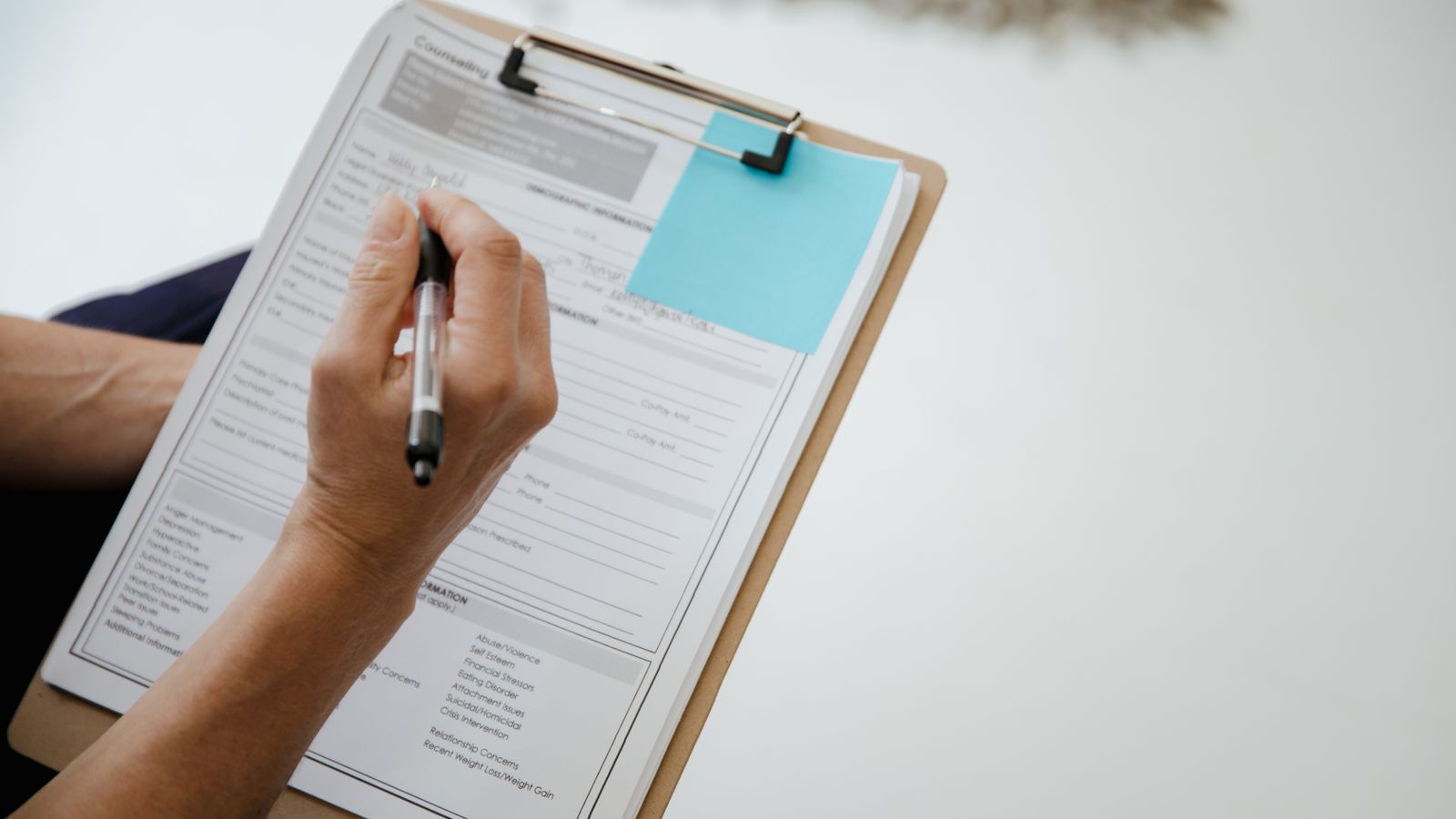
A person writes on a document using a clipboard indoors.
Policy Reversal Ends Automatic Disqualification
The unnamed Hawaii police department will no longer deny firearm permits solely on the basis of state medical marijuana registry enrollment. According to Marijuana Moment's July 9 report, the department had previously treated medical cannabis certification as disqualifying evidence of unlawful drug use under 18 U.S.C. § 922(g)(3), which bars gun possession by any "unlawful user" of a controlled substance.
The policy change affects an estimated 35,000 registered medical marijuana patients in Hawaii as of 2025. Patients previously faced a binary choice: surrender their state-issued cannabis card or forfeit their ability to apply for a firearm permit.
Federal Law Remains Unchanged
Cannabis remains a Schedule I controlled substance under the Controlled Substances Act, and federal firearms statutes haven't been amended to carve out state-legal medical use. ATF Form 4473, the mandatory background-check questionnaire for all gun purchases, still asks: "Are you an unlawful user of, or addicted to, marijuana?" The form explicitly states that marijuana use is illegal under federal law "regardless of whether it has been legalized or decriminized for medicinal or recreational purposes in the state where you reside."
The Hawaii department's new stance doesn't change federal law. It changes only local enforcement discretion. Patients who obtain permits under the new policy could still face federal prosecution if ATF or DOJ chose to pursue charges, though such prosecutions remain rare absent other criminal conduct.
Circuit Split on Medical Cannabis and Gun Rights
Federal appellate courts are divided on whether medical marijuana patients can be barred from gun ownership under the Second Amendment. In Wilson v. Lynch (9th Cir. 2016), the Ninth Circuit upheld the federal prohibition, ruling that Congress could rationally conclude that marijuana users pose a risk of irrational or unpredictable behavior. That precedent governs Hawaii, which sits in the Ninth Circuit.
But in United States v. Daniels (5th Cir. 2022) and subsequent cases, the Fifth Circuit has signaled skepticism of blanket bans on cannabis users post-Bruen, the Supreme Court's 2022 decision requiring gun restrictions to align with historical tradition. The Third Circuit in Range v. Attorney General (2023) similarly struck down a different firearms ban on historical-analogue grounds, though that case didn't involve cannabis.
The constitutional question is unsettled. Enforcement will vary by jurisdiction until the Supreme Court or Congress provides clarity.
Hawaii's Medical Marijuana Registry and Privacy
Hawaii operates a closed medical marijuana registry that law enforcement can access for permit-vetting purposes. The state's Department of Health maintains the registry under Hawaii Revised Statutes § 329-123, which requires patients to renew certification annually. Police departments have historically cross-referenced applicants against the registry to identify medical cannabis cardholders.
Under the new policy, registry enrollment alone won't trigger denial. It's unclear whether the department will still consider other evidence of cannabis use—such as failed drug tests or self-disclosure on ATF Form 4473—or whether it'll decline to investigate use altogether absent probable cause of a separate crime.
Implications for Other Jurisdictions
Hawaii's shift may embolden other local agencies to adopt similar policies, though most states defer to federal firearms law. Pennsylvania, Illinois, and Oklahoma have seen sporadic local-level debates over medical cannabis and gun permits. No statewide policy changes yet. In Pennsylvania, the state police continue to deny licenses to active medical marijuana cardholders, citing federal law.
The Hawaii department's decision is administratively significant but legally fragile. A change in federal enforcement priorities—or a single high-profile prosecution—could prompt reversal. The ATF hasn't issued updated guidance since its 2011 open letter reaffirming that state medical marijuana laws don't alter federal firearms prohibitions.
What Comes Next
Patients in Hawaii should consult firearms attorneys before applying for permits under the new policy. Lying on ATF Form 4473 is a federal felony, and answering "no" to the marijuana-use question while holding an active medical card could constitute perjury. Answering "yes" will trigger an automatic denial by the federally licensed dealer, regardless of local police department policy.
The next major test will be whether other Hawaii police departments follow suit—or whether the state attorney general issues formal guidance. For full background on this evolving area of law, see the CannIntel topic hub on medical marijuana and gun rights. Enforcement will remain inconsistent until federal courts or Congress resolve the underlying statutory conflict.
For complete background, history, and our ongoing coverage of this story:
Open the CannIntel topic hub →Frequently asked questions
Does this policy change make it legal for medical marijuana patients in Hawaii to own guns?
No. Federal law still prohibits marijuana users from possessing firearms under 18 U.S.C. § 922(g)(3). The Hawaii police department's policy affects only local permit issuance; it does not change federal law or eliminate the risk of federal prosecution.
Can I answer 'no' on ATF Form 4473 if I have a medical marijuana card?
Answering 'no' while holding an active medical marijuana card could constitute perjury, a federal felony. The form explicitly states that marijuana use remains illegal under federal law regardless of state medical programs. Consult a firearms attorney before completing the form.
Are other states likely to adopt similar policies?
Unlikely in the near term. Most state and local agencies defer to federal firearms law to avoid liability. Hawaii's shift is an outlier. Pennsylvania, Illinois, and other medical marijuana states continue to deny permits to cardholders based on federal law.
What is the legal basis for the federal marijuana-gun ban?
18 U.S.C. § 922(g)(3) prohibits gun possession by any 'unlawful user of or addicted to any controlled substance.' Cannabis remains Schedule I under the Controlled Substances Act, making any use—including state-legal medical use—unlawful under federal law.
Has the Supreme Court ruled on medical marijuana and gun rights?
Not yet. The Ninth Circuit upheld the ban in Wilson v. Lynch (2016), but post-Bruen (2022) challenges are pending in multiple circuits. The issue may reach the Supreme Court within the next two years if the circuit split deepens.
Sources
The cannabis newsletter you forward to your team.
Federal policy, market data, grower alerts, and the one story that matters today. Sent every weekday at 7am. Free.
No spam. Unsubscribe with one click. 21+ only.
Related from Laws
Rhode Island blocks local opt-outs for marijuana retail in 2027
State law will prohibit municipalities from banning licensed cannabis shops starting January 1, 2027.

Thailand's Anutin Faces Criticism Over Cannabis Policy Failures
Deputy PM under fire as recreational use remains unregulated two years after decriminalization
Osseo Residents Oppose Property Tax Funding for Proposed Dispensary
Local taxpayers push back on city plan to use public funds for cannabis retail infrastructure in suburban Minneapolis.
More from the newsroom

California Seizes $104 Million in Illegal Cannabis in Multi-County Bust
Coordinated enforcement across multiple California counties nets over $104 million in illicit product in one of the state's largest-ever cannabis seizures.

Eight Companies Apply for Industrial Cannabis Licenses in Ghana
Ghana's Narcotics Control Commission reviews cultivation applications as West African nation advances regulated hemp program.

Southern California Targets Illegal Cannabis in New Enforcement Push
Law enforcement agencies launch coordinated crackdown on unlicensed cultivation and distribution across multiple SoCal counties.