Goodwin Sets Mellow Tone on Texas THC Legalization at First Presser
Lt. Gov.-elect Goodwin's measured stance on THC legalization lands in the office that controls the Texas Senate's hemp and cannabis agenda.

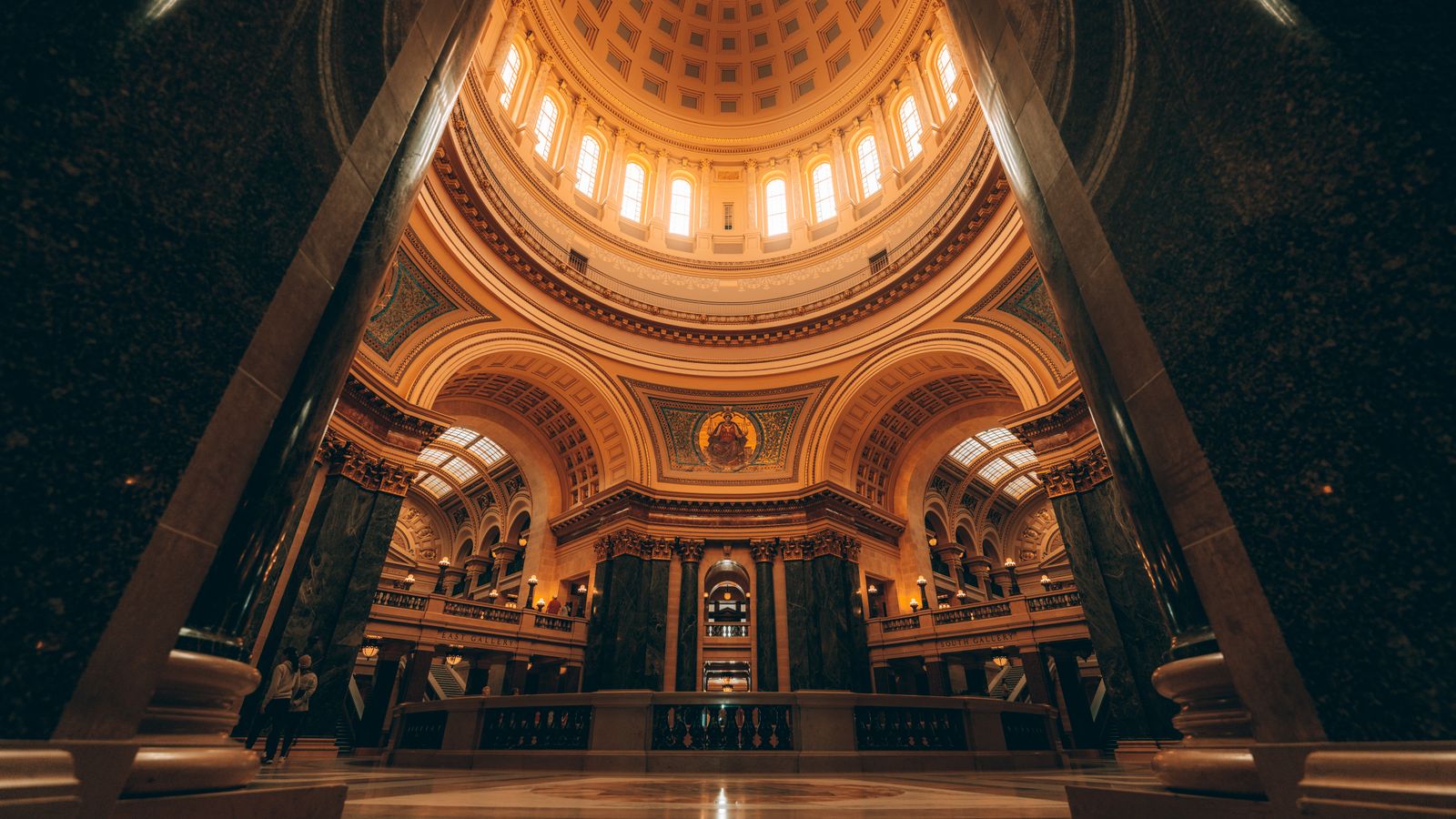
Intricate interior view of the Texas State Capitol dome in Austin, TX.
What the San Antonio Current reported, and what it didn't
The San Antonio Current reported Nov. 10 that Goodwin took a mellow approach to THC legalization during a first press conference as lieutenant governor-elect.
That's the full extent of what the published signal confirms. The headline characterizes the tone. It doesn't supply a transcript, a bill number, a timeline or a policy commitment, and CannIntel won't invent one.
Here's what's established:
- Who: Goodwin, identified by the Current as Lt. Gov.-elect.
- What: a measured, non-confrontational posture on THC legalization.
- When: reported Nov. 10, 2026.
- Where: a first press conference since the election.
Not established: whether Goodwin endorsed adult-use legalization, backed regulation of hemp-derived THC, or only declined to rule anything out. Those are different positions with very different consequences. We'll update when the full remarks are available.
Why the lieutenant governor's chair is the chokepoint
In Texas, the lieutenant governor presides over the Senate, so the occupant's tone on THC sets the odds for every hemp and cannabis bill that needs a Senate vote.
The office appoints Senate committee chairs and controls the flow of legislation to the floor. A hostile occupant can bottle up a bill indefinitely. A neutral one changes the math.
That's why a single press-conference posture matters more than it would from a rank-and-file member. The Texas Legislature is scheduled to convene in January 2027, and the pre-session signaling period is when operators, lobbyists and regulators read the room.
A mellow tone isn't policy. It is, though, a reason for hemp retailers and processors to stop assuming the worst-case Senate.
For full background on how we got here, see the CannIntel topic hub on Texas THC regulation.
The chemistry that decides who wins or loses in any Texas bill
Any Texas THC measure will turn on whether it regulates delta-9 THC alone or total THC, because that single definitional choice determines whether THCA flower and many hemp-derived products stay legal.
The federal 2018 Farm Bill defines hemp as cannabis with no more than 0.3% delta-9 THC by dry weight. Texas adopted that framework for its own hemp program. The text says delta-9, not total THC.
That wording created the loophole. Raw hemp flower is rich in THCA, the non-intoxicating acid precursor. Heat triggers decarboxylation, which strips a carboxyl group and converts THCA into psychoactive delta-9 THC. Smoke it or vape it and you get the intoxicating compound, even though the plant tested compliant.
The conversion isn't one-to-one. Because the carboxyl group has mass, THCA yields roughly 0.877 grams of THC per gram of THCA at theoretical maximum. Real-world conversion in a pipe or joint runs lower, and that gap is a live argument in every lab-testing dispute.
Total-THC rules close the gap by counting THCA, typically as delta-9 plus 0.877 times THCA. Under that standard, much smokable hemp flower fails outright.
Then there's isomerization. Processors can convert CBD into delta-8 THC and related isomers through acid-catalyzed reactions. Those products often sit under the delta-9 limit on paper. Whether a regulator treats them as hemp, intoxicants or something else is a policy call, not a chemistry one.
What operators should watch before January
The signal to track isn't Goodwin's tone but whether committee assignments and early bill filings define THC by delta-9 or by total THC.
Operators should watch for:
- Committee chair appointments for the Senate panels that handle agriculture, health and state affairs.
- Bill language on the THC measurement standard: delta-9 only, total THC, or a per-serving cap.
- Age and retail rules, since licensing and age gates can pass even when bans stall.
- Enforcement guidance from state agencies, which can diverge from statute text.
Here's the uncomfortable read. A softer tone from the presiding officer doesn't mean an easier regulatory outcome. It may mean regulation replaces prohibition, and regulation with a total-THC test is bad news for THCA flower sellers even if retail doors stay open.
Investors and multi-state operators eyeing Texas should model both paths. One is legal, taxed and tested. The other is the status quo with a patchwork of local enforcement and lab shopping.
It's unsettled. Until bill text exists, expect enforcement to vary by county, by lab and by how an individual prosecutor reads a certificate of analysis. The next signal: the first Senate bill filings of the 2027 session, and which THC definition they pick.
For complete background, history, and our ongoing coverage of this story:
Open the CannIntel topic hub →Sources
The cannabis newsletter you forward to your team.
Federal policy, market data, grower alerts, and the one story that matters today. Sent every weekday at 7am. Free.
No spam. Unsubscribe with one click. 21+ only.
Related from Laws

Illinois Hemp Ban Delay Covers Only Some Businesses, Sun-Times Reports
The Chicago Sun-Times reported that Illinois's hemp ban is postponed for a subset of businesses, as the federal hemp redefinition reaches its Nov. 12 effective date.

HHR Journal Piece Puts 1961 UN Drug Treaty Back Under Fire
A new HHR Journal headline calls the Single Convention a 'nightmare,' reviving the treaty fight that shapes hemp, THCA and total-THC rules.

NC House Democrat says party eyes marijuana bill in 2027
A top House Democrat told the News & Observer the caucus is eyeing marijuana legislation next year, two days before the federal hemp redefinition takes effect.
More from the newsroom

Nebraska Officials Clarify No Timeline Set for Cannabis Testing
Nebraska medical cannabis regulators said no schedule exists for product testing, leaving the timing of compliant patient access an open question.

Newsweek Map Puts Pennsylvania Adult-Use Push in Spotlight
A Nov. 10 Newsweek map frames Pennsylvania as a state eyeing adult-use legalization, but the underlying legislative record needs checking.
WTMJ Asks if Wisconsin Hemp Rescue Opens Door to Marijuana
A Milwaukee station frames hemp's survival as a possible opening for legalization, but Wisconsin's legal baseline and legislative math haven't moved.