First Phase of Federal Hemp Product Ban Takes Effect
The first phase of a renewed federal ban on intoxicating hemp products is now in force, and industry groups are lobbying Congress for a regulatory alternative.
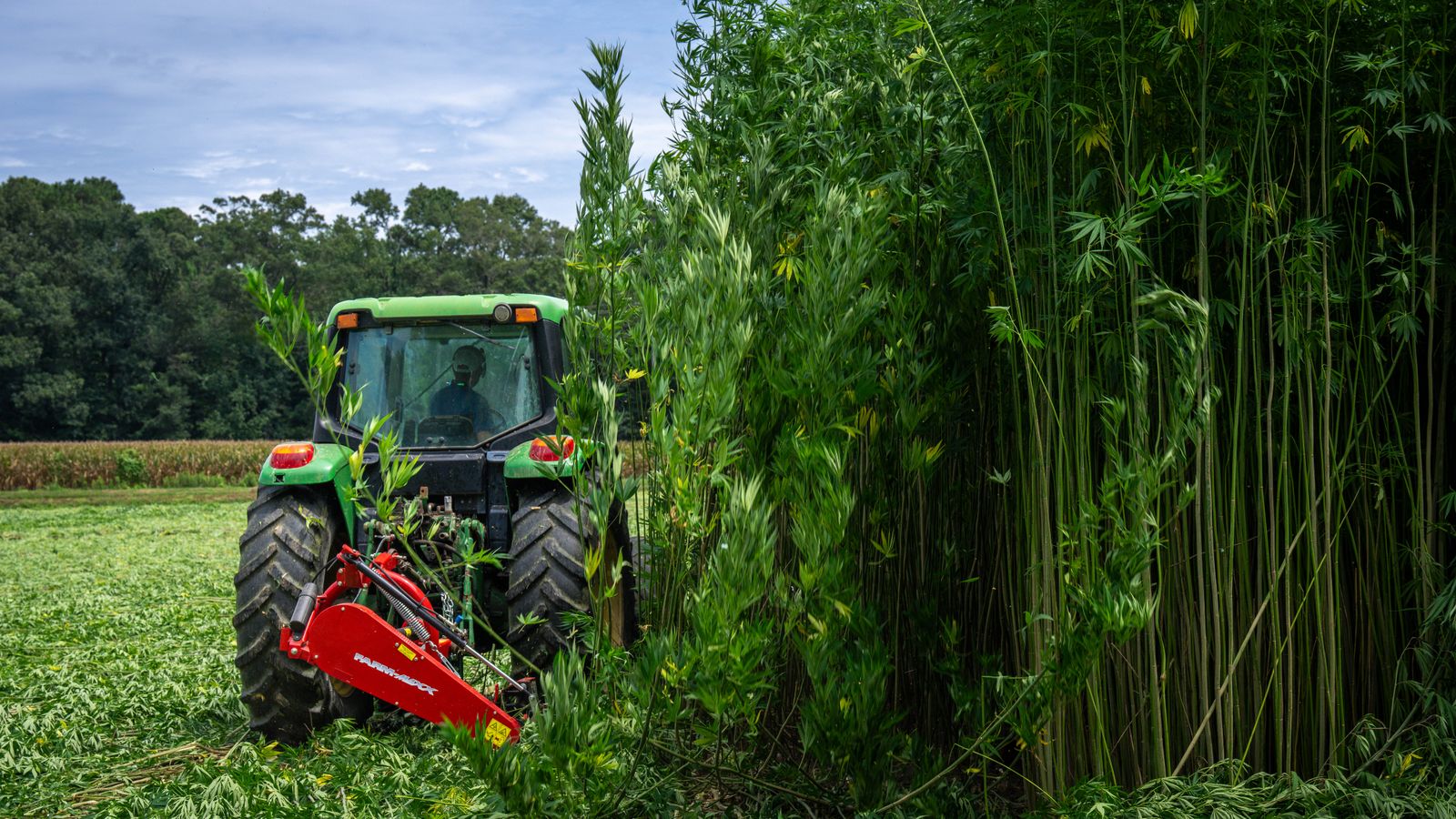
A tractor efficiently harvesting a lush field of tall industrial hemp plants under a clear sky.
The first phase of the federal ban is now in effect
A renewed federal prohibition on intoxicating hemp products has entered its first phase, according to Marijuana Moment's reporting on November 12, 2026.
What CannIntel has to work with is the Marijuana Moment headline and its summary line. Two facts come through: an initial phase of the ban has taken effect, and industry groups are pushing Congress for a regulatory alternative. The provisions themselves aren't spelled out, so this report sticks to what the record supports and flags what remains unsettled.
That distinction matters. A phased ban isn't a single on/off switch. Operators have to know which product categories are caught in phase one, which are deferred, and who enforces each piece. Those details weren't in the source material reviewed for this story.
Why the delta-9 versus total THC fight sits at the center
The core dispute is whether federal law measures hemp by delta-9 THC alone or by total THC, and that definition decides whether THCA flower stays legal.
The 2018 Farm Bill defined hemp as cannabis with no more than 0.3 percent delta-9 THC on a dry-weight basis. It said nothing explicit about THCA, the acidic precursor that converts to delta-9 THC when heated. Retailers read that gap literally. THCA flower tested low in delta-9 on paper, then delivered intoxicating levels once smoked.
The chemistry isn't exotic. Decarboxylation strips the carboxyl group from THCA and yields delta-9 THC. A total-THC standard accounts for that conversion, typically by adding delta-9 THC to THCA multiplied by roughly 0.877 to reflect the mass lost in the reaction. Under a delta-9-only test, the same flower can pass. Under a total-THC test, it can fail by a wide margin.
Isomerization is the other pressure point. Delta-8 THC and similar compounds are commonly produced by converting CBD in a lab, which is why regulators have argued they fall outside the spirit of the hemp definition even when the starting material was legal.
What industry is asking Congress to do
Industry groups are lobbying for a regulatory framework that would replace an outright ban with rules on testing, labeling and age limits.
The headline frames the push as a pursuit of a regulatory alternative. In practice, the hemp sector has favored a structure resembling state adult-use markets: age verification, potency caps per serving, child-resistant packaging, and mandatory third-party testing. Those levers would let a product stay legal while answering the safety concerns driving the ban.
Not every operator wants the same deal. Large beverage and edible brands often prefer a defined, capped market because it protects shelf space, while small THCA flower sellers tend to resist caps that would make their core product unviable. That split weakens a unified lobbying message.
For full background on how the loophole developed and where each fight stands, see the CannIntel topic hub on the federal hemp loophole.
Who gets hurt first
Retailers, extractors and brands with inventory in intoxicating hemp categories face the most immediate exposure.
Products built on hemp-derived THC, including THCA flower, delta-8 THC, delta-10 THC and THC-infused beverages, are the ones most likely to be swept into a prohibition on intoxicating hemp. Operators carrying finished goods face a basic question: sell through, reformulate or write it off.
Farmers are a second pressure point. Growers who planted for the high-THCA smokable market lose their highest-margin outlet if flower is caught. Those growing for fiber, grain or low-THC CBD sit in a different position, and that gap is part of why the lobbying coalition isn't monolithic.
The cost lands unevenly. A multistate MSO with a licensed cannabis arm can absorb a hemp-side hit. A single-location smoke shop whose revenue leans on THCA flower likely can't. That math is brutal.
The state-versus-federal enforcement problem
Federal prohibition does not automatically translate into uniform enforcement, and state regulators have already taken divergent paths on hemp THC.
States including California have restricted or banned hemp-derived intoxicants through their own agencies, while others have let the market run. A federal phase-in layers onto that patchwork. Whether federal agencies prioritize manufacturers, distributors or retailers will shape real-world risk far more than the statutory text alone.
Expect enforcement to vary. That's been the pattern with every hemp-related federal action since 2018, and nothing in the signal suggests a break from it. A retailer in a state with an active attorney general will face a different risk profile than one in a state that treats hemp THC as a low priority.
Compliance counsel have a practical problem too. Without clear guidance on which phase covers which product, many operators are choosing between voluntary pullback and calculated risk.
What is still unsettled
Key details, including phase timing, enforcement authority and the shape of any congressional alternative, were not confirmed in the source material.
CannIntel didn't have access to the full text of Marijuana Moment's report beyond its headline and summary. It hasn't independently verified the statutory language, effective dates for later phases, or the identity of lawmakers sponsoring any alternative. Those gaps are real, and readers should treat operational decisions accordingly.
Industry's bet is that Congress prefers regulating a market that already exists over banning one that employs thousands of farmers and retailers. That bet isn't guaranteed to pay off. Legislative calendars are crowded, and hemp reform has stalled before.
The next signal is whether a regulatory bill gains a committee hearing before the later phases of the ban begin to bite. Until then, it's unsettled, and operators should plan for inconsistent enforcement rather than a clean line.
For complete background, history, and our ongoing coverage of this story:
Open the CannIntel topic hub →Sources
The cannabis newsletter you forward to your team.
Federal policy, market data, grower alerts, and the one story that matters today. Sent every weekday at 7am. Free.
No spam. Unsubscribe with one click. 21+ only.
Related from Laws

Missouri Law Tightening Marijuana, Hemp Rules Takes Effect
A new Missouri statute reshaping the state's marijuana and hemp regulatory framework is now in force, though the signal supplies few operational specifics.

IOL: Positive dagga test doesn't prove impairment at work
A South African workplace-testing report says a positive cannabis result shows past use, not on-the-job impairment, a gap that matters for employers acting on it.

NC House Democrat Reives Says Medical Cannabis Bill Likely in 2027
House Minority Leader Robert Reives, running for speaker with Democratic backing, signaled a new Democratic majority would likely take up medical cannabis legalization next year.
More from the newsroom

Joe Rogan Blames Texas GOP's Hemp THC Ban for Midterm Losses
The Austin-based podcaster said Republicans 'fucked up' by pushing to ban hemp-derived THC products, tying a culture-war fight to last week's election results.

Attorney Casey Leaver to Detail Cannabis Packaging Pitfalls at MJBizCon
A single label rarely satisfies every jurisdiction, and attorney Casey Leaver plans to walk operators through the compliance mistakes exposing them and retailers to risk.

Georgia Marine veteran credits medical cannabis for return to skateboarding
A CBS News profile puts a face on Georgia's narrow low-THC program, where veterans can qualify for oil but still lack a legal in-state retail supply chain.