Utah's Medical Cannabis Program Offers Blueprint for Conservative Rollout
Stakeholders cite Utah's restrictive framework as a model for states seeking tight regulatory control over patient access.
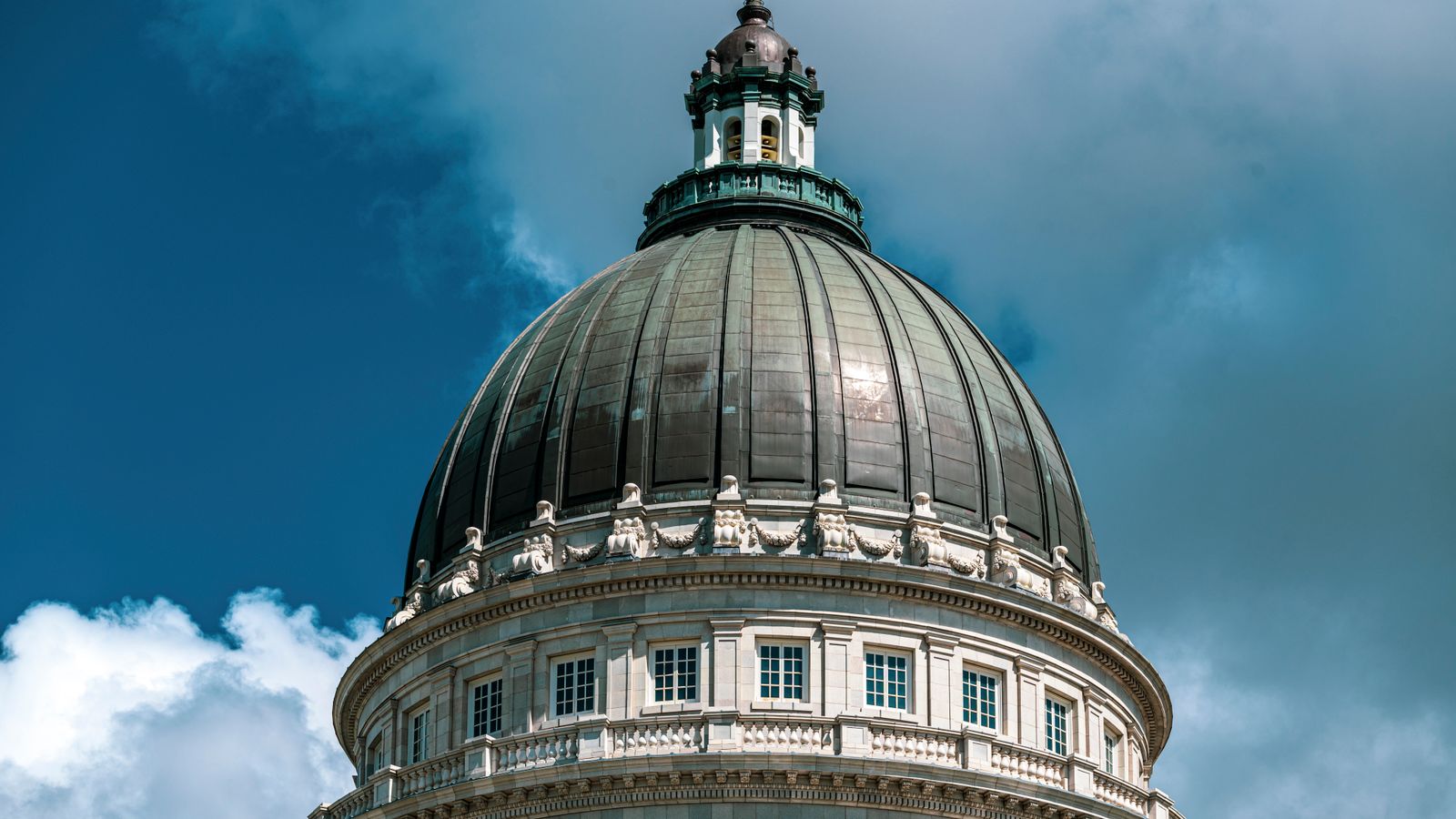
Close-up of the Utah State Capitol dome against a striking sky in Salt Lake City.
Restrictive Qualifying Conditions and Dispensary Limits Shape Access
Utah's medical cannabis framework limits qualifying conditions to 15 serious illnesses and caps the number of licensed pharmacies at 14 statewide. The program doesn't permit home cultivation. Patients must obtain a recommendation from a qualified medical provider enrolled in the state's electronic verification system. As of September 2026, approximately 38,000 active cardholders are enrolled in the program, according to the Utah Department of Health and Human Services.
Smokable flower is banned. Patients can access capsules, tinctures, topicals, gelatinous cubes, and vaporizable concentrates. THC content is capped at 20 percent for flower-derived products and 70 percent for concentrates. Edibles, gummies, and any product resembling candy are banned outright. A monthly purchase limit of 113 grams of unprocessed cannabis or the equivalent in other forms also applies.
State officials designed these restrictions to prevent diversion and maintain a clear separation between medical and recreational use. This approach has allowed Utah to provide therapeutic access while avoiding the commercialization and youth-marketing concerns that have emerged in adult-use states like Colorado and California, the Deseret News opinion piece argues.
Political Viability in Conservative States Drives Interest
Conservative lawmakers in states including Tennessee, Kentucky, and South Carolina have cited Utah's model as politically palatable in jurisdictions where full legalization remains a non-starter. The framework's emphasis on physician oversight, product restrictions, and limited dispensary networks aligns with voter preferences in states where medical cannabis ballot measures have passed narrowly or where legislative action is contingent on strict guardrails.
Utah voters approved Proposition 2 in November 2018 with 53 percent support. The legislature then replaced the ballot measure with a compromise bill that tightened qualifying conditions, eliminated home grow, and established a state-controlled distribution system. The revised program took effect in March 2020. Advocates criticized the legislative override at the time, but the program has since expanded incrementally without triggering significant political backlash.
The political durability of Utah's framework is a key selling point for legislators in other conservative states. Tennessee's medical cannabis bill, which stalled in committee in 2025, borrowed heavily from Utah's qualifying-condition list and dispensary-cap structure. Kentucky's 2023 medical cannabis law, scheduled to launch in 2025, similarly restricts product forms and bans home cultivation.
Operational Challenges and Patient Complaints Persist
Patient advocates and industry operators report that Utah's restrictive framework creates access barriers, particularly for rural residents and patients seeking higher-potency products. Fourteen licensed pharmacies are concentrated in the Wasatch Front corridor, leaving patients in southern and eastern Utah with limited options. Delivery services are permitted but not widely available. Many patients face round-trip drives exceeding 200 miles to reach the nearest dispensary.
Product pricing is another friction point. Utah's ban on vertical integration and its requirement that all cannabis be tested at state-certified labs have driven wholesale and retail prices above national averages. A gram of cannabis flower equivalent in Utah costs approximately $18 to $22, compared to $10 to $15 in neighboring Colorado. Patients have complained that the limited product menu and high costs push them toward gray-market alternatives or out-of-state purchases.
Slow expansion has also frustrated industry operators. The state has issued only eight cultivation licenses, and the application process for new pharmacy licenses has been suspended since 2022. The Utah Department of Agriculture and Food, which oversees cultivation and processing, hasn't announced a timeline for additional licensing rounds. This bottleneck has kept supply tight and prevented price competition from emerging.
The Deseret News opinion piece acknowledges these challenges but frames them as acceptable trade-offs for maintaining program integrity and preventing the kind of regulatory capture that's occurred in states with looser licensing regimes. Whether that calculus holds up as patient enrollment grows and neighboring states continue to liberalize their cannabis laws remains an open question. Enforcement consistency across state lines is another variable—Utah's model works in isolation, but patients near the Nevada or Colorado border face a very different set of incentives and access options.
Sources
The cannabis newsletter you forward to your team.
Federal policy, market data, grower alerts, and the one story that matters today. Sent every weekday at 7am. Free.
No spam. Unsubscribe with one click. 21+ only.
Related from Laws

Houston Voters to Decide Marijuana Deprioritization Ballot Measure
Proposition on November ballot would make misdemeanor possession HPD's lowest enforcement priority.
GOP senators tie hemp THC 'loophole' to Chinese criminal networks
Four Republican senators signal no reprieve for hemp cannabinoid ban, citing alleged Chinese involvement in intoxicating-hemp supply chain.
GOP Senators Demand DOJ Probe Chinese Role in U.S. Hemp, Cannabis Markets
Republican lawmakers call for federal investigation into alleged Chinese involvement in domestic cannabis and hemp supply chains.
More from the newsroom

Verano Preps Entry Into Major New Market Amid MSO Expansion Push
The Chicago-based MSO is readying infrastructure and capital for a significant geographic expansion as adult-use markets continue opening.

California Pesticide Testing Rules Push Clean-Cannabis Compliance Costs
State's pesticide screening mandate adds $400-$800 per batch, forcing cultivators to choose between clean inputs and margin survival.

Arizona, Missouri, Kentucky Show Three Stages of Cannabis Market Maturity
Myles Mayfield maps recurring pressures that shift operator priorities as markets evolve from scarcity to competition.