Six States Tighten Hemp Rules as Intoxicating-Cannabinoid Crackdown Widens
Delaware, Illinois, Nebraska, New Jersey, Pennsylvania, and Virginia moved this week to restrict or ban intoxicating hemp products.
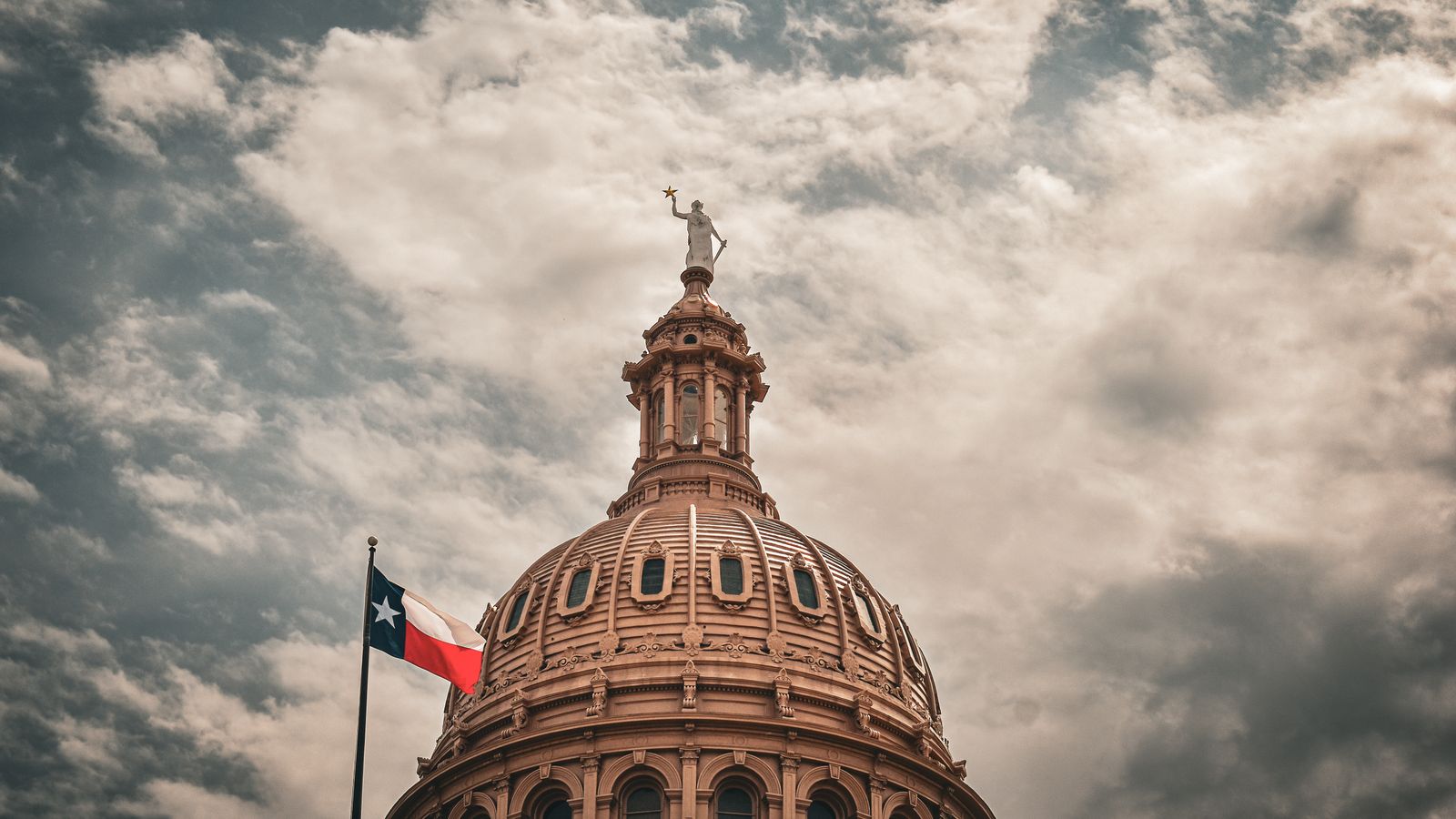
The dome of the Texas State Capitol with a Texas flag under a cloudy sky.
Delaware and Illinois Move to Ban Intoxicating Hemp Products
Delaware and Illinois both advanced legislation this week that would prohibit the sale of intoxicating hemp-derived cannabinoids, including delta-8 THC and THCA flower. Delaware's measure passed the Senate and awaits a House vote. Illinois lawmakers moved a companion bill through committee. Both states cite consumer-safety concerns and the lack of testing requirements for hemp-derived intoxicants sold in gas stations and smoke shops.
The Delaware bill defines "intoxicating hemp product" to include any hemp derivative with more than 0.3% total THC or any psychoactive cannabinoid marketed for ingestion or inhalation. Illinois's version mirrors that language and adds a civil-penalty structure for retailers: fines start at $1,000 per violation and escalate to $10,000 for repeat offenders within 12 months.
Both measures carve out exemptions for state-licensed cannabis dispensaries, effectively funneling intoxicating-cannabinoid sales into the regulated adult-use channel. Illinois collected $445 million in cannabis tax revenue in fiscal 2025, and the state argues unregulated hemp products erode that tax base while sidestepping potency caps and pesticide testing.
Nebraska, New Jersey, and Philadelphia Finalize Enforcement Rules
Nebraska, New Jersey, and Philadelphia each finalized administrative rules this week that restrict or ban the sale of intoxicating hemp cannabinoids under existing statutory authority. Nebraska's Department of Agriculture published an emergency rule prohibiting the sale of any hemp product with detectable delta-8 THC, delta-10 THC, or THCA, effective June 1. It applies to all retail channels, including convenience stores, vape shops, and online sellers shipping into the state.
New Jersey's Cannabis Regulatory Commission issued guidance clarifying that THCA flower and delta-8 vapes fall outside the Farm Bill's "hemp" definition if they exceed 0.3% total THC on a dry-weight basis. The guidance doesn't carry the force of law but signals enforcement priority: the CRC will refer cases to local prosecutors. Philadelphia's Department of Public Health went further, amending its food-code regulations to classify intoxicating hemp edibles as "adulterated food" subject to immediate seizure and a $2,000-per-day civil penalty.
Administrative action is faster than legislation but legally shakier. Nebraska's emergency rule expires in 120 days unless the legislature ratifies it, and New Jersey's guidance has already drawn a legal challenge from the Hemp Industry Association, which argues the CRC is redefining "hemp" in violation of the Farm Bill's federal preemption clause. For more context on state-federal conflicts over hemp regulation, see the CannIntel topic hub on state hemp policy.
Virginia Expands Its Hemp Ban to Cover THCA Flower
Virginia amended its existing intoxicating-hemp ban this week to explicitly include THCA flower, closing a loophole retailers had exploited since the state's original delta-8 ban took effect in July 2023. The amendment, signed by the governor on May 26, defines THCA as an "intoxicating cannabinoid" and subjects it to the same criminal penalties as delta-8 THC: a Class 1 misdemeanor for possession with intent to distribute, carrying up to 12 months in jail and a $2,500 fine.
Virginia's original statute banned "any tetrahydrocannabinol" derived from hemp but didn't list THCA by name. Retailers argued THCA is a precursor, not THC itself, and continued selling THCA flower as a legal hemp product. The amendment eliminates that argument and directs the Virginia Department of Agriculture and Consumer Services to publish a list of prohibited cannabinoids by July 1, giving the agency ongoing authority to ban new synthetic or semi-synthetic intoxicants without returning to the legislature.
Virginia's model is the most aggressive. It criminalizes possession, not just sale. Enforcement falls to local police rather than agricultural inspectors, a sharp departure from Nebraska's civil-penalty approach and New Jersey's prosecutorial discretion. The divergence matters for interstate commerce: a retailer shipping THCA flower from Oregon to a Virginia customer now faces felony mail-fraud exposure under the federal wire-fraud statute if the product is deemed illegal under Virginia law.
Sources
The cannabis newsletter you forward to your team.
Federal policy, market data, grower alerts, and the one story that matters today. Sent every weekday at 7am. Free.
No spam. Unsubscribe with one click. 21+ only.
Related from Laws
Louisiana Joins Multi-State Lawsuit to Block DEA Marijuana Rescheduling
Attorney General Liz Murrill adds Louisiana to coalition challenging federal reclassification from Schedule I to Schedule III.

Curaleaf Loses Challenge to New Jersey Labor-Peace Mandate
Federal court upholds state requirement forcing cannabis operators to sign neutrality pacts with unions.

Bloom Cannabis Cites Ohio Hemp Ban as Validation for Licensed Market
Ohio MSO says state's intoxicating-hemp prohibition underscores regulatory advantage of adult-use dispensaries.
More from the newsroom

ATF Revises Form 4473, Restoring Gun Rights For Medical Cannabis Patients
Federal firearms form no longer treats medical marijuana users as unlawful drug users, reversing decades of Second Amendment restrictions.

Cannabis Rescheduling Does Not Lift Federal Firearm Purchase Ban
DEA's move to Schedule III leaves 18 USC §922(g)(3) intact, barring unlawful users from gun ownership.

Massachusetts Cannabis Control Commission Holds First Meeting Under New Board
Newly appointed commissioners convened Thursday to begin oversight of the state's $1.6 billion adult-use market.