Child Poisoning Cases Mount as New York's Cannabis Rollout Faces Scrutiny
Critics cite pediatric exposures and enforcement gaps as evidence of regulatory failures in the state's 2021 legalization framework.
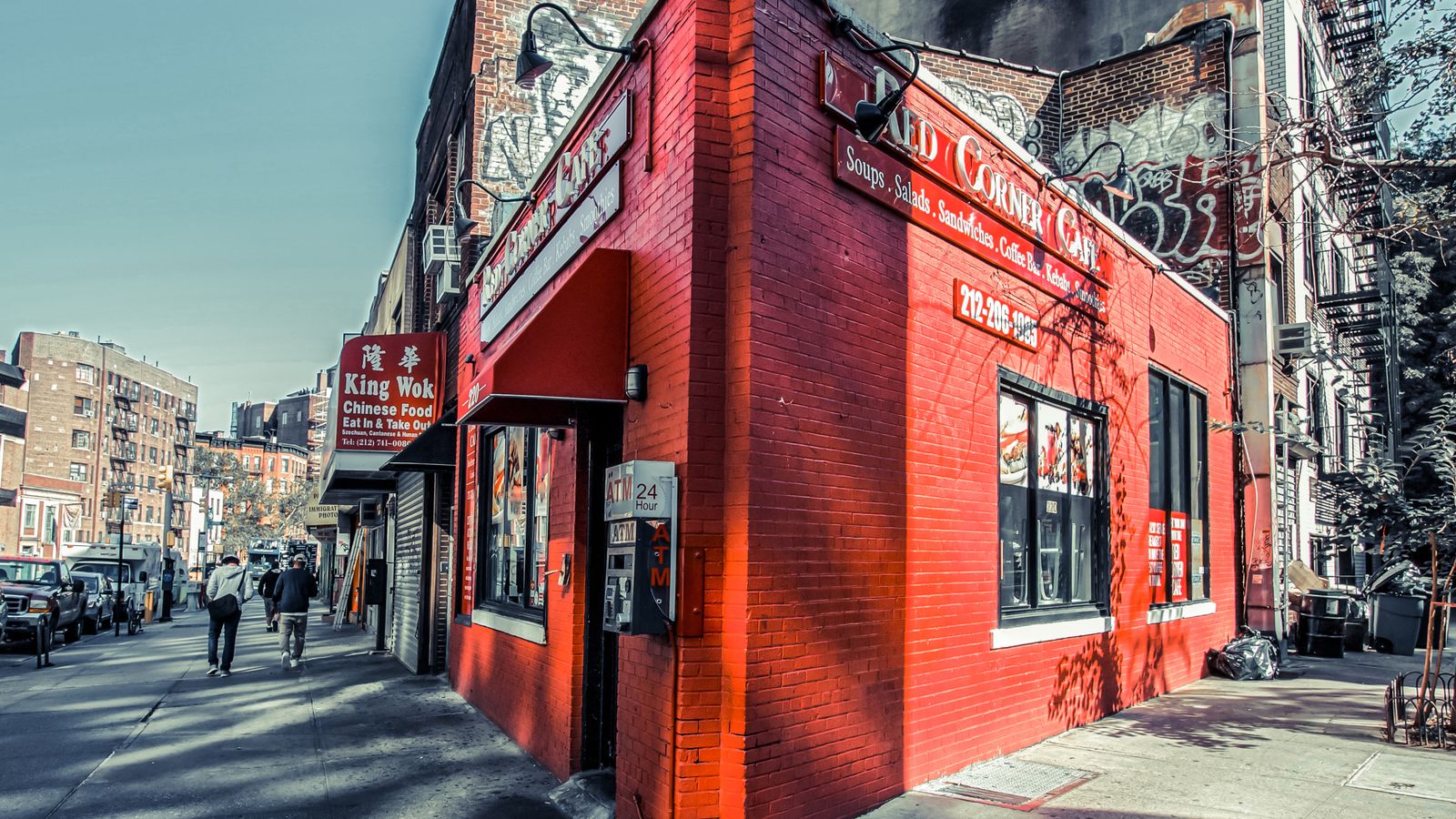
Vibrant red corner cafe in bustling New York City, capturing urban life.
Pediatric Exposure Data Drives Policy Debate
Poison-control centers across New York reported a measurable uptick in pediatric cannabis exposures since adult-use sales commenced in December 2022, according to state health department data. The New York State Department of Health hasn't released aggregated statistics for 2025 or 2026. But regional poison-control centers in Albany, Syracuse, and New York City each logged double-digit increases in calls involving children under age 5 who ingested edible cannabis products between January 2023 and June 2026.
On a strict reading of the MRTA's packaging requirements—codified at Cannabis Law §68—all edible products must be individually wrapped in child-resistant, opaque packaging and labeled with a universal THC symbol. Unlicensed retailers operating outside the OCM's regulatory perimeter don't comply with these mandates, creating a bifurcated market in which compliant operators face higher packaging costs while illicit sellers distribute products in non-compliant formats.
The enforcement gap is acute. As of July 2026, the OCM has issued fewer than 200 adult-use retail licenses statewide. Estimates of unlicensed storefronts in New York City alone range from 1,500 to 2,000.
Enforcement Authority and Resource Constraints
The OCM's enforcement division operates with a staff of approximately 40 inspectors tasked with monitoring both licensed and unlicensed activity across a state of 20 million residents. By comparison, California's Department of Cannabis Control employed more than 200 enforcement personnel at a similar stage in its rollout.
New York's enforcement toolkit includes civil penalties up to $10,000 per violation and criminal referrals to local district attorneys, but the MRTA doesn't grant the OCM direct cease-and-desist authority over unlicensed retailers. Instead, the agency must coordinate with the New York City Sheriff's Office, the State Police, and municipal code-enforcement units. Critics describe the multi-agency process as slow and fragmented.
In testimony before the State Assembly's Codes Committee in June 2026, OCM Executive Director Chris Alexander acknowledged that the agency's enforcement capacity hasn't kept pace with the proliferation of unlicensed retail, citing budget constraints and staffing delays as primary obstacles.
Revenue Shortfalls and Tax-Structure Concerns
New York collected $87 million in cannabis excise and retail taxes in fiscal year 2025, falling short of the state's $150 million projection by 42 percent. The MRTA imposes a 13 percent retail excise tax plus a 9 percent state sales tax, with an additional THC-based potency tax at the wholesale level. Some industry analysts argue the three-tier structure incentivizes consumers to purchase from unlicensed sellers offering lower prices.
The potency tax, set at 0.5 cents per milligram of THC for flower and 0.8 cents per milligram for concentrates, adds a variable cost that licensed cultivators and processors must absorb or pass downstream. Unlicensed operators face no such burden. Regulatory economists at Cornell University estimate the resulting price differential at 20 to 30 percent in urban markets.
For full background on this story, see the CannIntel topic hub on New York's cannabis rollout.
What's next: the State Assembly is expected to consider amendments to the MRTA's enforcement provisions in the 2027 legislative session, with proposals including expanded OCM cease-and-desist authority and increased funding for regional task forces. The OCM hasn't issued a timeline for when licensed retail density will reach parity with unlicensed activity.
For complete background, history, and our ongoing coverage of this story:
Open the CannIntel topic hub →Frequently asked questions
What packaging requirements apply to cannabis edibles in New York?
Cannabis Law §68 mandates child-resistant, opaque, individually wrapped packaging for all edible products, with a universal THC symbol on each unit. Unlicensed retailers typically do not comply with these standards, contributing to pediatric exposure risk.
How many licensed cannabis retailers operate in New York as of mid-2026?
The OCM has issued fewer than 200 adult-use retail licenses statewide as of July 2026, while estimates place unlicensed storefronts in New York City alone between 1,500 and 2,000.
Why did New York's cannabis tax revenue miss projections in FY2025?
The state collected $87 million against a $150 million target, a 42 percent shortfall attributed to slow licensed-retail rollout and price competition from unlicensed sellers who avoid the MRTA's three-tier tax structure.
What enforcement tools does the OCM have against unlicensed retailers?
The OCM can levy civil penalties up to $10,000 per violation and refer cases for criminal prosecution, but lacks direct cease-and-desist authority and must coordinate with local law enforcement and code-enforcement agencies.
Sources
The cannabis newsletter you forward to your team.
Federal policy, market data, grower alerts, and the one story that matters today. Sent every weekday at 7am. Free.
No spam. Unsubscribe with one click. 21+ only.
Related from Laws

Missouri Amendment 4 Would Restrict Ballot Initiative Process
Proposed constitutional change would raise signature thresholds and impose new requirements for citizen-led measures.

Namibia Cannabis Advocacy Group Advances Legalization Push After Court Filing
Namibian dagga reform coalition presses High Court review of existing prohibition statutes as legislative pathway stalls.

Saint Kitts and Nevis Enlists Regional Expert for Cannabis Banking Rules
The twin-island federation has retained a Caribbean financial-services consultant to draft banking protocols for its emerging medicinal cannabis sector.
More from the newsroom

UAMS Study Finds 3.8% of Pregnant Arkansans Used Cannabis in 2021
University of Arkansas researchers document medical cannabis use during pregnancy despite federal warnings and state program restrictions.

Canopy Growth Faces August Earnings Amid German Policy Shift, Insider Sales
The Canadian cannabis producer confronts a tightening German market and executive stock disposals ahead of its quarterly report.

Canberra Advocates Push to Reform Medicinal Cannabis Driving Laws
Patient groups and lawmakers seek to eliminate zero-tolerance THC rules for prescribed medicinal cannabis users in the Australian Capital Territory.