Massachusetts marijuana repeal question clears final legal hurdle for November ballot
State's highest court rejects last challenge, teeing up first-ever statewide vote to reverse adult-use legalization.
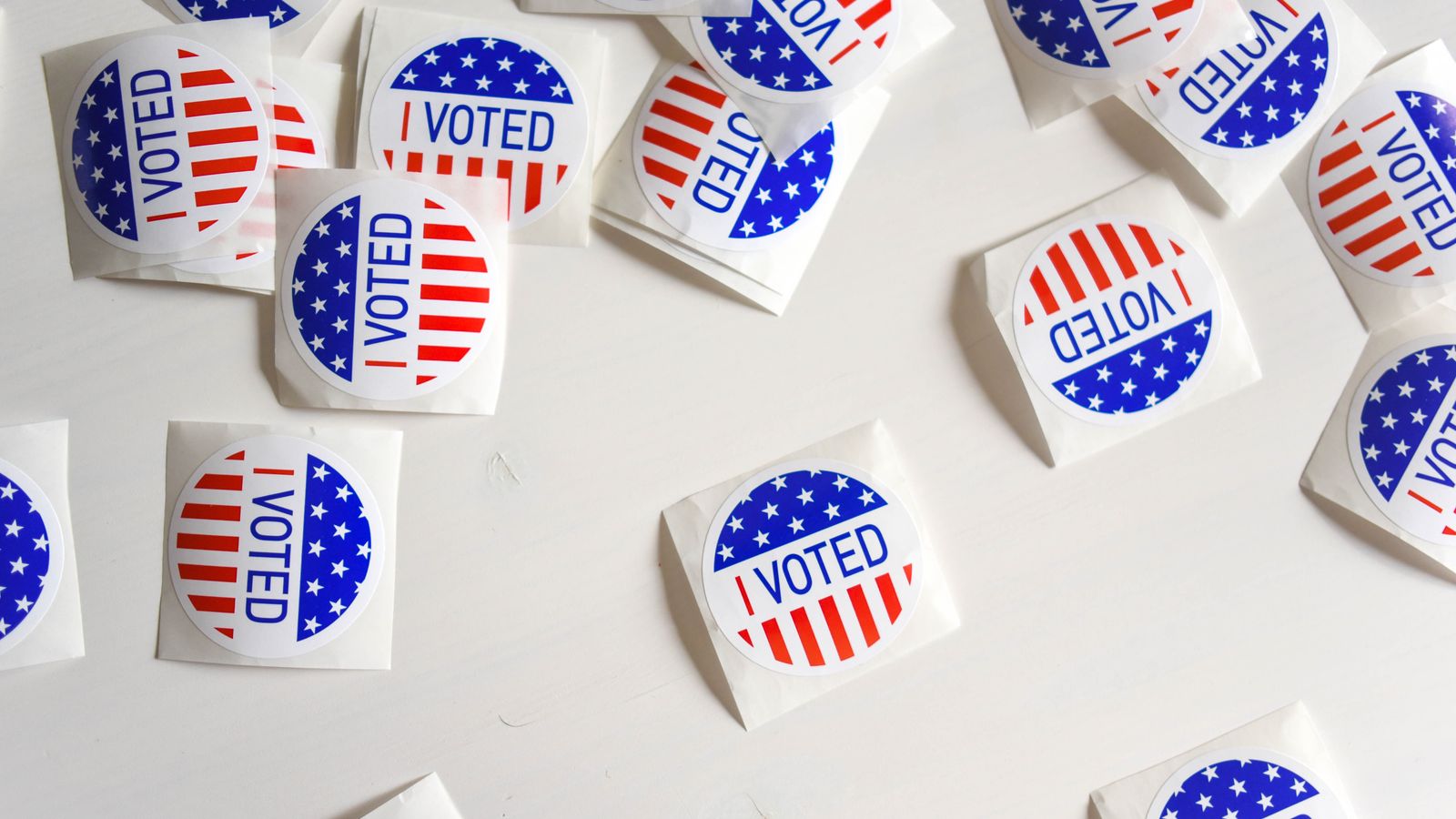
Top view set of small round stickers with flag of United Stated and I voted text scattered on white surface
Court Denies Eleventh-Hour Objection
The Supreme Judicial Court dismissed the challenge without issuing a written opinion, ending a months-long legal fight over ballot language and signature validity. The decision came down late Monday. Opponents of the repeal measure now have no further avenue to block its placement on the November 5 general-election ballot. The court didn't publish reasoning, issuing only a one-line order denying the petition.
Proponents of the repeal—organized under the Committee to Restore Public Safety—had gathered approximately 110,000 certified signatures, well above the 74,574 threshold required under Massachusetts law. Challengers argued that signature collectors misrepresented the measure's impact, a claim the Attorney General's office and the Secretary of State both rejected during earlier review stages.
What the Ballot Question Would Do
If approved, Question 4 would repeal Chapter 334 of the Acts of 2016, the statute that legalized possession, home cultivation, and retail sale of marijuana for adults 21 and older. The measure doesn't touch the state's medical marijuana program, which has operated since 2012 under a separate ballot initiative. Passage would immediately halt new adult-use licenses and trigger a six-month wind-down period for existing retailers, according to legislative analysis published by the Joint Committee on Election Laws in May.
The state Cannabis Control Commission currently oversees 402 active adult-use licenses: 247 retailers, 91 cultivators, and 64 product manufacturers. Those operations generated roughly $1.8 billion in annual sales and $148 million in excise tax revenue as of fiscal 2025. Operators would face closure or conversion to medical-only models if the repeal takes effect.
Polling and Political Landscape
A Suffolk University / Boston Globe poll conducted in June found 52 percent of likely voters oppose repeal, with 39 percent in favor and 9 percent undecided. That margin has narrowed from a 61–29 split recorded in March. The Committee to Restore Public Safety's $4.2 million ad campaign—focused on impaired driving and youth access—appears to be gaining traction. The opposition coalition, Protect Massachusetts Cannabis, has raised $6.7 million, primarily from multi-state operators Curaleaf, Trulieve, and Ascend Wellness.
Governor Maura Healey hasn't taken a public position. Attorney General Andrea Campbell, who certified the ballot language in February, declined to comment on the merits but noted in a statement that the initiative met all statutory requirements for voter consideration.
National Implications and Precedent
No state has ever repealed adult-use legalization via ballot measure or legislative action since Colorado and Washington became the first to pass such laws in 2012. If Massachusetts voters approve the repeal, it would mark a significant reversal in a national trend that has seen 24 states and two territories legalize recreational marijuana. Industry analysts at BDSA project the outcome could embolden repeal efforts in states with narrow legalization margins, particularly Ohio and Missouri, where conservative lawmakers have filed bills to place similar questions before voters.
Massachusetts was the first East Coast state to launch adult-use sales, in November 2018, and has served as a regulatory model for Connecticut, Rhode Island, and New Jersey. A repeal wouldn't affect those states' programs directly but could shift the political calculus in New York, where implementation has lagged and opposition remains organized.
Economic and Enforcement Variables
The state's cannabis industry employs approximately 14,600 workers, according to data filed with the Executive Office of Labor and Workforce Development. A repeal wouldn't criminalize possession retroactively—Massachusetts decriminalized small amounts in 2008—but it would end legal retail access. That would likely push consumers toward the illicit market or neighboring states. Vermont, Rhode Island, Connecticut, New York, and Maine all permit adult-use sales, though only Rhode Island and Maine allow out-of-state purchases without residency restrictions.
Law enforcement groups, including the Massachusetts Chiefs of Police Association, have endorsed the repeal, citing a 19 percent increase in drugged-driving incidents involving THC since 2019, per State Police data. The Massachusetts chapter of NORML disputes that figure. They note the state adopted oral-fluid testing in 2021, which detects THC presence but not impairment, inflating reported incidents.
What Happens Next
The ballot question will appear as Question 4 on the November 5 general-election ballot, with early voting beginning October 19. If it passes, the repeal takes effect 30 days after the election is certified, likely in early December. The Cannabis Control Commission would then enter a six-month transition period during which existing licensees could apply to convert to medical-only operations or wind down inventory. Home cultivation—currently capped at six plants per adult, 12 per household—would remain legal under the 2008 decriminalization statute, which isn't affected by the repeal language.
For ongoing updates and full context, see the CannIntel topic hub on the Massachusetts marijuana repeal ballot.
Expect enforcement to vary. If the repeal passes, the state's patchwork of municipal opt-ins and zoning rules will collide with a suddenly illegal retail market, and no clear playbook exists for unwinding $1.8 billion in annual commerce. We'll be watching three variables: whether neighboring states see a sales spike, whether the illicit market rebounds to pre-2018 levels, and whether the legislature attempts a post-election fix.
Sources
The cannabis newsletter you forward to your team.
Federal policy, market data, grower alerts, and the one story that matters today. Sent every weekday at 7am. Free.
No spam. Unsubscribe with one click. 21+ only.
Related from Laws

Harris Sliwoski Hosts Live Rescheduling Analysis After DEA Hearing
Jason Adelstone will dissect the DEA administrative hearing and next steps for Schedule III reclassification on July 22.

Massachusetts Voters to Reconsider Recreational Marijuana This November
A ballot measure this fall could reshape the state's adult-use cannabis framework eight years after legalization.

Kansas GOP Gubernatorial Candidates Split on Cannabis Legalization
Republican primary contenders diverge on medical and recreational marijuana policy during televised debate.
More from the newsroom

ASX Cannabis Companies Face Export Revenue Test Amid Growth Claims
Australian cannabis firms on the ASX are banking on international sales to justify valuations, but export execution remains unproven.

ASX:LGP Expands Cultivation Capacity in Australia Medical Cannabis Push
Little Green Pharma scales production infrastructure as domestic patient demand accelerates through mid-2026.
Fetterman Reaffirms Support for Cannabis Legalization
Pennsylvania senator restates long-held position on marijuana reform amid ongoing federal rescheduling debate.