Maine Issues Record Cannabis Recalls as Testing Enforcement Tightens
State regulators have issued more product recalls in 2026 than the prior three years combined, driven by stricter lab protocols and pesticide screening.
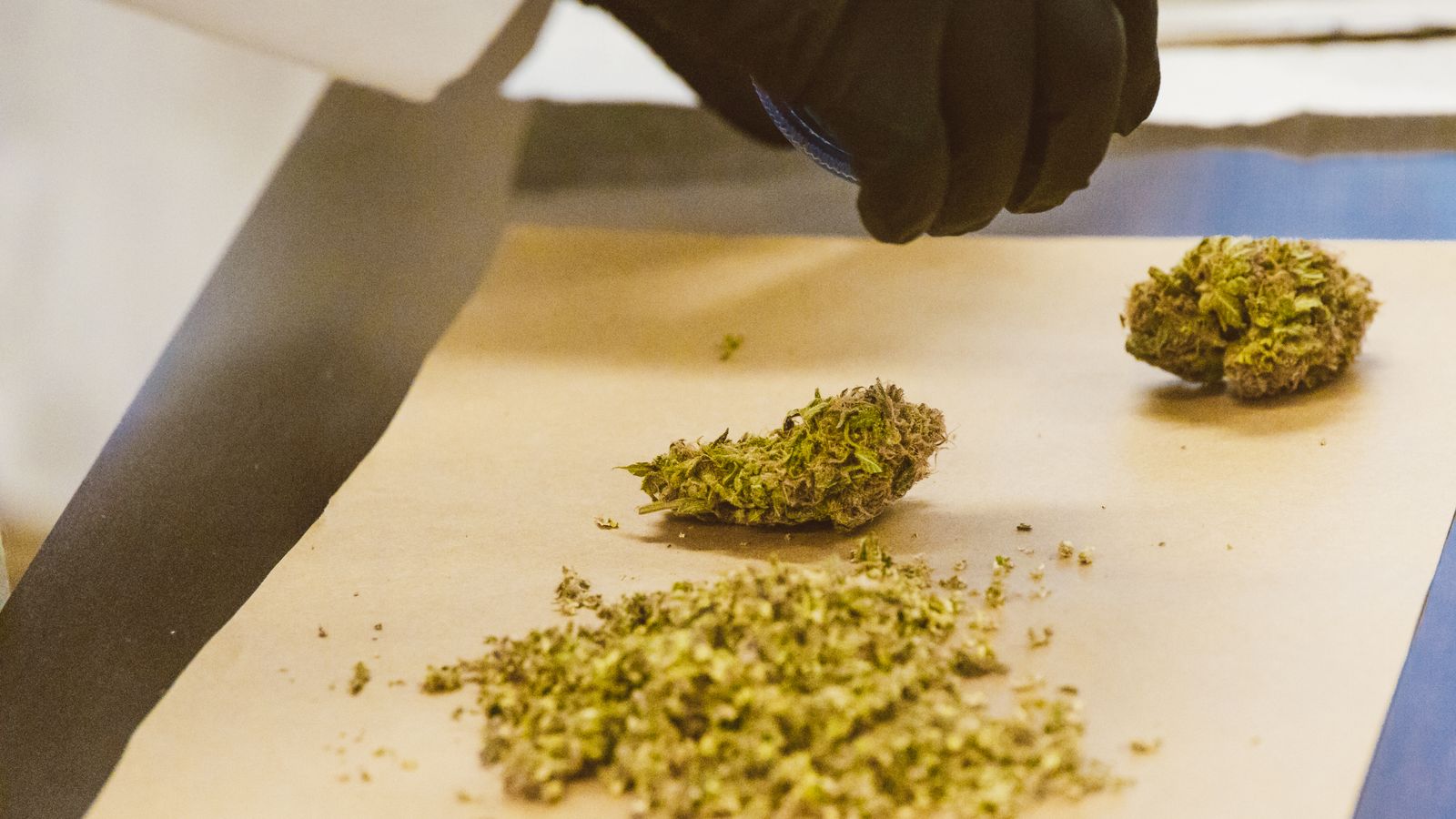
Close-up of cannabis buds being prepared with care on lab paper.
Recall Volume Triples Under New Testing Rules
Maine has recorded 47 product recalls between January and June 2026, compared to 14 recalls in all of 2025. The Office of Cannabis Policy began enforcing revised testing protocols on January 1, 2026, expanding the required pesticide screening panel from 66 compounds to 96 and lowering action limits for heavy metals by 30 percent. State compliance director Sarah Michaud said the changes align Maine's standards with those in California and Massachusetts, where recalls have historically run higher.
Pesticide residues drive most recalls. Myclobutanil and imidacloprid top the list. Myclobutanil, a systemic fungicide, now carries a 0.1 ppm action limit in Maine flower, down from 0.3 ppm. Imidacloprid, a neonicotinoid insecticide, dropped to 0.4 ppm from 1.0 ppm. Cultivators who applied these products under the old limits now face automatic recalls if post-harvest testing detects residues above the revised ceilings.
The state's compliance database shows that 34 of the 47 recalls cite pesticide violations, nine cite mold or yeast contamination, and four cite labeling errors. No recalls to date have involved THC potency misstatements, a contrast with states like Colorado and Oregon where potency inflation has driven enforcement actions.
Cultivators Struggle With Transition Period
Operators say the state provided insufficient lead time to adjust cultivation practices before the new limits took effect. The Office of Cannabis Policy published the final rule on October 15, 2025, giving growers 77 days to exhaust existing pesticide inventories and retrain staff. Many cultivators were mid-cycle when the rule dropped, leaving them with flowering plants treated under the old regime that would fail under the new one.
Tom Lavigne, co-owner of Elevation 207 in Auburn, told the Sun Journal that his facility lost six harvests totaling 180 pounds to recalls in the first quarter. Lavigne said his team had used myclobutanil at labeled rates throughout 2025 without issue, only to see those same application rates trigger recalls once the January cutover arrived. He estimated the financial hit at $270,000 in wholesale value, forcing the operation to lay off two cultivation techs and delay a planned canopy expansion.
A May survey by the Maine Cannabis Industry Association found that 41 percent of 58 licensed cultivators had experienced at least one recall since January. Executive director Amanda Holden said the data suggests the rule change caught a significant portion of the market unprepared, particularly smaller operators without in-house compliance staff or the capital to absorb batch losses.
Enforcement Likely to Remain Elevated Through Year-End
State officials expect recall rates to stay elevated through the remainder of 2026 as labs work through a backlog of retests and cultivators cycle out legacy inputs. Michaud said the Office of Cannabis Policy has no plans to revert to the old action limits, noting that the revised thresholds reflect current toxicological guidance from the EPA and align with adult-use programs in neighboring states. She added that the state's considering a one-time amnesty window for cultivators to voluntarily destroy non-compliant inventory without penalty, though no formal proposal has been published.
The recall surge has also strained Maine's third-party testing infrastructure. The state licenses nine ISO 17025-accredited cannabis labs, and four of them reported turnaround times exceeding 14 days in June, up from a typical 5-7 day window. Labs attribute the slowdown to the expanded pesticide panel, which requires additional instrument time and calibration runs. One lab director, speaking on background, said the 96-compound screen adds roughly 40 percent to per-sample analysis costs, a figure that gets passed through to cultivators in the form of higher testing fees.
For context on Maine's regulatory framework and compliance history, see the CannIntel topic hub on the Maine Cannabis Program. The state launched adult-use sales in October 2020 and currently licenses approximately 340 active cultivation facilities and 120 retail stores. Maine's testing requirements have historically been less stringent than those in Massachusetts or California, making the January 2026 rule change a significant tightening of oversight.
Operators are now watching whether the Office of Cannabis Policy will adjust enforcement discretion or extend compliance deadlines. The next quarterly compliance briefing is scheduled for August 15, 2026, and industry observers expect the recall trend to dominate the agenda. Until then, cultivators face the choice of absorbing recall risk or switching to organic and biological pest-management programs that carry higher labor costs but eliminate pesticide-residue exposure entirely.
For complete background, history, and our ongoing coverage of this story:
Open the CannIntel topic hub →Frequently asked questions
Why did Maine's cannabis recall rate spike in 2026?
The state implemented stricter testing rules on January 1, 2026, expanding the required pesticide screening panel from 66 to 96 compounds and lowering action limits for heavy metals by 30 percent. Most recalls involve pesticide residues that were compliant under the old thresholds but exceed the new limits.
Which pesticides are driving the most recalls in Maine?
Myclobutanil and imidacloprid account for the majority of pesticide-related recalls. Myclobutanil's action limit dropped from 0.3 ppm to 0.1 ppm, and imidacloprid's limit fell from 1.0 ppm to 0.4 ppm, catching cultivators who applied these products under the old regime.
How are Maine cultivators responding to the new testing requirements?
Many operators are switching to organic and biological pest-management programs to eliminate pesticide-residue risk, though these methods carry higher labor costs. Some cultivators are also lobbying the Office of Cannabis Policy for an amnesty window to voluntarily destroy non-compliant inventory without penalty.
Will Maine's recall rate remain elevated?
State officials expect recall rates to stay high through the remainder of 2026 as labs work through a backlog of retests and cultivators cycle out legacy pesticide inventories. The Office of Cannabis Policy has no plans to revert to the old action limits.
How do Maine's testing standards compare to other states?
The January 2026 rule change brought Maine's pesticide and heavy-metal limits in line with California and Massachusetts, which have historically maintained stricter testing protocols. Maine's prior standards were less stringent, making the transition a significant tightening of oversight.
Sources
The cannabis newsletter you forward to your team.
Federal policy, market data, grower alerts, and the one story that matters today. Sent every weekday at 7am. Free.
No spam. Unsubscribe with one click. 21+ only.
Related from Laws

NDLEA Seizes N10.3 Billion in Canadian Cannabis, Arrests Lagos Courier
Nigeria's drug agency intercepted high-grade imported cannabis and methamphetamine in coordinated Lagos operations this week.

DEA Blocks Medical Marijuana Patient From Rescheduling Hearing
The agency denied a petition for a chronic pain patient to testify at the December administrative hearing.

Virginia Cannabis Budget Language Triggers Legal Confusion, Political Fallout
Ambiguous fiscal language in Virginia's 2026-27 budget has sparked legal questions over cannabis retail timelines and regulatory authority.
More from the newsroom

Cannabis Dispensaries Invest in Commercial Cash-Handling Infrastructure
Operators are deploying vault-grade cash systems as banking access stalls and transaction volumes climb.

DEA Blocks Medical Marijuana Patient From Rescheduling Hearings
Agency denied request from longtime MMJ advocate to testify during administrative proceedings on cannabis reclassification.

Little Green Pharma Pivots to Europe as Australian Cannabis Exports Accelerate
The ASX-listed producer is redirecting shipments toward European medical markets as Australia's export pipeline expands.