California Task Force Reports $1.5B in Illegal Cannabis Destroyed
A $1.5 billion destruction tally lands in California's enforcement debate, but the valuation method and hemp-versus-cannabis testing rules behind it remain unclear.
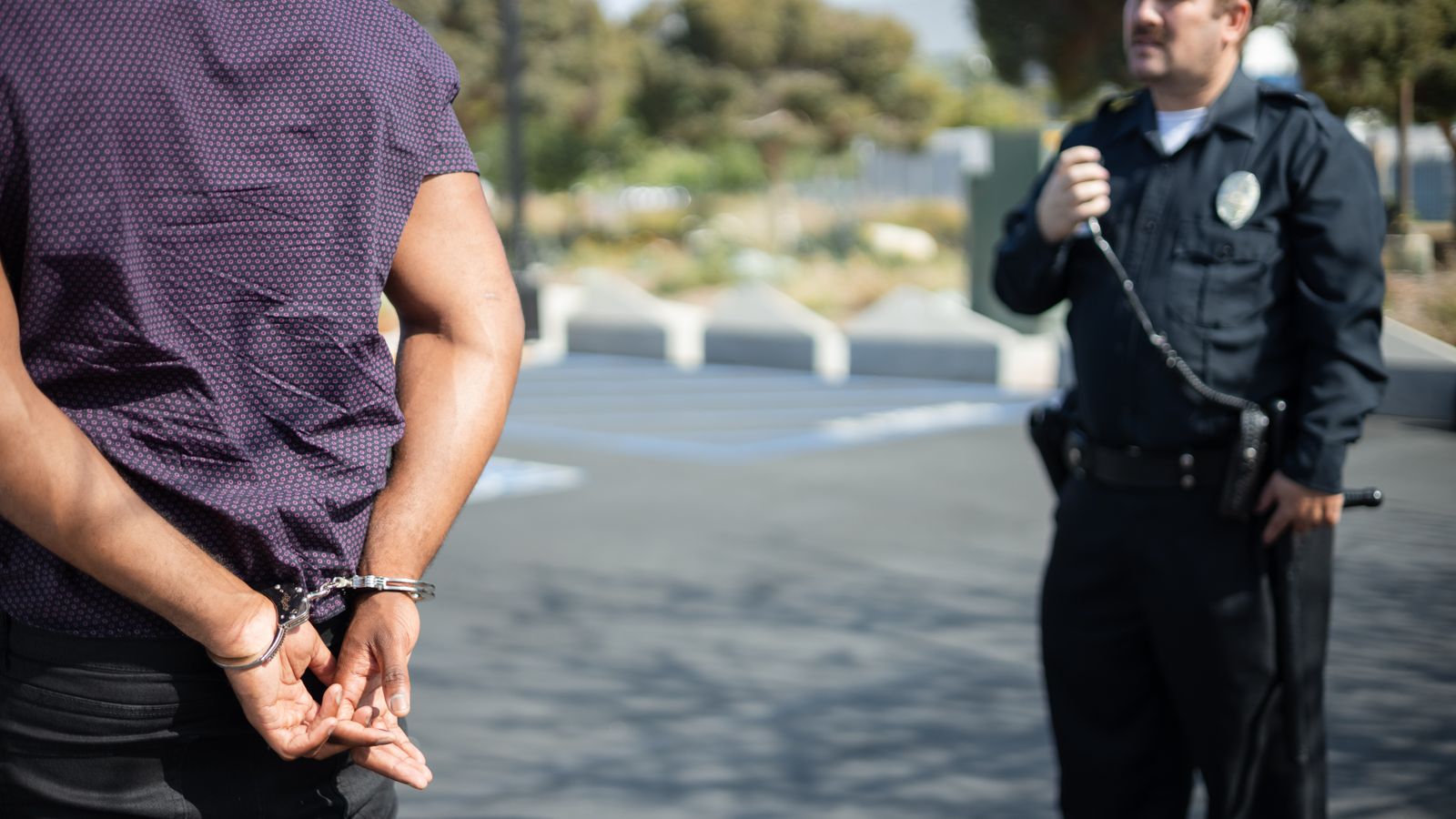
Police officer engaging with a handcuffed individual in an outdoor setting.
The $1.5 billion figure, and what the report leaves out
Cannabis Equipment News reported on Oct. 29 that California's cannabis task force has destroyed $1.5 billion worth of illegal cannabis. That's the entire verified claim.
The item CannIntel reviewed is a headline-level summary. It doesn't name the agencies involved, the start date of the count, the plant or pound totals, or how the dollar value was set. We haven't seen the underlying agency data, and we won't pretend otherwise.
Still, a number this size demands scrutiny. Cumulative tallies like this one are easy to quote and hard to compare.
Why a destruction tally isn't a market-size number
Enforcement agencies typically attach a dollar value to seized product by applying a price assumption, so the total depends heavily on which price they chose. A pound valued at licensed retail prices produces a far bigger figure than the same pound valued at illicit wholesale.
Plants add another wrinkle. Outdoor plants seized before harvest get valued on projected yield, not on anything that reached a shelf. Big headline, soft denominator.
So $1.5 billion tells you the task force has been busy. It doesn't tell you how much illicit product California's market actually moves, or what share the operation intercepted. Readers should resist dividing one by the other.
The hemp line inside every seizure
Whether destroyed flower counts as illegal cannabis or lawful hemp turns on which THC measurement a lab applies. The federal hemp definition caps delta-9 THC at 0.3% on a dry-weight basis, and that language has produced years of fights over THCA.
THCA isn't intoxicating until heat removes its carboxyl group. That process, decarboxylation, converts THCA to delta-9 THC at a mass factor of roughly 0.877. Run the math on a flower sample testing 0.2% delta-9 THC and 20% THCA: total potential THC lands near 17.7%, even though the delta-9 line looks compliant.
A delta-9-only test would clear that flower. A total-THC test wouldn't. The signal doesn't say which standard California's task force applied to the material it destroyed, and that gap matters for any hemp seller whose inventory sits near the line.
What destruction means for licensed operators
For licensed California operators, the real question is whether enforcement at this scale narrows the price gap with the illicit market. The report doesn't answer it.
Destroyed product is supply removed from circulation, but only if it would have reached consumers, and plants torn out of a remote grow were never going to compete on a dispensary shelf next week. Seized finished product is a different story.
Operators carrying 280E tax burdens and compliance costs have an obvious interest in the answer. They'd be wise to ask regulators for per-category data rather than a single headline dollar amount.
Questions the number leaves open
Five basic questions would turn this tally from a talking point into usable data.
- Which agencies and operations are included in the $1.5 billion?
- What period does the count cover?
- How was value assigned: retail, wholesale or projected yield?
- How much was live plants versus finished flower, concentrates or vapes?
- How much of it was tested, and by which THC standard?
The last item is the one hemp operators should care about most. Hemp-derived flower and THCA products sit in a gray zone where a seizure under one lab method might not survive another.
The enforcement picture: unsettled, and likely uneven
The total-THC-versus-delta-9 question remains unsettled, and enforcement against hemp-derived products will likely vary by agency and by county. A big destruction number doesn't resolve that. If anything, it raises the stakes for sellers who can't prove which test their certificates of analysis follow.
That's the sober read. A task force that can destroy $1.5 billion in product has the capacity to scrutinize gray-market inventory, and a seller relying on a delta-9-only COA is carrying risk it may not have priced in.
For full background on this story, see the CannIntel topic hub on California illicit cannabis enforcement. We'll update this report once the California Department of Cannabis Control or the task force publishes methodology and category breakdowns.
The next signal to watch: any official release that defines the count's time frame and valuation method. Until then, treat $1.5 billion as a measure of activity, not of the illicit market, and expect enforcement to vary.
Sources
The cannabis newsletter you forward to your team.
Federal policy, market data, grower alerts, and the one story that matters today. Sent every weekday at 7am. Free.
No spam. Unsubscribe with one click. 21+ only.
Related from Laws

NJCRC Approves Special Curaleaf Renewal, Denies Pesticide Request
New Jersey regulators granted Curaleaf an off-track renewal because of litigation and, in a separate ruling, rejected a pesticide-related request, Heady NJ reported.

Two Alabama Medical Cannabis Dispensaries Set to Open Next Week
The Alabama Reflector reported Thursday that two dispensaries are expected to open, a milestone for a program authorized in 2021 and slowed by litigation.

Snohomish County Council votes down second Clearview cannabis shop
HeraldNet reports the council rejected another retail cannabis outlet in unincorporated Clearview, leaving the vote's legal basis and tally to be documented.
More from the newsroom

Safe Harbor Financial Signs Opifex Media Term Sheet
SHF Holdings, doing business as Safe Harbor Financial, signed a non-binding term sheet for a combination with Opifex Media Inc., but no financial terms have surfaced.

ASA names 21 recipients of 2026 Cannabis Safety Awards
Americans for Safe Access tied its annual awards to the federal rescheduling debate, but the public excerpt omits recipients, categories and selection criteria.

RealClearEducation publishes 'Why So Many Students Are Stoned'
A new RealClearEducation piece puts student cannabis use back on the agenda, and the questions it raises turn on potency, product format and access.