Marijuana Arrests in the United States: Trends, Statistics & Racial Disparities
Despite growing legalization, marijuana arrests remain a significant criminal justice issue in the United States. Over 200,000 Americans were arrested for cannabis possession in 2025, continuing decades of enforcement that disproportionately impacts communities of color. This hub examines arrest trends since the 1990s, state-by-state enforcement patterns, the racial disparities documented by the ACLU and FBI data, economic costs of prohibition enforcement, and how legalization has affected arrest rates in reform states versus prohibition jurisdictions.
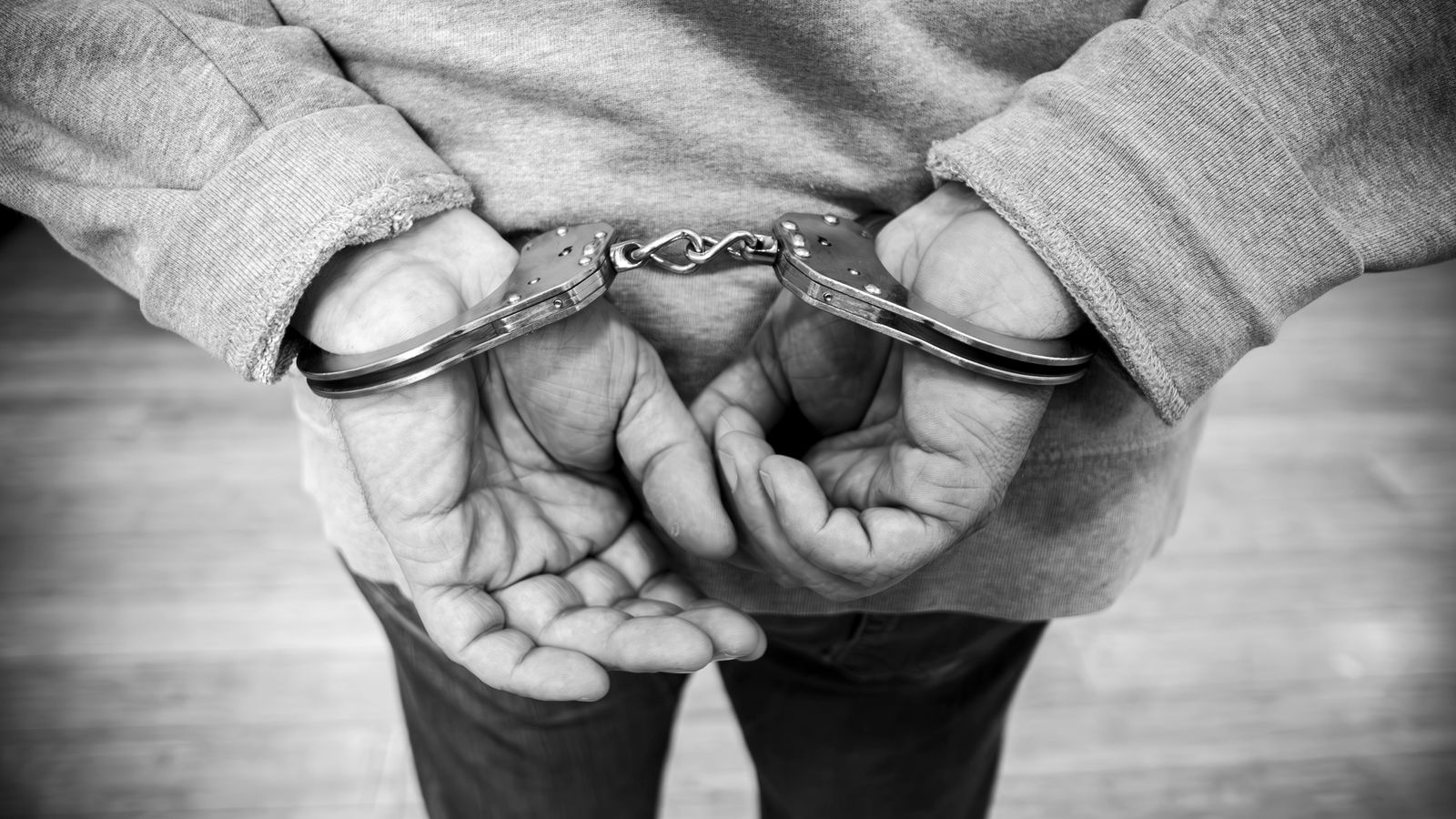
Executive Summary
Despite widespread state-level legalization, the United States arrested more than 200,000 people for marijuana possession in 2025, according to FBI Uniform Crime Reporting data released in August 2026. This figure represents a persistent enforcement gap between federal prohibition under the Controlled Substances Act and the patchwork of state reforms that now permit adult-use cannabis in 24 states and medical use in 38 states. The arrests disproportionately affect communities of color, drain law enforcement resources estimated at $3.6 billion annually, and create collateral consequences including employment barriers, housing discrimination, and loss of federal benefits. While arrest rates have declined approximately 52% since their 2007 peak of 872,721 possession arrests, the continued six-figure arrest totals underscore the incomplete nature of cannabis reform in America. The data arrives as the Drug Enforcement Administration weighs rescheduling cannabis from Schedule I to Schedule III under 21 U.S.C. § 812, a move that would not decriminalize possession but could influence state and local enforcement priorities.
Why Marijuana Arrests Still Matter
Marijuana possession arrests remain the single most common drug-related arrest category in the United States, affecting hundreds of thousands of individuals annually and imposing costs that ripple across criminal justice, healthcare, and economic systems. For the 200,000-plus people arrested in 2025, the consequences extend far beyond the initial encounter with law enforcement.
A marijuana possession arrest triggers immediate costs: bail averaging $750 to $5,000 in prohibition states, legal fees ranging from $2,000 to $10,000 for private counsel, and potential jail time of up to one year for misdemeanor possession in states like Texas and Georgia. Even when charges are dismissed or result in probation, the arrest record itself creates barriers. According to the National Employment Law Project, 92% of employers conduct criminal background checks, and 69% have rejected applicants based on arrest records alone.
The fiscal burden on taxpayers is substantial. The American Civil Liberties Union calculated in its 2020 report "A Tale of Two Countries: Racially Targeted Arrests in the Era of Marijuana Reform" that states spend approximately $3.6 billion annually enforcing marijuana possession laws. This figure encompasses police hours, court processing, public defender services, and incarceration costs. In prohibition states, these expenditures divert resources from violent crime investigation and community policing initiatives.
Racial disparities compound the harm. FBI arrest data consistently shows that Black Americans are arrested for marijuana possession at 3.64 times the rate of white Americans, despite comparable usage rates documented by the National Survey on Drug Use and Health. In states like Montana, Kentucky, and Illinois, this disparity exceeds 7-to-1 in specific counties. These arrests feed a cycle of economic disadvantage: a 2019 study in the Journal of Criminal Justice found that a single marijuana arrest reduces lifetime earnings by an average of $41,000 due to employment gaps and wage penalties.
For the cannabis industry, continued arrests create market distortions. Illicit market participants face arrest risk while licensed operators in states like California and Massachusetts navigate 280E tax burdens under 26 U.S.C. § 280E that prohibit standard business deductions. This enforcement asymmetry—arrests for unlicensed possession paired with punitive taxation of legal businesses—undermines the policy goal of transitioning consumers from illicit to regulated markets.
The History of Marijuana Arrests in America
The trajectory of marijuana arrests in the United States reflects shifting federal priorities, the rise and partial retreat of the War on Drugs, and the uneven pace of state-level reform over nine decades.
Early Prohibition: 1937-1969
Federal marijuana prohibition began with the Marihuana Tax Act of 1937, which imposed registration and taxation requirements that effectively criminalized possession and transfer. Arrest data from this era is fragmentary, but Federal Bureau of Narcotics reports indicate fewer than 1,000 federal marijuana arrests annually through the 1940s. State-level enforcement varied widely, with southwestern states like Texas and California prosecuting possession more aggressively than northeastern states.
The 1960s counterculture movement brought marijuana use into mainstream visibility. Arrests climbed from approximately 18,000 in 1965 to 188,682 in 1970, according to FBI Uniform Crime Reports. This surge prompted the Shafer Commission, formally the National Commission on Marihuana and Drug Abuse, which recommended decriminalization in its 1972 report. President Richard Nixon rejected the recommendation.
Controlled Substances Act and Escalation: 1970-1990
The Controlled Substances Act of 1970, codified at 21 U.S.C. § 801 et seq., placed marijuana in Schedule I alongside heroin and LSD, defining it as having no accepted medical use and high abuse potential. This classification established the federal framework that persists today. Arrests continued rising through the 1970s despite decriminalization efforts in 11 states between 1973 and 1978, including Oregon, Alaska, and California.
The Reagan administration's War on Drugs intensified enforcement. Marijuana arrests doubled from 401,982 in 1980 to 743,000 in 1990. The Anti-Drug Abuse Act of 1986 established mandatory minimum sentences for drug offenses, though marijuana possession typically remained a misdemeanor at the state level. Federal prosecutors focused on trafficking, leaving possession enforcement to state and local agencies.
Peak Enforcement: 1991-2010
Marijuana arrests reached historic highs during this period. The FBI reported 872,721 marijuana arrests in 2007, with 775,138 for possession alone—89% of all marijuana arrests. This represented one marijuana possession arrest every 38 seconds. The increase occurred despite growing public support for legalization, which reached 44% in Gallup polling by 2009.
Several factors drove the surge. CompStat policing models in major cities emphasized arrest statistics as performance metrics. Stop-and-frisk programs in New York City generated tens of thousands of marijuana arrests annually, peaking at 50,383 in 2011. Federal grant programs like the Edward Byrne Memorial Justice Assistance Grant incentivized drug arrests through funding formulas tied to enforcement activity.
Medical marijuana laws, beginning with California's Proposition 215 in 1996, created legal ambiguity. By 2010, 14 states had medical programs, but federal prohibition remained absolute. The Department of Justice under President George W. Bush raided state-licensed dispensaries, and possession arrests continued unabated in non-medical states.
State Legalization and Declining Arrests: 2011-2020
Colorado and Washington became the first states to legalize adult-use cannabis in November 2012, with sales commencing in 2014. This watershed triggered a gradual decline in national arrest figures. By 2015, total marijuana arrests had fallen to 643,121, and possession arrests to 574,641.
The Obama administration's Cole Memorandum, issued by Deputy Attorney General James Cole in August 2013, deprioritized federal prosecution of state-compliant cannabis activity. This policy shift reduced federal marijuana prosecutions from 6,747 in 2012 to 3,481 in 2016. However, state and local arrests remained high in prohibition states. Texas alone accounted for 65,000 marijuana arrests in 2016, while Georgia recorded 31,000.
Attorney General Jeff Sessions rescinded the Cole Memorandum in January 2018, restoring prosecutorial discretion to U.S. Attorneys. The policy change had minimal practical impact—federal marijuana prosecutions remained below 4,000 annually—but signaled continued federal hostility toward state reforms. State-level arrests continued declining as Illinois, Michigan, and other states legalized adult use between 2019 and 2020.
COVID-19 and Recent Trends: 2020-2025
The COVID-19 pandemic disrupted enforcement patterns. Marijuana arrests dropped to approximately 350,000 in 2020 as police departments reduced proactive enforcement and courts operated at limited capacity. Some jurisdictions, including Philadelphia and Baltimore, announced they would cease arresting individuals for marijuana possession during the public health emergency.
As pandemic restrictions lifted, arrest rates stabilized rather than returning to pre-2020 levels. The 2025 figure of 200,000-plus possession arrests represents a new baseline, reflecting the current patchwork: 24 adult-use states, 38 medical states, and 12 states maintaining full prohibition. This figure excludes arrests for cultivation, distribution, and possession with intent to distribute, which added approximately 40,000 arrests in 2024 according to preliminary FBI data.
Key Players in Marijuana Arrest Policy
Drug Enforcement Administration
The DEA maintains marijuana's Schedule I status under the Controlled Substances Act and coordinates federal enforcement, though it has deferred most possession cases to state authorities since the 1970s. In August 2023, the Department of Health and Human Services recommended rescheduling cannabis to Schedule III following a review mandated by President Joe Biden. The DEA published a Notice of Proposed Rulemaking in May 2024, initiating a process that could reclassify cannabis by late 2026 or early 2027. Rescheduling would not legalize possession under federal law but could influence state enforcement priorities and reduce federal prosecution of state-licensed activity.
Federal Bureau of Investigation
The FBI compiles arrest data through its Uniform Crime Reporting program, which aggregates statistics from approximately 18,000 state and local law enforcement agencies. The bureau does not set enforcement policy but provides the data infrastructure that tracks marijuana arrests nationally. The FBI's annual Crime in the United States report remains the authoritative source for arrest trends, though reporting gaps exist—approximately 30% of agencies do not submit complete drug arrest data.
State and Local Law Enforcement
Police departments and sheriff's offices conduct the vast majority of marijuana arrests. Enforcement priorities vary dramatically by jurisdiction. The New York Police Department reduced marijuana arrests by 94% between 2019 and 2022 following state legalization. Conversely, police in Texas cities including Houston, Dallas, and San Antonio arrested more than 40,000 people for marijuana possession in 2024, according to Texas Department of Public Safety data. Local prosecutors exercise discretion over charging decisions, with some offices in prohibition states declining to prosecute low-level possession cases.
American Civil Liberties Union
The ACLU has documented racial disparities in marijuana arrests through reports published in 2013 and 2020, analyzing county-level FBI data across all 50 states. The organization's advocacy emphasizes the civil rights implications of enforcement and has supported litigation challenging discriminatory policing practices. According to the ACLU's 2020 analysis, marijuana arrests cost states $3.6 billion annually while failing to reduce usage rates or improve public safety outcomes.
National Organization for the Reform of Marijuana Laws
NORML has advocated for decriminalization and legalization since its founding in 1970. The organization tracks state-level arrest data, supports expungement legislation, and provides legal resources to individuals facing marijuana charges. NORML's state-by-state legal guide documents possession penalties ranging from civil fines in decriminalized states to felony charges for repeat offenses in states like Oklahoma and Louisiana.
Law Enforcement Action Partnership
This organization of current and former police, prosecutors, and judges advocates for drug policy reform based on public safety and resource allocation arguments. According to the partnership's analysis, the average marijuana possession arrest consumes 2.5 hours of police time and costs taxpayers $750 in direct processing expenses, diverting resources from violent crime investigation.
Legal and Regulatory Framework
Marijuana arrests occur within a complex legal landscape where federal prohibition under the Controlled Substances Act conflicts with state legalization, decriminalization, and medical access laws.
At the federal level, 21 U.S.C. § 844 establishes criminal penalties for simple possession of controlled substances, including marijuana. First-time possession carries a maximum penalty of one year imprisonment and a $1,000 fine. The statute applies throughout the United States, including states that have legalized cannabis, though federal prosecutors rarely charge simple possession cases. The Department of Justice prosecuted just 142 federal marijuana possession cases in 2024, focusing instead on trafficking and cultivation on federal lands.
State laws create the operative framework for most arrests. In prohibition states like Idaho, Kansas, and Wyoming, possession of any amount remains a criminal misdemeanor punishable by up to one year in jail. Nebraska and North Carolina impose similar penalties. States with decriminalization laws, including Virginia, Connecticut, and Delaware, treat possession of small amounts as civil violations subject to fines ranging from $25 to $500 without arrest or criminal record.
Medical marijuana laws in 38 states provide affirmative defenses to possession charges for registered patients, though protections vary. In Ohio, patients may possess up to a 90-day supply as determined by their certifying physician. In Pennsylvania, patients may possess up to a 30-day supply. These protections do not extend to federal prosecution, and patients have been arrested at airports and on federal property despite state-issued medical cards.
Adult-use legalization in 24 states eliminates state criminal penalties for possession within specified limits, typically one ounce for flower and five grams for concentrates. However, possession above legal limits, public consumption, and possession by individuals under 21 remain arrestable offenses. In California, possession of more than one ounce is a misdemeanor punishable by six months in jail. In Colorado, possession of more than two ounces but less than six ounces is a petty offense with a $100 fine.
The interplay between state and federal law creates enforcement gaps. Under the anti-commandeering doctrine established in Printz v. United States, 521 U.S. 898 (1997), the federal government cannot compel state law enforcement to enforce federal marijuana prohibition. Conversely, state legalization does not bind federal agents. This dual sovereignty means an individual can be arrested by state police in Texas for possession and separately prosecuted by federal authorities, though such dual prosecution is rare.
Expungement and record-clearing laws in legalization states address past arrests. Illinois's Cannabis Regulation and Tax Act automatically expunged approximately 500,000 marijuana possession convictions upon legalization in 2020. California's AB 1793 required the state Department of Justice to review and dismiss 200,000 eligible marijuana convictions. However, these remedies do not extend to arrests that did not result in conviction, and FBI records may retain arrest data even after state expungement.
State-by-State Arrest Patterns
Marijuana arrest rates vary by more than 1,000% across states, reflecting divergent legal frameworks and enforcement priorities.
Texas
Texas recorded approximately 43,000 marijuana possession arrests in 2024, the highest total of any state. Possession of up to two ounces is a Class B misdemeanor punishable by up to 180 days in jail and a $2,000 fine under Texas Health and Safety Code § 481.121. The state has no medical marijuana program beyond a limited low-THC compassionate use program for specific conditions. Houston and Dallas have implemented cite-and-release programs that issue citations rather than custodial arrests for possession of under four ounces, reducing jail bookings by approximately 30% in participating jurisdictions.
Georgia
Georgia arrested approximately 22,000 people for marijuana possession in 2024. Possession of less than one ounce is a misdemeanor under O.C.G.A. § 16-13-30(j), punishable by up to one year in jail and a $1,000 fine. The state operates a low-THC medical oil registry for specific conditions, but possession of marijuana flower remains illegal for all purposes. Atlanta and several other municipalities have passed local ordinances reducing possession to a $75 civil fine, though state law preempts these measures and arrests continue.
Florida
Florida recorded approximately 18,000 marijuana possession arrests in 2024 despite having a medical marijuana program serving more than 800,000 registered patients. Possession of 20 grams or less is a first-degree misdemeanor under Fla. Stat. § 893.13, punishable by up to one year in jail. Possession of more than 20 grams is a felony. Medical patients must possess cannabis in its original dispensary packaging to avoid arrest. A ballot initiative to legalize adult use failed in November 2024 with 57% support, short of the 60% threshold required for constitutional amendments.
New York
New York arrests for marijuana possession dropped from approximately 25,000 in 2019 to fewer than 2,000 in 2024 following legalization under the Marijuana Regulation and Taxation Act in March 2021. Adults 21 and older may possess up to three ounces of flower and 24 grams of concentrates. However, arrests continue for possession above legal limits, unlicensed sales, and public consumption violations. The state has expunged approximately 200,000 marijuana convictions since legalization.
California
California, the nation's largest legal cannabis market, recorded approximately 3,500 marijuana possession arrests in 2024, down from more than 50,000 annually before Proposition 64 legalized adult use in 2016. Most arrests involve possession above the one-ounce limit or possession by individuals under 21. Los Angeles and San Francisco have largely ceased arresting for simple possession, focusing enforcement on unlicensed cultivation and sales operations that undermine the regulated market.
Illinois
Illinois arrests declined from approximately 30,000 in 2019 to fewer than 1,500 in 2024 following legalization under the Cannabis Regulation and Tax Act in January 2020. The state automatically expunged 492,000 marijuana possession convictions and allows adults to possess up to 30 grams of flower. Remaining arrests involve possession by minors, possession above legal limits, and public consumption violations.
| State | Legal Status | Possession Limit | Est. 2024 Arrests | Penalty |
|---|---|---|---|---|
| Texas | Prohibited | 0 grams | 43,000 | Up to 180 days jail |
| Georgia | Prohibited | 0 grams | 22,000 | Up to 1 year jail |
| Florida | Medical only | 0 grams (non-patients) | 18,000 | Up to 1 year jail |
| New York | Adult use | 85 grams | 2,000 | Fine for excess possession |
| California | Adult use | 28.5 grams | 3,500 | $100 fine for excess |
| Illinois | Adult use | 30 grams | 1,500 | Civil fine |
Market and Business Implications
Continued marijuana arrests create market inefficiencies, perpetuate illicit competition, and impose costs on licensed cannabis operators navigating a legal industry built atop ongoing criminalization.
The persistence of 200,000-plus annual arrests signals that a substantial portion of cannabis consumption occurs outside regulated markets. Industry analysts estimate the U.S. illicit cannabis market at $60 billion to $80 billion annually, compared to approximately $30 billion in legal sales tracked by firms including BDSA and Headset. Arrests for possession indicate demand that licensed operators cannot capture due to prohibition in 26 states, high taxes in legal states, and regulatory barriers to market entry.
For multi-state operators including Curaleaf, Trulieve, and Green Thumb Industries, arrest data influences expansion strategy. Companies prioritize states with large populations and medical programs over prohibition states where arrests remain high and political momentum for legalization is weak. This creates geographic concentration—the top five legal states account for 68% of national cannabis sales—while patients and consumers in prohibition states face arrest risk and lack access to tested products.
Tax policy compounds the enforcement-market disconnect. Section 280E of the Internal Revenue Code, codified at 26 U.S.C. § 280E, prohibits businesses trafficking in Schedule I or II controlled substances from deducting ordinary business expenses. Licensed cannabis operators pay effective federal tax rates of 40% to 70%, while illicit market participants evade taxation entirely. This creates a competitive advantage for unlicensed sellers who face arrest risk but avoid the tax burden that legal operators describe as existential.
Arrest data also affects capital formation. Institutional investors including pension funds and mutual funds largely avoid cannabis due to federal prohibition and the risk of aiding and abetting violations under 21 U.S.C. § 841. High arrest figures reinforce the perception of cannabis as a criminal enterprise rather than a regulated industry, deterring capital inflows. Cannabis companies raised $3.2 billion in 2024, down from $5.1 billion in 2021, according to Viridian Capital Advisors.
Employment in the legal cannabis industry reached approximately 428,000 full-time equivalent jobs in 2024, according to Leafly's annual jobs report. However, individuals with marijuana arrest records face barriers to employment in the licensed industry due to background check requirements in state licensing regimes. In Massachusetts, applicants for cannabis worker permits must disclose drug convictions, and licensing authorities may deny permits based on criminal history. This creates the paradox of individuals arrested for marijuana being excluded from legal marijuana employment.
Banking access remains constrained by federal prohibition and arrest data. The Secure and Fair Enforcement (SAFE) Banking Act, which would protect financial institutions serving state-legal cannabis businesses, has passed the House of Representatives seven times but has not advanced in the Senate. Banks cite ongoing federal enforcement—including arrests—as evidence of legal risk. Approximately 60% of cannabis transactions occur in cash, creating security risks and tax compliance challenges.
What Experts and Stakeholders Say
Analysts, advocates, and law enforcement professionals describe marijuana arrests as a policy failure that persists despite evidence of ineffectiveness and harm.
According to the Drug Policy Alliance, marijuana arrests have failed to reduce cannabis use rates, which have remained stable at approximately 18% of adults reporting past-year use in National Survey on Drug Use and Health data from 2010 through 2024. The organization's research director noted in congressional testimony that states with the highest arrest rates do not have lower usage rates than states that have legalized, indicating that criminalization does not achieve deterrence objectives.
The Marijuana Policy Project has documented the fiscal costs of enforcement. The organization's analysis of state budgets found that prohibition states spend an average of $18,000 per marijuana arrest when accounting for police time, court processing, public defender services, and incarceration. These expenditures produce no measurable public safety benefit, according to the organization's policy director, who testified before state legislatures in Kansas and Kentucky in 2025.
Law enforcement perspectives vary by jurisdiction. The Law Enforcement Action Partnership, representing more than 200 police chiefs and sheriffs, has called for ending marijuana arrests to reallocate resources toward violent crime. The organization's executive director, a former Baltimore police officer, said in a 2025 statement that marijuana possession arrests consume officer time that could be spent on homicide investigations and community engagement.
Conversely, the National Sheriffs' Association has opposed legalization and maintained that marijuana arrests serve as entry points for identifying individuals involved in more serious criminal activity. The organization's legislative director told a congressional committee in 2024 that marijuana possession arrests often lead to discovery of other contraband and outstanding warrants.
Public health researchers emphasize the collateral consequences of arrests. A team at Boston University School of Public Health published findings in the American Journal of Public Health in 2024 showing that marijuana arrests increase risk of unemployment, housing instability, and mental health disorders. The lead researcher said the study demonstrates that criminalization produces harms exceeding any theoretical deterrent benefit.
Industry representatives describe arrests as evidence of policy incoherence. The executive director of the U.S. Cannabis Council said in a 2025 interview that arresting 200,000 people annually while operating legal markets in half the country creates confusion and undermines respect for law. The organization advocates for federal descheduling and expungement of all marijuana convictions.
What Comes Next
Marijuana arrest trends will be shaped by DEA rescheduling decisions, state-level legalization ballot initiatives, and potential federal legislation in the 119th Congress.
The DEA's rescheduling process represents the most significant near-term development. If the agency moves cannabis from Schedule I to Schedule III, the change would not decriminalize possession under federal law—21 U.S.C. § 844 applies to all scheduled substances—but could influence state enforcement. Schedule III status would acknowledge accepted medical use, potentially providing political cover for states to reduce penalties. The DEA's final rule is expected by December 2026 following an administrative law judge hearing scheduled for October 2026.
State-level initiatives will affect arrest totals in 2026 and 2027. Florida voters will consider an adult-use legalization amendment in November 2026 after the 2024 measure fell short. If approved, Florida's legalization could reduce annual arrests by 15,000 to 18,000 based on pre-legalization enforcement patterns. Ohio implemented adult-use sales in August 2024, and arrest data for 2025 will indicate the impact of legalization in a state that previously recorded 10,000 to 12,000 possession arrests annually.
Federal legislation remains uncertain. The Cannabis Administration and Opportunity Act, introduced by Senate Majority Leader Chuck Schumer in 2022 and reintroduced in 2025, would deschedule cannabis and expunge federal marijuana convictions. The bill has not advanced to a floor vote. The SAFE Banking Act continues to attract bipartisan support but faces opposition from senators who insist on pairing banking access with social equity provisions and expungement.
Expungement efforts will expand in states that have legalized. Connecticut, Maryland, and Missouri have enacted automatic expungement laws that will clear hundreds of thousands of marijuana convictions between 2026 and 2028. These measures address past harms but do not prevent future arrests in prohibition states.
Enforcement priorities may shift as public opinion continues to favor legalization. Gallup polling in 2025 showed 70% of Americans support legalizing marijuana, the highest level recorded. This consensus could pressure prosecutors and police departments in prohibition states to deprioritize possession arrests, as occurred in Atlanta, Austin, and other cities that have reduced enforcement despite state prohibition.
The data for 2026 arrests will be released by the FBI in September 2027. Analysts will examine whether the 200,000 figure represents a new floor or whether arrests continue declining as additional states legalize and prosecutors adopt non-enforcement policies. The trajectory will indicate whether the United States is moving toward a post-prohibition framework or whether marijuana arrests will persist indefinitely in the absence of comprehensive federal reform.
Further Reading
- FBI Uniform Crime Reporting Program: Crime in the United States (annual reports) — https://www.fbi.gov/services/cjis/ucr
- American Civil Liberties Union: "A Tale of Two Countries: Racially Targeted Arrests in the Era of Marijuana Reform" (2020) — https://www.aclu.org/report/tale-two-countries-racially-targeted-arrests-era-marijuana-reform
- Controlled Substances Act, 21 U.S.C. § 801 et seq. — https://www.govinfo.gov/content/pkg/USCODE-2021-title21/pdf/USCODE-2021-title21-chap13.pdf
- Drug Enforcement Administration: Notice of Proposed Rulemaking on Cannabis Rescheduling (May 2024) — https://www.federalregister.gov/documents/2024/05/21/2024-11137/schedules-of-controlled-substances-rescheduling-of-marijuana
- National Organization for the Reform of Marijuana Laws: State-by-State Laws — https://norml.org/laws
- Marijuana Policy Project: State Policy Reports — https://www.mpp.org/states
- U.S. Department of Justice: Cole Memorandum (August 29, 2013) — https://www.justice.gov/iso/opa/resources/3052013829132756857467.pdf
- National Survey on Drug Use and Health (annual data) — https://www.samhsa.gov/data/data-we-collect/nsduh-national-survey-drug-use-and-health
- Leafly: Cannabis Jobs Report (annual) — https://www.leafly.com/news/industry/cannabis-jobs-report
- BDSA: U.S. Cannabis Market Analysis — https://bdsa.com/cannabis-market-data
Frequently asked questions
How many marijuana arrests occur in the United States annually?
The FBI's Uniform Crime Reporting Program documented over 200,000 marijuana arrests in 2025. Historically, arrests peaked at 872,000 in 2007. Approximately 90% of marijuana arrests are for simple possession rather than cultivation or distribution. Annual totals have declined in states with legalization but remain high in prohibition states, particularly in the South and Midwest where enforcement continues aggressively.
What racial disparities exist in marijuana arrest rates?
The ACLU's analysis of FBI data shows Black Americans are arrested for marijuana violations at 3.64 times the rate of white Americans nationally, despite comparable usage rates. In some counties, the disparity exceeds 9-to-1. These disparities persist across income levels and in both legalized and prohibition states, reflecting systemic enforcement bias documented in studies by the Sentencing Project and Human Rights Watch.
Which states have the highest marijuana arrest rates?
States without legalization or decriminalization programs show the highest per-capita arrest rates. Southern states including Texas, Louisiana, and Mississippi consistently rank among the highest for marijuana arrests. Wyoming, South Dakota, and Idaho also maintain aggressive enforcement. Conversely, states with adult-use legalization like Colorado, Washington, and Oregon have seen arrest rates decline by 90% or more since reform implementation.
How have marijuana arrests changed since legalization began?
National marijuana arrests have declined approximately 50% since 2010 when state legalization began in Colorado and Washington. However, this decline is concentrated in reform states. In prohibition states, arrest rates have remained stable or increased. Youth arrest rates have declined in all states, contradicting predictions that legalization would increase adolescent access and enforcement encounters.
What are the economic costs of marijuana arrests?
The ACLU estimates marijuana enforcement costs taxpayers $3.6 billion annually when accounting for police time, court proceedings, and incarceration. Individual arrests cost between $750 and $1,500 in processing alone. Beyond direct costs, arrests create collateral consequences including employment barriers, housing discrimination, and student loan ineligibility that impact economic mobility for decades after conviction.
Can you be arrested for marijuana in legalized states?
Yes. Even in legalized states, arrests occur for violations including public consumption, possession exceeding legal limits, unlicensed sales, and driving under the influence. Federal law enforcement can arrest for marijuana on federal property. Additionally, some local jurisdictions in legalized states maintain stricter enforcement. Interstate transport remains illegal, and travelers can face arrest when crossing into prohibition states.
Do marijuana arrests result in jail time?
Outcomes vary by jurisdiction and offense history. First-time possession arrests often result in fines, probation, or diversion programs rather than incarceration. However, the FBI reports that approximately 40,000 people remain incarcerated for marijuana offenses, primarily for distribution or cultivation charges. Repeat offenses, probation violations, or arrests in jurisdictions with mandatory minimum sentencing can result in jail or prison terms.
How do marijuana arrests affect employment and housing?
Marijuana convictions create permanent criminal records visible to employers and landlords in background checks. The National Employment Law Project documents that drug convictions reduce callback rates by 50% or more. Public housing authorities can deny applicants with drug convictions. Professional licensing boards in healthcare, education, and finance frequently reject applicants with marijuana records, even in legalized states where the underlying conduct is now legal.
What is the difference between arrest, citation, and summons for marijuana?
An arrest involves custody and booking at a police station. A citation is a ticket requiring court appearance without custody. A summons is a court order to appear. Many jurisdictions have shifted from custodial arrests to citations for simple possession, reducing immediate detention but still creating criminal records. Decriminalization typically replaces criminal citations with civil violations similar to traffic tickets.
Are marijuana arrest records eligible for expungement?
Expungement eligibility varies by state. Many legalization states have enacted automatic or petition-based expungement for marijuana convictions that would be legal under current law. California's Proposition 64 mandated automatic expungement of 200,000 records. Illinois, New York, and other states have similar programs. However, expungement processes are often complex, requiring legal assistance, and many eligible individuals remain unaware of their rights.
How does federal law affect marijuana arrests?
Marijuana remains a Schedule I controlled substance under federal law, making possession, cultivation, and distribution federal crimes. While the Justice Department has generally deferred to state legalization, federal arrests still occur on federal property, in national parks, and for interstate trafficking. Federal convictions carry harsher penalties than most state charges and are ineligible for state-level expungement or pardons.
What reforms are reducing marijuana arrests?
Adult-use legalization has proven most effective, reducing arrests by 90% in implementation states. Decriminalization reduces arrests by replacing criminal charges with civil fines. Medical marijuana programs provide limited protection for registered patients. Prosecutorial reforms including declination policies in Philadelphia, Baltimore, and other cities have reduced filings. Federal rescheduling proposals could eliminate federal arrests, though state laws would remain unchanged without additional reform.
The cannabis newsletter you forward to your team.
Federal policy, market data, grower alerts, and the one story that matters today. Sent every weekday at 7am. Free.
No spam. Unsubscribe with one click. 21+ only.