Supreme Court Could Resolve Cannabis Licensing Disputes, Report Says
A new Congressional Research Service report identifies federal pathways for operators locked out by state licensing schemes.
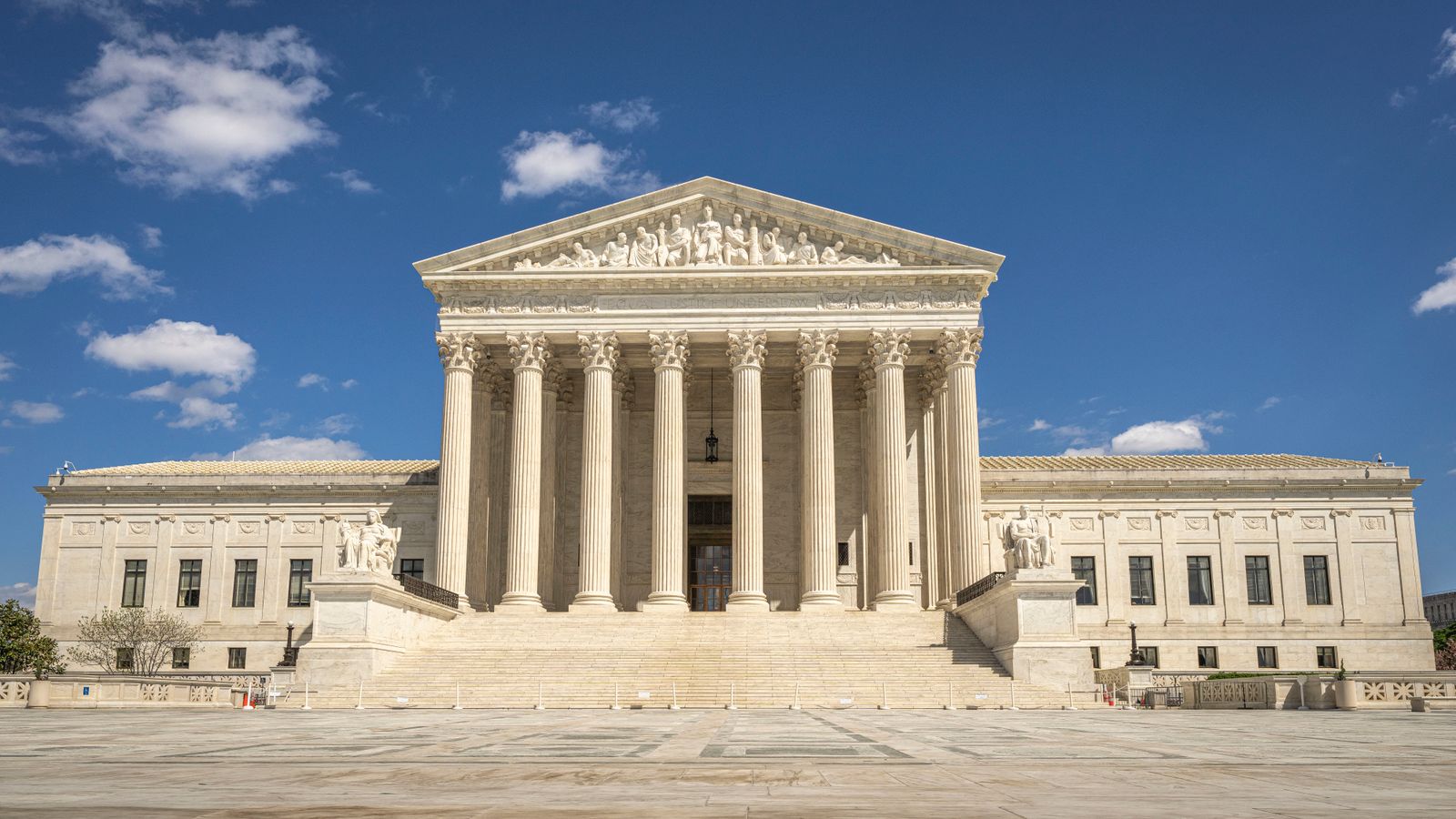
The majestic facade of the United States Supreme Court under a clear blue sky.
Three Federal Avenues for Licensing Challenges
The Congressional Research Service report identifies equal protection, dormant Commerce Clause, and federal antitrust law as the three most viable routes for operators to challenge restrictive state licensing. Equal protection claims would target residency requirements or arbitrary caps that treat similarly situated applicants differently. Dormant Commerce Clause arguments would attack rules that explicitly favor in-state businesses over out-of-state competitors. Antitrust suits under the Sherman Act would focus on collusive behavior or anticompetitive agreements between state regulators and incumbent license holders.
Cannabis remains federally illegal under the Controlled Substances Act. Yet federal courts have increasingly entertained procedural and constitutional challenges to state cannabis regulations. Federal illegality no longer immunizes state licensing schemes from constitutional scrutiny.
Several circuit courts have already ruled on aspects of these claims. The Sixth Circuit in 2024 allowed an equal protection challenge to proceed against Ohio's residency requirement for dispensary owners. The Ninth Circuit in 2025 declined to dismiss a dormant Commerce Clause claim against California's vertical integration mandate, which plaintiffs argued functioned as a barrier to interstate commerce even in the absence of legal interstate cannabis trade.
Why This Matters Now
State licensing disputes have escalated as mature markets implement caps, lotteries, and merit-based scoring systems that incumbents routinely challenge as arbitrary or discriminatory. Over 200 conditional adult-use retail licenses remain tied up in litigation in New York. Illinois applicants denied licenses in the 2020 lottery have filed federal civil rights claims alleging the state's social equity scoring system violated equal protection. A group of Missouri operators sued the state Division of Cannabis Regulation in August 2026, claiming the agency colluded with existing license holders to block new microbusiness applications.
Members of the House Judiciary Committee and the Senate Commerce Committee requested the Congressional Research Service report. Both committees have held hearings on cannabis market consolidation and licensing fairness. The timing suggests lawmakers are preparing for a scenario in which federal courts—potentially including the Supreme Court—intervene in state licensing structures that Congress has so far declined to regulate directly.
What Operators Should Watch
The next inflection point is whether the Supreme Court grants certiorari in any of the three pending circuit-level cases the CRS report highlights. The Ninth Circuit's California vertical integration ruling is currently on petition for rehearing en banc. If the full circuit upholds the panel's decision, California or the plaintiff operators are likely to petition the Supreme Court by early 2027. The Illinois equal protection case is on appeal to the Seventh Circuit, with oral arguments scheduled for October 2026.
Operators locked out of state markets now have a Congressional Research Service analysis that maps the federal litigation strategy. That doesn't guarantee Supreme Court review. But it signals that licensing disputes are no longer viewed as purely state-level administrative matters. For full background on this story, see the CannIntel topic hub on Supreme Court cannabis licensing disputes.
The political variable nobody can model is whether the Supreme Court's current composition will extend its skepticism of state regulatory overreach to cannabis licensing. The Court has shown that skepticism in other contexts. We'll know more when the Court releases its certiorari decisions for the October 2026 term in late September.
For complete background, history, and our ongoing coverage of this story:
Open the CannIntel topic hub →Frequently asked questions
Can federal courts rule on state cannabis licensing even though cannabis is federally illegal?
Yes. Federal courts have increasingly ruled that the Controlled Substances Act doesn't immunize state cannabis licensing schemes from constitutional scrutiny. Procedural due process, equal protection, and dormant Commerce Clause claims have all survived motions to dismiss in multiple circuits.
What is the dormant Commerce Clause argument against state cannabis licensing?
The dormant Commerce Clause prohibits states from discriminating against interstate commerce. Even though interstate cannabis commerce is currently illegal, plaintiffs argue that state rules favoring in-state operators over out-of-state applicants violate the clause's structural prohibition on protectionism.
Which states face the most active federal licensing litigation?
New York, Illinois, Missouri, and California have the most active federal licensing litigation as of September 2026. New York has over 200 conditional licenses tied up in court. Illinois and Missouri face equal protection and antitrust claims. California's vertical integration mandate is on appeal to the Ninth Circuit.
When could the Supreme Court take up a cannabis licensing case?
The earliest likely window is the October 2026 term if the Court grants certiorari to the pending Ninth Circuit California case or the Seventh Circuit Illinois case. Cert petitions would be filed in late 2026 or early 2027, with decisions on whether to grant review coming in the spring or summer of 2027.
Sources
The cannabis newsletter you forward to your team.
Federal policy, market data, grower alerts, and the one story that matters today. Sent every weekday at 7am. Free.
No spam. Unsubscribe with one click. 21+ only.
Related from Laws

Massachusetts Hempfest Opposes Ballot Question Seeking Cannabis Repeal
The 37th annual Boston Freedom Rally mobilized opposition to a November measure that would end adult-use sales.
Texas Cannabis Companies File Competing Lawsuits Over THC Sales Rights
Hemp and medical marijuana operators clash in court over who can legally sell THC products under state law.

Mendocino Cannabis Raids Show Different Agencies Leading Enforcement
Two separate operations this week highlight the fractured enforcement landscape in California's cannabis country.
More from the newsroom

Florida Medical Marijuana Sales Hit 15.94 Billion mg THC in 2026
State medical program dispensed 5.47 million ounces of flower and over 15.9 billion milligrams of THC across all product categories through 2026.

THCA Hemp Crackdown Intensifies as Three States Move to Close Loophole
Kentucky, Montana, and Virginia advance emergency rules targeting intoxicating hemp products this week.

Springfield Dispensary Workers Allege Firings Over Union Drive
Employees say terminations came days after organizing effort began at Missouri cannabis retailer.