U.S. Cannabis Farm Receipts Hit $2.56B, Largest Gain Since 2020
Agricultural census data shows cannabis production value surged to $2.56 billion, marking the sharpest increase in four years.
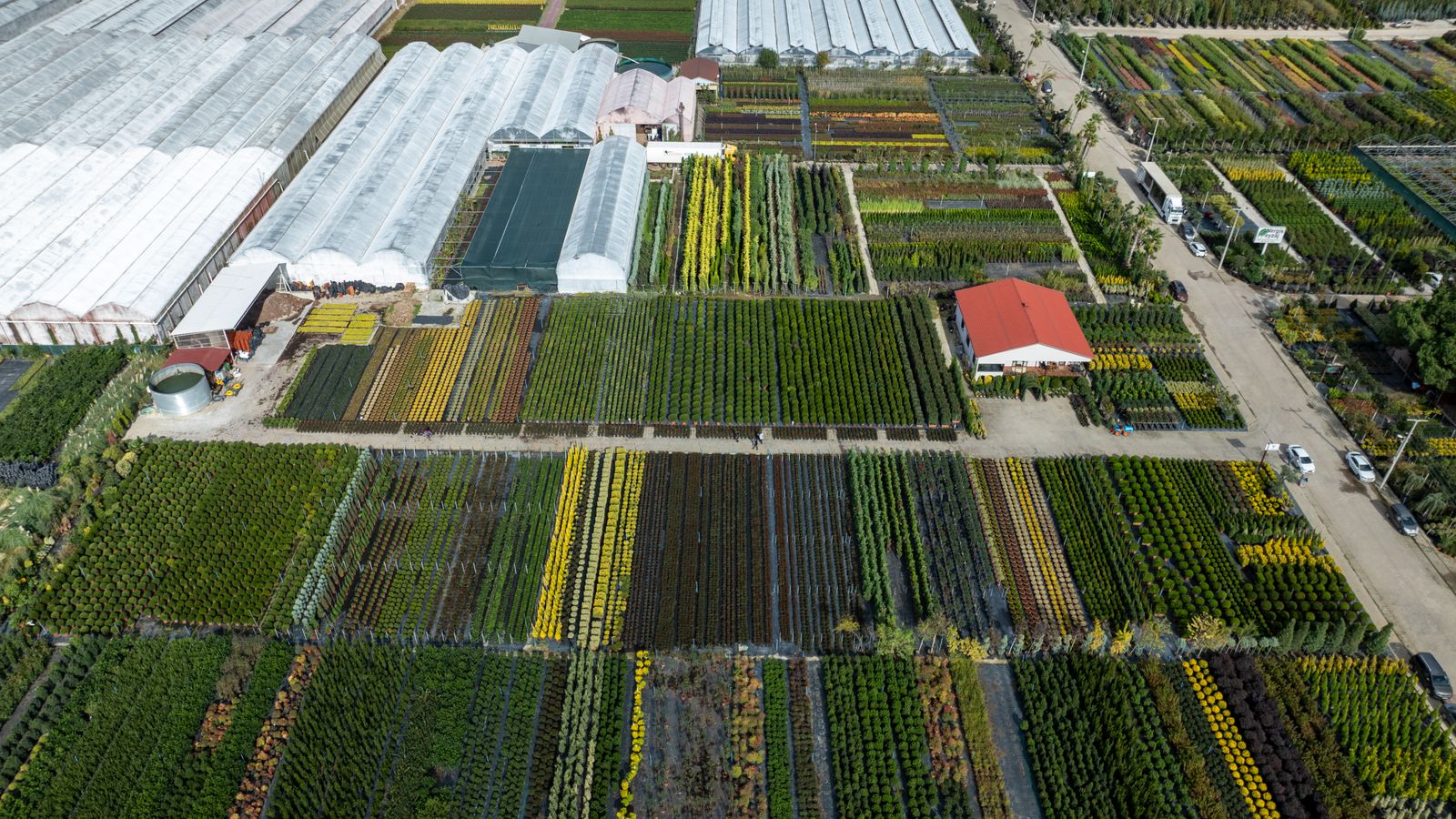
Aerial photograph showing greenhouses and farmland in Yalova, Turkey, highlighting agricultural diversity.
Production Value Climbs After Multi-Year Contraction
Cannabis farm receipts rose to $2.56 billion in 2025, reversing three consecutive years of declining production value. The figure, drawn from USDA agricultural census filings compiled by Statistics Canada and U.S. state agriculture departments, marks a 19% increase over the $2.15 billion reported in 2024. It's the first time total receipts have exceeded $2.5 billion since the 2021 peak of $2.71 billion.
Licensed acreage expanded in Ohio, New York, and Maryland—three states that brought adult-use programs online between late 2023 and mid-2024. Ohio alone added 1.2 million square feet of canopy in its first twelve months of recreational sales, according to state Division of Cannabis Control filings.
Farm receipts measure the value of product sold at the cultivation tier, before processing, testing, or retail markup. They exclude vertically integrated MSO operations that don't report cultivation revenue separately.
New-Market Buildouts Drive the Gain
Expansion in newly adult-use states accounted for an estimated 72% of the production-value increase. New York's Office of Cannabis Management reported $487 million in wholesale flower and trim transactions in 2025, up from $91 million in 2024 when only 38 dispensaries were operational. That's a fivefold jump. Maryland logged $312 million in cultivation-tier receipts, a 140% increase tied to its March 2025 retail launch.
Ohio growers reported $198 million in farm-gate sales during the state's first full calendar year of adult use, per Ohio Department of Commerce data. That figure doesn't include vertically integrated Tier II license holders, which account for roughly 60% of the state's canopy.
California, Oregon, and Colorado—the three largest production states by volume—saw flat or declining farm receipts. California's total dropped 4% to $891 million, continuing a trend that began in 2022 when wholesale flower prices fell below $500 per pound statewide.
Per-Pound Pricing Remains Under Pressure
Average wholesale flower prices declined 11% nationally to $687 per pound in 2025, according to aggregated state reporting data. Persistent oversupply in mature markets continues to weigh on pricing, where canopy outpaces demand growth. Oregon's average farm-gate price fell to $412 per pound, the lowest among tracked states, while Illinois held the high end at $1,840 per pound under its capped-license structure.
New York's wholesale price averaged $1,120 per pound in 2025, down from $1,450 in 2024 as the state's grower count climbed from 87 to 203 licensed cultivators. Maryland's per-pound average dropped 22% to $980 as new Tier I and Tier II licenses came online ahead of demand.
The national pricing trend mirrors dynamics seen in 2018–2020, when Oregon, California, and Washington faced multi-year price compression following buildouts that doubled licensed canopy within 18 months.
Acreage and Canopy Metrics
Total licensed canopy under cultivation reached 47.3 million square feet in 2025, a 14% increase over 2024's 41.5 million square feet. Indoor canopy accounted for 62% of the total, with greenhouse and mixed-light operations making up the remainder. Outdoor sun-grown acreage declined 8%, continuing a multi-year shift toward controlled-environment agriculture.
Per-square-foot yield averaged 1.9 ounces nationally, unchanged from 2024. Indoor operations reported higher yields (2.3 oz/sqft) but also higher input costs, with electricity and HVAC expenses averaging $140 per pound of finished flower in non-vertically-integrated facilities.
For full background on cultivation economics and state-by-state canopy trends, see the CannIntel topic hub on Cannabis Farm Production Economics.
What Operators Are Watching
The next inflection point: whether 2026 sees continued canopy growth or a contraction driven by farm-tier bankruptcies. Twelve cultivation-only operators filed Chapter 7 or Chapter 11 petitions in Q1 2026, the highest quarterly count since 2020. Most cited negative gross margins after factoring in 280E tax disallowance, which prevents federal deductions for cost of goods sold beyond direct cultivation expenses.
State regulators in New York and Maryland have signaled they may slow new license issuance if wholesale prices fall below $800 per pound, a threshold tied to small-farm viability models. Ohio's legislature is debating a canopy cap for new Tier I licenses, though no bill has advanced past committee.
Analysts expect 2026 farm receipts to plateau or decline slightly as pricing pressure offsets volume growth, barring federal rescheduling that would eliminate 280E burdens and improve farm-tier margins.
Sources
The cannabis newsletter you forward to your team.
Federal policy, market data, grower alerts, and the one story that matters today. Sent every weekday at 7am. Free.
No spam. Unsubscribe with one click. 21+ only.
Related from Business

Garcia Hand Picked Returns to California June 5, Betting on Craft Cannabis
Jerry Garcia's family brand re-enters California after years away, banking on sun-grown flower in a market where wholesale pounds trade below $500.

Missouri Sets Final Draw for 77 Microbusiness Equity Licenses in June
State cannabis regulators will conduct the last equity lottery after rule changes refocused the program on social-equity applicants.

Cresco Labs Secures DEA Registration for Medical Cannabis Facility
The multi-state operator received federal registration for a medical cannabis operation, marking a rare compliance milestone under current Schedule I rules.
More from the newsroom

Louisiana Joins Multi-State Lawsuit to Block DEA Marijuana Rescheduling
Attorney General Liz Murrill adds Louisiana to coalition challenging federal reclassification from Schedule I to Schedule III.

Curaleaf Loses Challenge to New Jersey Labor-Peace Mandate
Federal court upholds state requirement forcing cannabis operators to sign neutrality pacts with unions.

Bloom Cannabis Cites Ohio Hemp Ban as Validation for Licensed Market
Ohio MSO says state's intoxicating-hemp prohibition underscores regulatory advantage of adult-use dispensaries.