New York Operator Spends Five Years, $100K to Secure Cannabis License
A first-person account exposes the financial and temporal costs of navigating New York's social-equity licensing regime.
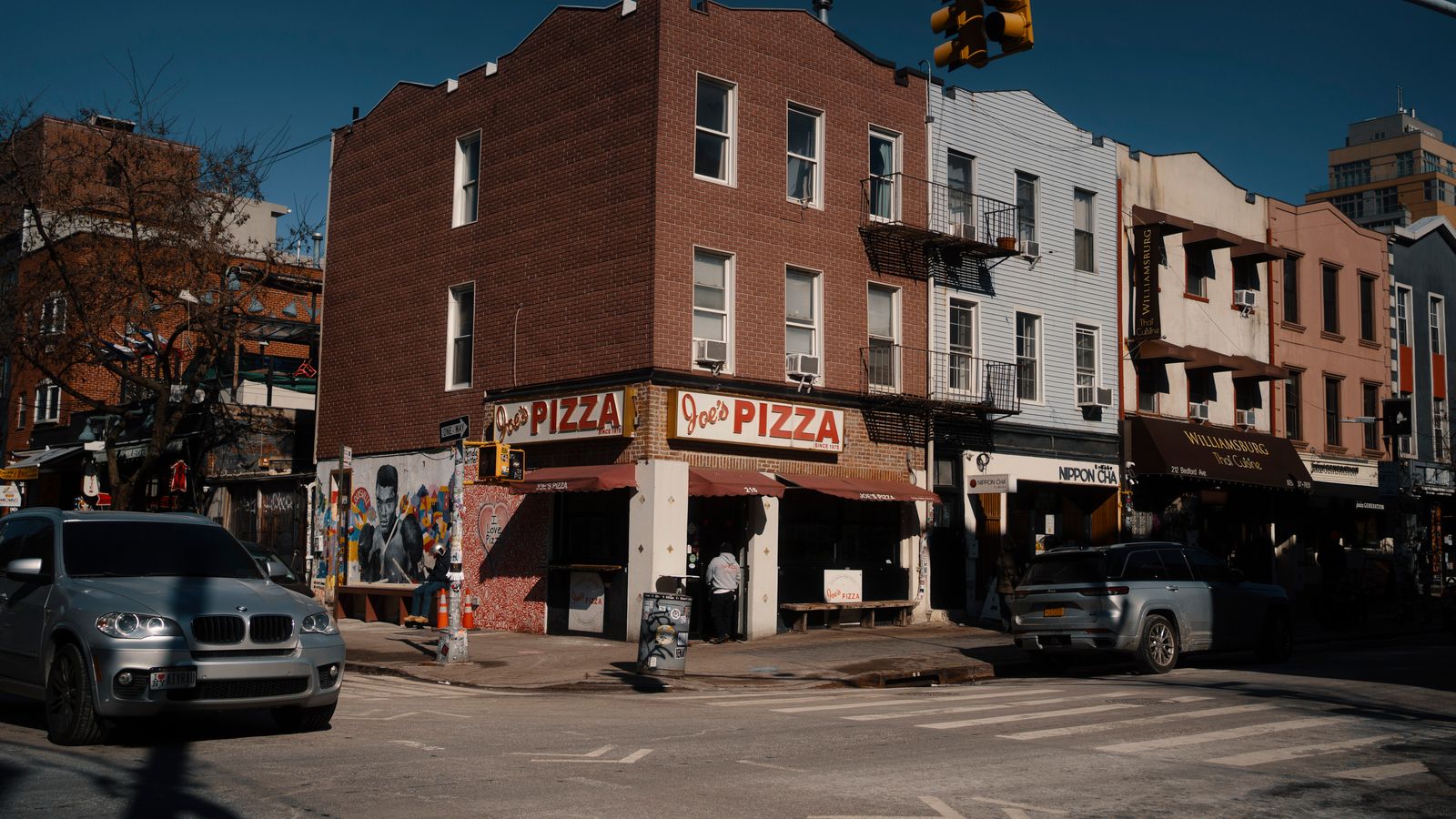
Street view of Joe's Pizza on a sunny day in Brooklyn, showcasing the lively urban atmosphere.
Timeline and Capital Expenditure
The operator's journey from application to approval spanned five years and consumed roughly $100,000 in direct costs. The account, published in High Times Magazine on July 11, 2026, documents legal fees, compliance consulting, real-estate holding costs, and administrative expenses accumulated while working through New York's Office of Cannabis Management (OCM) licensing process. The figure doesn't include opportunity costs or foregone revenue during the multi-year wait.
New York launched its adult-use program in March 2021 under the Marijuana Regulation and Taxation Act. The OCM prioritized Conditional Adult-Use Retail Dispensary (CAURD) licenses for justice-involved applicants beginning in 2022. Litigation and administrative delays pushed many approvals into 2024 and 2025.
Breakdown of Costs
Legal and compliance consulting represented the largest expense category. Applicants required specialized counsel to work through OCM's evolving ruleset, municipal opt-in/opt-out decisions, and real-estate zoning restrictions. The operator cited legal fees exceeding $40,000. Compliance consulting added another estimated $25,000.
Real-estate costs compounded the burden. New York's 500-foot buffer from schools and 1,000-foot buffer from places of worship constrained site selection, forcing applicants into narrow geographic corridors where landlords could charge premium rents. Holding deposits and lease obligations during the approval limbo cost the operator approximately $20,000. Application fees, background checks, and ancillary filings accounted for the remainder.
Comparative International Context
New York's five-year timeline contrasts sharply with faster European and Canadian frameworks. Germany's BfArM issues cultivation licenses within 12-18 months under the 2017 medical framework. Health Canada's Cannabis Act licensing averaged 9-14 months for standard cultivation and processing licenses in 2023. Even Italy's regional medical programs, often criticized for bureaucratic drag, process operator applications in under three years.
The $100,000 capital requirement exceeds barriers in most OECD jurisdictions. Ontario's Alcohol and Gaming Commission charged CAD $6,000 for retail authorization in 2024. Portugal's INFARMED medical-cannabis operator fees totaled approximately €15,000 for cultivation and manufacturing combined.
Social-Equity Program Outcomes
New York's CAURD program issued 463 conditional licenses by June 2026. Fewer than 200 have opened for business. According to OCM data released in May 2026, capital access remains the primary bottleneck. The state's $200 million Social Equity Cannabis Investment Fund, announced in 2022, disbursed only $47 million through Q1 2026 due to underwriting delays and risk-aversion among participating lenders.
The operator's account aligns with findings from the New York Cannabis Equity Coalition, which surveyed 112 CAURD licensees in March 2026. Median time-to-approval was 41 months; median out-of-pocket costs were $87,000. Thirty-seven percent of respondents reported depleting personal savings or taking on debt to sustain applications.
Regulatory Complexity Drivers
New York's municipal opt-in requirement and real-estate constraints created a multi-layered approval gauntlet. Unlike California's statewide licensing with local overlay, New York required municipalities to affirmatively opt in to allow dispensaries. As of June 2026, 412 of the state's 1,521 municipalities had opted in. That concentrated viable locations in urban corridors and forced applicants to compete for scarce compliant sites.
The OCM's phased rollout prioritized CAURD applicants but lacked clear timelines for standard adult-use retail licenses, leaving non-equity applicants in indefinite queue. The agency issued its first non-CAURD retail licenses in April 2026. Four years after the CAURD program launched.
Operator Revenue Projections
The operator projects 18-24 months to recoup the $100,000 in pre-operational costs based on current New York market conditions. New York dispensaries averaged $1.2 million in annual revenue in 2025, according to Headset data, with gross margins of 35-40 percent after cost of goods sold. The state's 13 percent retail excise tax and 9 percent wholesale tax compress net margins to approximately 15-20 percent for efficient operators.
Breakeven timelines assume stable competition. New York issued 89 new retail licenses in Q2 2026 alone, accelerating market saturation in high-density areas. The operator's location and differentiation strategy will determine whether the 18-month payback holds.
Policy Implications
The account underscores the gap between social-equity intent and execution in state cannabis programs. New York designed CAURD to remedy disproportionate enforcement harms, but the capital and time requirements effectively filter for applicants with access to patient capital or family wealth. Comparator states like Illinois and Massachusetts face similar critiques: equity programs that demand non-equity resources.
For full background on New York's licensing evolution and equity-program outcomes, see the CannIntel topic hub on New York cannabis licensing. The next policy signal to watch: OCM's anticipated August 2026 report on CAURD program outcomes and proposed reforms to streamline standard retail licensing.
For complete background, history, and our ongoing coverage of this story:
Open the CannIntel topic hub →Frequently asked questions
How long does New York cannabis licensing take?
New York's Conditional Adult-Use Retail Dispensary (CAURD) licenses averaged 41 months from application to approval through Q1 2026, according to industry surveys. Standard retail licenses, first issued in April 2026, have no published average timeline yet.
What are the main costs of a New York cannabis license?
Applicants report legal fees of $40,000+, compliance consulting around $25,000, and real-estate holding costs of $15,000-$30,000 during approval. Total median out-of-pocket costs for CAURD applicants were $87,000 in a March 2026 survey.
How does New York compare to other state licensing programs?
New York's five-year timeline and $100,000 cost profile exceed most states. California's licensing averaged 9-14 months in 2023. Illinois and Massachusetts also face criticism for high equity-program barriers, but approval timelines are generally shorter.
How many New York CAURD licenses are operational?
Fewer than 200 of the 463 CAURD licenses issued by June 2026 have opened for business, according to OCM data. Capital access and real-estate constraints are the primary bottlenecks preventing license-holders from launching.
What is New York's Social Equity Cannabis Investment Fund?
A $200 million state fund announced in 2022 to provide loans and grants to CAURD licensees. Through Q1 2026, only $47 million had been disbursed due to underwriting delays and risk-averse lending criteria among participating financial institutions.
Sources
The cannabis newsletter you forward to your team.
Federal policy, market data, grower alerts, and the one story that matters today. Sent every weekday at 7am. Free.
No spam. Unsubscribe with one click. 21+ only.
Related from Business

Trulieve Expands NYSE Presence as MSO Seeks Broader Investor Access
The Florida-based operator is leveraging its existing NYSE listing to attract institutional capital ahead of federal reform.

Bioxyne Secures German Export Deal as Australia Expands Cannabis Trade
ASX-listed Bioxyne's German supply agreement marks another milestone in Australia's growing medicinal cannabis export sector.
Missouri Cannabis Workers Notch Union Wins as Organizing Spreads
Multiple Missouri dispensaries and cultivation sites have voted to unionize in recent weeks, accelerating labor organizing across the state's adult-use market.
More from the newsroom
Former Trump Official Pushes Hemp THC Ban in New Policy Brief
A former Trump administration drug policy adviser is calling for federal action to close the hemp THC loophole created by the 2018 Farm Bill.

Pennsylvania Budget Signed Without Adult-Use Cannabis Provisions
Governor Josh Shapiro signed Pennsylvania's fiscal 2026-27 budget after weekend legislative sessions, but adult-use legalization language was stripped from the final package.
Avecho Launches World's Largest CBD Insomnia Trial in Australia
Perth biotech's 200-patient Phase 3 study could secure exclusive Australian regulatory pathway for CBD sleep therapy.